Daily Hair Protection Guide for Thin Hair: Everything You Need
About This Guide: This article is written with input from professional hairstylists, trichologists, and real experiences shared by people with thin hair across the United States. Our goal is to give you a complete, practical daily protection routine that actually works for thin hair at every age, every budget, and every lifestyle. Every recommendation here is grounded in hair science and real-world results.
You wake up, run your fingers through your hair, and immediately feel that familiar sinking feeling. More strands on the pillow. More breakage at the ends. More flatness no matter what you try. If you have thin hair, you already know that every single choice you make during the day either helps your hair or hurts it. The wrong pillowcase, the wrong product, the wrong ponytail elastic, the wrong heat setting — all of it adds up.
The problem is that most hair care advice out there is written for thick, coarse, or curly hair. Thin hair is different. It is more fragile, more prone to breakage, more easily weighed down by products, and far more sensitive to the cumulative damage of daily habits that seem harmless but are not.
Here is the good news. You do not need expensive treatments, complicated routines, or a complete lifestyle overhaul. What you need is the right information organized into a daily protection system that is easy to follow and genuinely effective. That is exactly what this guide delivers. From the moment you wake up to the moment you go to sleep, we will walk you through every step of a daily hair protection routine designed specifically for thin hair. By the time you finish reading, you will have a clear, practical plan you can start using today.
Why Thin Hair Needs a Different Kind of Daily Protection
Before we get into the routine, it is important to understand why thin hair requires its own approach rather than simply following general hair care advice.
Thin hair refers to the diameter of each individual strand, not the number of strands on your head. A person can have a full head of thin hair, meaning many strands that are each individually fine and narrow in diameter. Because each strand is narrow, it has less structural integrity than a coarse strand. It bends more easily, breaks more easily, and absorbs and loses moisture more quickly.
This creates a set of vulnerabilities that are unique to thin hair. Products that work beautifully on thick hair can make thin hair limp and greasy within hours. Heat settings that thick hair tolerates without visible damage can cause thin hair to dry out, become brittle, and break. Hairstyles that look polished on thick hair can cause real mechanical damage and even permanent follicle stress when applied to thin hair with too much tension.
Understanding these vulnerabilities is the foundation of a smart daily protection strategy. Every recommendation in this guide is built on that foundation.
| Thin Hair Vulnerability | What It Causes | How Daily Protection Helps |
|---|---|---|
| Small strand diameter | Easy breakage from friction and tension | Gentle handling, silk pillowcases, loose styles |
| Fast moisture loss | Dryness, brittleness, split ends | Lightweight moisturizing products, low heat |
| Product buildup sensitivity | Flat, limp, weighed-down appearance | Minimal product use, sulfate-free washing |
| Scalp oil visibility | Hair looks greasy faster | Dry shampoo, strategic washing schedule |
| Tension damage risk | Traction alopecia from tight styles | Loose hairstyles, alternating styles daily |
Morning Routine: How to Start the Day Right for Thin Hair
Build Your Morning Around Minimal Manipulation
The morning is when most thin hair damage happens. Rushing through a routine, using too much heat, pulling hair into tight styles, and applying heavy products all within thirty minutes creates a daily damage cycle that accumulates into real, visible hair loss and breakage over time.
The core principle of a thin hair morning routine is minimal manipulation. Every time you touch your hair, drag a brush through it, apply tension, or expose it to heat, you create an opportunity for breakage. The goal is to achieve your desired look with the least possible contact and stress.
Start by assessing whether you actually need to wash your hair that morning. One of the most common mistakes people with thin hair make is washing every single day out of habit. Daily washing strips the scalp of natural oils, which triggers the sebaceous glands to produce more oil to compensate. This creates a cycle where hair gets greasy faster and faster, requiring more washing, which strips more oil, and the cycle continues.
For most people with thin hair, washing every other day or every two to three days is optimal. On non-wash days, dry shampoo becomes your most important styling tool.
How to Wash Thin Hair Without Causing Damage
Choose the Right Shampoo for Thin Hair
The shampoo you use makes a meaningful difference in the health and appearance of thin hair over time. For thin hair specifically, you want to avoid two things in your shampoo formula: sulfates and heavy silicones.
Sulfates are the cleansing agents responsible for the rich lather most people associate with a thorough wash. They are effective at removing oil and dirt, but they are also harsh enough to strip thin hair of the natural oils it genuinely needs. Over-stripped thin hair becomes dry, brittle, and prone to breakage.
Heavy silicones create a coating on the hair shaft that builds up with repeated use. On thick hair, this coating creates shine and smoothness. On thin hair, it creates weight and limpness that makes hair look flat and feel heavy rather than clean and full.
Look for shampoos labeled sulfate-free and volumizing. These formulas clean effectively without stripping, and they are designed to lift the hair at the root rather than weigh it down.
- Sulfate-free shampoos preserve natural oils and reduce dryness and breakage
- Volumizing formulas add body to each strand without buildup
- Clarifying shampoos can be used once every two weeks to remove any accumulated product residue
- Avoid shampoos with heavy moisturizing agents like shea butter or coconut oil as the primary ingredient, as these tend to weigh thin hair down
Condition Correctly to Add Moisture Without Weight
Conditioning is non-negotiable for thin hair, but technique matters enormously. Many people with thin hair either skip conditioner entirely because they fear it will flatten their hair, or they apply it incorrectly and end up with exactly the limpness they were trying to avoid.
The right approach is to apply conditioner only from the mid-shaft to the ends of your hair, never directly at the roots or scalp. The scalp produces its own natural oils that condition the roots adequately. Applying conditioner directly to the scalp adds unnecessary weight and contributes to the greasy, flat look that people with thin hair dislike.
Choose lightweight, rinse-out conditioners specifically formulated for fine or thin hair. Leave-in conditioners should be used sparingly and only on the ends if your hair is prone to dryness at the tips.
Heat Styling and Thin Hair: The Rules That Protect You
Always Use Heat Protectant Before Any Heat Tool
This is not optional. If you use any heat styling tool on thin hair, a heat protectant product must go on first. Every time. No exceptions.
Heat protectants work by creating a thin barrier between the heat source and the hair shaft. They reduce the direct temperature impact on the delicate protein structure of each strand. Without protection, the high temperatures from flat irons, curling wands, and blow dryers can denature the keratin proteins that give each strand its strength and elasticity. Repeated heat damage without protection leads to hair that feels rough, looks dull, breaks easily, and loses its natural wave or texture permanently.
For thin hair, choose a lightweight heat protectant spray rather than a cream or serum. Spray formulas provide even coverage without adding weight or creating buildup.
Use the Lowest Effective Heat Setting
Higher heat does not mean better styling results for thin hair. Because thin strands are narrower in diameter, they reach their internal temperature threshold faster than thick strands. Using a flat iron or curling wand at 400 degrees Fahrenheit on thin hair is genuinely damaging, even with a protectant applied.
A temperature between 250 and 320 degrees Fahrenheit is adequate for most thin hair styling needs. If your hair is also color-treated, which further reduces its structural integrity, staying at the lower end of that range is the smarter choice.
| Heat Tool | Recommended Temperature for Thin Hair | Maximum Recommended Use |
|---|---|---|
| Blow dryer | Low to medium heat setting | Every other day maximum |
| Flat iron | 250 to 300 degrees Fahrenheit | Two to three times per week |
| Curling wand | 250 to 320 degrees Fahrenheit | Two to three times per week |
| Hot rollers | Low heat setting | Two to three times per week |
| Air drying | No heat required | As often as possible |
Make Air Drying Your Default Whenever Possible
The best heat styling session for thin hair is the one you skip entirely. Air drying creates zero direct heat damage and gives thin hair the best possible environment to maintain its natural health over time.
If you need to use a blow dryer, use it on a cool or warm setting rather than hot, keep it moving constantly rather than concentrating heat in one spot, and stop before your hair is completely dry. Finishing with air drying for the last ten to fifteen percent of drying time preserves moisture in the hair shaft.
Hairstyles That Protect Thin Hair vs. Styles That Damage It
Avoid High-Tension Styles That Cause Traction Stress
Traction alopecia is a form of gradual hair loss caused by repeated tension on the hair follicles. It is directly caused by hairstyles that pull the hair tight at the scalp, such as high ponytails, tight buns, braids pulled from the root, and updos secured with aggressive clips or elastics. For people with thin hair, the risk of traction alopecia is real and the results can be permanent if the style tension is maintained long-term.
This does not mean you can never wear a ponytail. It means you need to be thoughtful about how often you wear tight styles, how tightly you secure them, and what you use to hold them.
Protective styling habits for thin hair include:
- Wearing ponytails and buns loosely rather than pulled tightly against the scalp
- Alternating your part location daily or weekly to avoid stress on the same follicles repeatedly
- Using fabric-covered elastics rather than rubber bands, which snag and break thin strands
- Avoiding styles that require bobby pins inserted with tension against the scalp
- Never sleeping with your hair in a tight style
- Giving your scalp rest days between any style that uses significant tension
Choose Hairstyles That Work With Thin Hair
Rather than fighting against what thin hair naturally does, certain hairstyles genuinely complement it and can make it look fuller and healthier.
Blunt cuts are one of the most effective tools for making thin hair look thicker. When all ends are cut to the same length, the hair appears denser at the bottom because the ends are aligned and create a solid visual line rather than tapering into wispy points. A blunt bob or a blunt cut with minimal layering works particularly well for many people with thin hair.
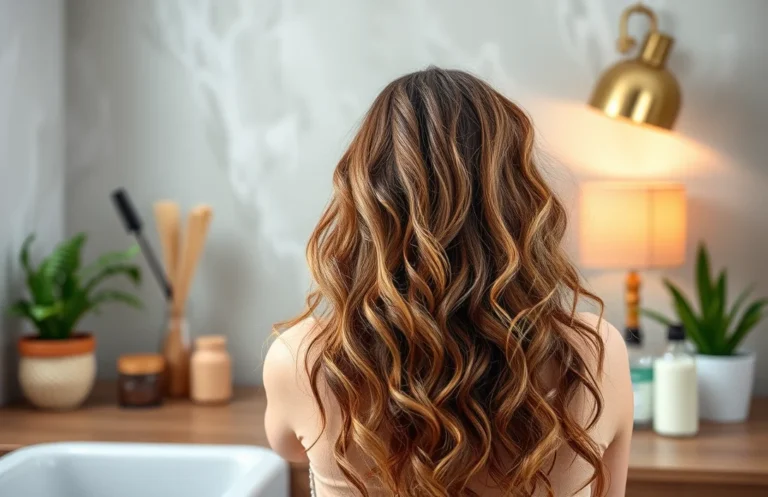
Loose waves and soft curls add visual volume and texture that make thin hair look fuller. Because the curls create dimensional shape, the hair appears to have more body than it does when lying flat and straight.
Daily Product Routine for Thin Hair: Less Is Almost Always More
Use Products Sparingly and Choose Lightweight Formulas
Product buildup is the enemy of thin hair. Because thin strands are narrow and fine, even a small amount of a heavy product creates noticeable weight and limpness. The goal with product application is to enhance without loading the hair down.
The general rule for thin hair product use is to start with less than you think you need and add more only if necessary. You can always add more product. You cannot remove it without washing, which is not always an option mid-day.
Products that work well for thin hair daily protection:
- Volumizing mousse applied at the roots before blow drying adds lift without lasting buildup
- Dry shampoo is outstanding for thin hair both as a styling tool and as a between-wash fresher
- Lightweight serum applied only to the ends addresses dryness without weighing down the rest of the hair
- Texturizing spray adds grip and separation to styles without heaviness
- Scalp treatments with niacinamide or caffeine support follicle health without product residue on the strands
Products to minimize or avoid for thin hair:
- Heavy oils like castor oil, coconut oil, or argan oil applied along the full hair length
- Thick creams or butters intended for coarse or curly hair
- Heavy-hold gels that create stiffness and visible residue
- Serums with heavy silicones as a primary ingredient
Dry Shampoo Is Your Most Versatile Daily Tool
For people with thin hair, dry shampoo is genuinely transformative when used correctly. It absorbs excess oil at the scalp, which is where thin hair shows greasiness first and most visibly. It adds texture and grip to hair that might otherwise feel slippery and fine. And it extends the time between washes, which reduces the cumulative damage of frequent washing and heat styling.
Apply dry shampoo to the roots in sections, hold the can six to eight inches from the scalp, and allow it to sit for sixty to ninety seconds before massaging it in with your fingertips. This absorption time makes a significant difference in effectiveness. Brushing it in immediately pushes the product through the hair rather than allowing it to work at the root where it is needed.
Use dry shampoo on non-wash days as a matter of routine rather than as a last resort. Building it into your daily or every-other-day routine prevents oil buildup from accumulating to the point where hair looks flat and unwashed.
Nighttime Routine: Protecting Thin Hair While You Sleep
Switch to a Silk or Satin Pillowcase Tonight
If there is one single change you make after reading this guide, make it this one. Switching from a standard cotton pillowcase to a silk or satin pillowcase is one of the highest-impact, lowest-effort changes you can make for thin hair protection.
Cotton pillowcases create significant friction against your hair throughout the night. As you move during sleep, your hair rubs repeatedly against the cotton surface, creating friction that physically roughens the cuticle of each strand and causes mechanical breakage. For thin hair, which already has less structural resistance than thick hair, this nightly friction accumulates into real, visible damage over weeks and months.
Silk and satin surfaces are smooth enough that hair slides rather than catches and pulls. The reduction in friction means significantly less breakage, less frizz in the morning, and better preservation of any style you went to sleep with.
Pure silk pillowcases are the most effective and most expensive option, typically ranging from forty to one hundred fifty dollars. Satin pillowcases made from polyester satin deliver many of the same friction-reduction benefits at a significantly lower price point, usually ten to thirty dollars. Both are vastly superior to cotton for thin hair protection.
Prepare Your Hair Properly Before Bed
How you handle your hair before bed has a real impact on what it looks and feels like in the morning. For thin hair specifically, nighttime preparation can mean the difference between waking up with breakage and lost strands versus waking up with hair that looks and feels healthy.
Before bed, take these steps consistently:
- Detangle gently with a wide-tooth comb or a soft boar bristle brush, working from ends to roots rather than roots to ends
- Never go to sleep with wet hair, as wet strands are significantly weaker and more prone to breakage from the friction and movement of sleep
- If you have medium to long thin hair, gather it loosely at the top of your head in a very loose bun or braid secured with a soft fabric elastic, not a tight rubber band
- Apply a small amount of lightweight hair oil or a few drops of a leave-in conditioner to the ends only if your ends are prone to dryness
- Avoid sleeping with any metal clips, bobby pins, or tight accessories in your hair
Detangling Thin Hair Without Breaking It
Detangle Before Washing, Not After
Most people detangle their hair in the shower after applying conditioner. For thin hair, this is a high-risk approach. Wet hair is significantly weaker than dry hair because water temporarily disrupts the hydrogen bonds that give each strand its structure. Pulling a comb or brush through wet, tangled thin hair creates substantial breakage that could have been avoided entirely.
The better approach is to detangle gently before you wash, when hair is dry and at its structural strongest. Use a wide-tooth comb or a detangling brush designed for fine hair, and always work from the ends up to the roots. Never drag a comb from root to tip through a tangle. Start at the bottom, work through any knots at the ends first, then gradually work your way up the shaft in sections.
If you prefer to detangle in the shower, apply conditioner first, let it sit for a full two to three minutes to soften the hair structure, and then use a wide-tooth comb only, never a brush, working from ends to roots with minimal pressure.
Nutrition and Scalp Health: The Foundation Under the Routine
What You Eat Affects Your Hair Every Single Day
Daily protection for thin hair is not limited to what you put on your hair from the outside. The nutritional environment your follicles operate in determines how strong, healthy, and resilient each new strand grows in from the very beginning. No topical routine can fully compensate for nutritional deficiencies that affect hair growth and strength at the follicle level.
Key nutrients that directly support thin hair health include:
- Biotin supports keratin production, which is the protein structure of each hair strand
- Iron deficiency is one of the most common nutritional causes of increased hair shedding in American women, making iron intake especially important
- Protein in adequate daily amounts provides the raw material for hair strand production, since hair is made almost entirely of protein
- Zinc supports follicle function and helps regulate the oil glands surrounding each follicle
- Vitamin D deficiency has been linked in research to hair thinning and reduced follicle cycling
- Omega-3 fatty acids support scalp health and reduce the inflammation that can negatively affect follicle function
Before adding supplements, speak with your doctor or a registered dietitian. Hair thinning can sometimes signal underlying health conditions, including thyroid disorders, hormonal imbalances, or anemia, that require medical attention rather than just a better hair care routine.
| Nutrient | Role in Hair Health | Common Food Sources |
|---|---|---|
| Biotin | Supports keratin protein structure | Eggs, almonds, sweet potato, salmon |
| Iron | Prevents shedding from deficiency | Red meat, spinach, lentils, fortified cereals |
| Protein | Raw material for strand production | Chicken, fish, Greek yogurt, legumes |
| Zinc | Follicle function and oil regulation | Pumpkin seeds, beef, chickpeas, cashews |
| Vitamin D | Follicle cycling support | Fatty fish, fortified milk, sunlight exposure |
| Omega-3 | Scalp health and inflammation reduction | Salmon, walnuts, flaxseeds, chia seeds |
Weekly and Monthly Maintenance for Long-Term Thin Hair Protection
Schedule Regular Trims to Keep Ends Healthy
Split ends on thin hair are a particularly serious problem because thin strands have less material to spare. When a split end is left untrimmed, the split travels up the shaft over time, causing breakage at progressively higher points. Regular trims prevent this progression and keep the ends of your hair healthy enough to hold a style and resist further damage.
For thin hair specifically, trims every six to eight weeks are generally ideal for maintaining end health and a clean, blunt shape that maximizes the appearance of volume. If you are trying to grow your thin hair longer, trims every ten to twelve weeks are a reasonable compromise that removes damage without sacrificing significant length.
Request blunt cuts from your stylist rather than heavily layered cuts. Blunt ends create the visual density that makes thin hair look its fullest, while heavy layering removes bulk and can make thin hair look wispy rather than full.
Deep Conditioning Treatments on a Weekly Basis
Even though thin hair cannot tolerate heavy products in daily use, a weekly deep conditioning treatment provides the intensive moisture that thin strands genuinely need to stay flexible and resilient rather than dry and brittle.
Choose lightweight, protein-balanced deep conditioners designed for fine or thin hair. Apply to the mid-shaft and ends only, leave on for ten to fifteen minutes under a shower cap to allow the heat from your scalp to help the product penetrate, and rinse thoroughly.
Avoid deep conditioning treatments with heavy butters or oils as primary ingredients, and rinse more thoroughly than you think is necessary to prevent any residue from weighing the hair down after the treatment.
Frequently Asked Questions About Daily Hair Protection for Thin Hair
How often should I wash thin hair?
Every other day to every two or three days is ideal for most people with thin hair. Daily washing strips natural oils and triggers excess oil production, creating a cycle of faster greasiness that requires more washing. Use dry shampoo on non-wash days to absorb oil and add texture at the roots. If your scalp produces oil very quickly and daily washing feels necessary, look for a gentle sulfate-free shampoo and skip heat styling on wash days to reduce total daily stress on your strands.
Can thin hair get thicker with the right routine?
The daily protection routine described in this guide will not change the genetic diameter of each individual hair strand. However, it absolutely can make a visible difference in how full and healthy your hair looks and feels. Reducing breakage means more of the hair you grow actually reaches length rather than breaking off. Reducing product buildup means hair has more natural volume at the root. Minimizing heat damage means strands retain their natural texture and wave, which adds visual body. Many people with thin hair who commit to a proper protection routine report that their hair looks noticeably fuller within eight to twelve weeks simply because they are retaining more length and experiencing less damage.
Is dry shampoo safe to use every day on thin hair?
Using dry shampoo daily over a long period without regular washing can lead to product buildup on the scalp, which can clog follicles and potentially contribute to irritation or slowed growth if left unaddressed. The healthiest approach is to use dry shampoo on non-wash days, which means two to four times per week for most people, and to wash thoroughly on wash days to clear any accumulated product. Look for dry shampoos without heavy talc formulas, and make sure you are massaging the product fully into the scalp rather than leaving it sitting on the surface.
What hairstyles are best for protecting thin hair daily?
Loose styles that minimize tension on the scalp are the best daily choices for thin hair protection. Loose low buns secured with a soft fabric elastic, loose braids without tight root tension, half-up styles with gentle clips, and wearing hair down with a soft part are all protective options. Blunt cuts at any length are the most flattering and protective cut choice because they maximize the appearance of density. Avoid tight ponytails, high buns with tension, tight braids from the root, and any style that requires pulling the scalp skin with the hair.
Does sleeping with hair up or down protect it better?
For thin hair, a very loose updo is generally better than sleeping with hair completely down, particularly if your hair is medium to long length. When hair is loose during sleep, it tangled more freely and creates more friction points across the pillow surface. Gathering it loosely at the crown in a soft bun or a loose braid reduces tangling and the associated breakage from detangling in the morning. Always pair this with a silk or satin pillowcase regardless of which option you choose. Never sleep with hair in a tight style of any kind.
How do I add volume to thin hair without damaging it?
The safest volume-adding techniques for thin hair are blow drying upside down on a low heat setting with a volumizing mousse at the roots, using a round brush to lift the roots during drying, applying dry shampoo to the roots before styling, and asking your stylist for a blunt cut that maximizes density at the ends. Backcombing or teasing adds temporary volume but physically damages the cuticle of each strand and should be used very sparingly if at all. Velcro rollers set on dry hair without heat are another effective, gentle volume method.
Final Thoughts: Consistency Is What Protects Thin Hair
Thin hair does not need a miracle product or an expensive treatment. What it needs is consistent, informed daily habits that add up over weeks and months into real, visible improvements in strength, fullness, and health.
The daily hair protection guide outlined here covers every part of your day from morning to night because thin hair requires protection at every stage. The right shampoo, the right heat setting, the right pillowcase, the right hairstyle, the right nighttime routine — none of these things alone is the answer. Together, as a consistent daily system, they are genuinely transformative.
Start with one or two changes today. Add the others gradually until the full routine becomes second nature. Your hair will respond. Give it the protection it deserves and it will reward you with the health, volume, and resilience you have been looking for.
Daily Protection Quick Reference for Thin Hair
Wash every other day with sulfate-free volumizing shampoo, condition mid-shaft to ends only, apply heat protectant before any heat tool, use the lowest effective heat setting, choose loose hairstyles over tight ones, apply products sparingly using lightweight formulas, use dry shampoo on non-wash days, sleep on a silk or satin pillowcase, detangle gently before washing starting from ends to roots, and trim every six to eight weeks with a blunt cut for maximum fullness.

- Does Summer Really Boost Hair Growth Speed? Insights and Facts - March 31, 2026
- Medium Hairstyles for School: 25 Best Looks That Are Easy - March 31, 2026
- Hairstyles for Medium Hair for School: Easy and Stylish - March 31, 2026