10 Types of Curly Hair for Black Men: Hair Textures, Styles, and Care
Black men’s curly hair comes in at least 10 distinct types, each with its own strengths, vulnerabilities, and best practices. Knowing your exact type changes everything about how you style, moisturize, and maintain your hair. A routine that works for Type 3A loose curls will fail on Type 4C coils. Understanding the differences prevents breakage, dryness, and the frustration of following generic hair advice that does not apply to your texture.
This guide identifies all 10 types, explains what makes each type unique, and gives you specific care protocols for your texture.
1. Hair Texture Classification for Black Men
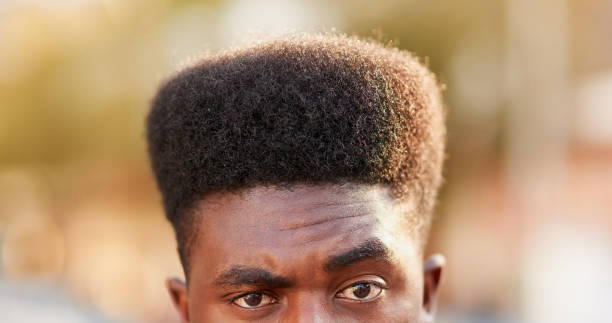
Hair type classification comes from dermatologist and cosmetologist research. The system ranks hair from straight (Type 1) to tightest curls (Type 4). Most Black men fall into Types 3 and 4. Understanding the classification system lets you identify your hair accurately and find relevant hair care information.
Why Hair Type Matters for Black Men’s Hair Care
Hair type determines how water enters and exits the hair shaft. It determines how much natural sebum your scalp can distribute. It determines which products absorb versus sit on top. Two men can use the same product and get opposite results because their hair types process products differently.
A Type 3A man with loose curls and high moisture retention can use heavy oils freely. A Type 4C man with tight coils and low moisture retention needs water-based products first, then oils to seal. Confusion about hair type leads men to use wrong products and develop hair problems that feel like personal failures. It is not failure. It is using a product not formulated for your texture.
The Andre Hair Typing System Explained
Cosmetologist Andre Walker created the most widely used hair typing system in 1997. Type 1 is straight. Type 2 is wavy. Type 3 is curly. Type 4 is coily. Within each type, letters (A, B, C) indicate curl tightness. 3A is looser than 3C. 4A is looser than 4C.
The system is not perfect. Your hair may be 3B on top and 4A at the nape. That is normal. You are not picking your type wrong. Your hair is mixed. Use the care protocol for your most fragile area. If you have 4A at the nape, treat that section with 4A-level care and moisture, even if the rest is 3B.
How Porosity and Density Affect Your Curls and Care
Porosity is how easily water enters and exits the hair shaft. High porosity hair absorbs products quickly but loses moisture fast. Low porosity hair resists water entry but also resists water loss. Density is how much hair grows on your scalp. Fine density has fewer individual strands. Thick density has more strands per square inch.
A man can be Type 4C (curl type) with high porosity (water absorption) and fine density (strand count). These factors are independent. Together they determine how much moisture you need, how quickly you lose moisture, and how much product you can use without buildup.
Hair Texture Categories for Black Men: Quick Reference
- Type 3A: Loose, elongated S-shaped curls, circumference of a piece of chalk
- Type 3B: Medium, spiral-shaped curls, circumference of a straw
- Type 3C: Tight, 360-degree ringlet curls, circumference of a pencil lead
- Type 4A: Coils with a clear curl pattern, S-coil shape, springs back when stretched
- Type 4B: Zig-zag pattern, less defined curl, Z-shaped texture, minimal spring
- Type 4C: Tightest coil, often appears as a cloud or afro texture, little to no curl spring
- High porosity: Absorbs water quickly, dries fast, easily absorbs color, frizzes easily
- Low porosity: Resists water, dries slowly, hard to color, needs heat for product penetration
- Fine density: Fewer strands per square inch, lighter total weight of hair, easier to style
- Thick density: More strands per square inch, heavier total weight, holds styles longer
2. Type 3A Loose Curls (Soft Waves)
Type 3A is the loosest curl pattern for Black men. It sits somewhere between waves and tight curls. The curl pattern is defined enough to give shape but open enough that it appears relaxed or wavy. Type 3A men often do not realize they have curly hair until they grow it out or stop chemically treating it.
Characteristics and Appearance of Type 3A Curls
Type 3A curls have a circumference of approximately the width of a piece of chalk, roughly 8 to 10 millimeters. The curl pattern is elongated, meaning the spiral goes along the length of the hair rather than wrapping tight. When wet, Type 3A curls stretch and appear wavy. When dry, they spring back to a defined but loose curl.
The advantage of Type 3A is ease. These curls cooperate with styling. They hold products without buildup. They dry with a defined shape without extensive manipulation. The disadvantage is frizz in humidity. Type 3A has the most surface area exposed to moisture. Humidity can disrupt the curl pattern and create frizz.
Common Hair Concerns and Problems Specific to 3A
Frizz is the primary concern for Type 3A men. The loose curl pattern is susceptible to humidity disrupting the curl definition. A second concern is curl shrinkage. Type 3A hair shrinks 10 to 20% from wet to dry. A man who thinks his hair is 8 inches is often shocked that wet it stretches to 10 inches.
Breakage at the ends is a third concern. Loose curls have less structural support than tight coils. The ends taper thinner and break easier with rough handling. A fourth concern is product buildup. The open curl pattern makes it easy for products to sit on top and accumulate over weeks.
Best Styling Products and Methods for Definition
Type 3A curls need products that provide definition without weight. Curl creams are heavier than gels and work well. Gels provide hold and definition with less weight. Serums and oils work as finishing products to smooth frizz and add shine. Avoid heavy butters and thick creams that weigh down the loose curl pattern.
A cream gel hybrid works best for Type 3A. It provides the hold of a gel and the smoothness of a cream. Apply to soaking wet hair. Use a praying hands or raking method to distribute evenly. Scrunch upward to encourage curl clumping. Allow to air dry or diffuse with low heat.
Daily Maintenance Routine for Type 3A Hair
- Wash twice per week with sulfate-free shampoo
- Deep condition once per week for 20 minutes
- Apply leave-in conditioner to wet hair immediately after washing
- Style with curl cream or gel while soaking wet
- Allow hair to air dry or diffuse on low
- Once dry, smooth with a serum or oil to control frizz
- Sleep on a silk pillowcase or wear a silk bonnet
- Refresh between wash days with a water spray and leave-in conditioner
- Avoid touching or fluffing curls while drying, which breaks curl clumps
- Use a wide-tooth comb for detangling when wet, not dry
3. Type 3B Medium Curls

Type 3B is the middle ground between loose and tight curls. The curl pattern is tight enough to hold shape against humidity but open enough that individual curls are visible and distinct. Type 3B is the most common type among Black men. The curl pattern looks like a spiral spring.
What Type 3B Curls Look Like and Feel Like
Type 3B curls have a circumference of approximately a drinking straw, roughly 6 to 8 millimeters. The curl pattern is a clear spiral. The curl clumps together visibly. A man with Type 3B can section the hair with his fingers and identify distinct curl groups. The hair feels bouncy and springs back when stretched.
Type 3B shrinks 25 to 35% from wet to dry. A man with wet curls reaching his shoulders will shrink to chin-length when dry. This shrinkage is normal and not a sign of damage. Knowing the shrinkage helps with styling decisions. If you want shoulder-length curls when dry, you need longer hair when wet.
Texture Challenges Specific to Type 3B Hair
Type 3B hair is susceptible to frizz in humidity but less than Type 3A. The tighter curl pattern provides more resistance. Dryness is a larger concern. Type 3B curls are prone to moisture loss, especially if you wash frequently or live in a dry climate. The curl pattern concentration means less scalp oil can travel to the ends.
Buildup is also a concern. The tighter curl pattern creates more places for products to settle. Type 3B benefits from regular clarifying washes once per month to prevent buildup that dulls curl definition. A third concern is curl definition loss over time. Without proper moisture maintenance, the curls relax and lose their shape.
Best Products and Methods for 3B Definition and Shine
Type 3B curls respond well to curl creams, gels, and mousses. A cream-gel combination provides definition and hold without making the hair feel crunchy. Oils and serums add shine and control frizz. Avoid heavy butters and thick conditioners that weigh the curl pattern down.
Apply products to soaking wet hair. Use a squish-to-condish method, squishing products into the hair while cupping with both hands. This encourages product absorption and curl clumping. Scrunch upward to define the curl pattern. Diffuse with medium heat for 50 to 70% dry, then allow to air dry completely.
Popular Styling Approaches for Type 3B Texture
| Style | Cut Length | Product Type | Hold Duration | Maintenance Level |
|---|---|---|---|---|
| Twist-Out | 2 to 4 inches | Curl cream + gel | 2 to 3 days | Medium |
| Coil-Out | 3 to 5 inches | Cream gel hybrid | 3 to 5 days | Medium |
| Tapered Fade | Fade 0.5 inch, top 2 to 3 inches | Cream or gel | 2 to 3 days | Low |
| Textured Top | Fade 1 inch, top 3 to 4 inches | Lightweight cream | 2 to 3 days | Medium |
| Free Form | 4+ inches | Leave-in + serum | Varies | Low |
| Faded Curls | Fade 0.5 inch, top 2 inches | Firm gel | 2 to 3 days | Medium |
4. Type 3C Tight Curls (Spiral Curls)

Type 3C is the tightest curl pattern still classified as Type 3. The curl is 360-degree ringlets, true spirals with consistent definition. Type 3C looks almost like tiny springs covering the scalp. It is significantly tighter than 3B but slightly more open than 4A coils.
Type 3C Curl Pattern and Structure Explained
Type 3C curls have a circumference of approximately a pencil lead, roughly 3 to 4 millimeters. The curl is a perfect spiral with consistent width from root to tip. Individual curls are distinct and remain clumped even when not styled. The curl pattern is defined by its consistency. Type 3C will look like a 3C from one end of the head to the other.
Type 3C shrinks 30 to 40% from wet to dry. A man with wet curls at shoulder length will have curls at chin length when completely dry. This extreme shrinkage is normal for Type 3C and not a concern.
Moisture and Frizz Challenges Unique to 3C
Type 3C is prone to dryness because the tight curl pattern concentrates on the scalp and pulls away from it. Scalp oil cannot travel far. The ends of Type 3C are often significantly drier than the roots. Moisture retention is a constant challenge.
Frizz in humidity is less of an issue for 3C than for 3A and 3B because the tight curl is harder to disrupt. Single-strand knots are a bigger concern. These form when the tight curl wraps around itself. They appear as white bumps on single strands. Single-strand knots are not a health concern but are annoying and difficult to remove.
Best Products and Methods for 3C Definition
Type 3C responds well to creamy products. A thick cream gel works better than a thin gel. Creams alone work if you do not need strong hold. Avocado-based products are excellent for 3C. Oils and butters should be used to seal, not as leave-in moisture alone.
Apply products to soaking wet hair. Squish to condish to encourage absorption. Separate into twists or braids before drying to define the curl pattern further. Two-strand twists or braids prevent single-strand knots by keeping strands together. Diffuse or air dry completely before untwisting.
Popular and Flattering Styles for 3C Texture
- Twist-outs with 3B or 4A finishing for extra definition
- Faded fade with defined curls on top
- Tapered sides with textured top, cut to show off the curl pattern
- Faded edges with free-form curls on top, no manipulation
- Braided or twisted sections with defined curl pops
- Maintenance cut every 4 to 6 weeks to remove split ends
- Finger coils when wet for enhanced spiral definition
5. Type 4A Coils (Fragile Spirals)
Type 4A marks the beginning of the coil family. The curl pattern is a tight spiral that springs back when stretched. Type 4A sits between curls (Type 3) and coils (Type 4B and 4C). It has the most defined curl pattern of the coil types.
Type 4A Hair Characteristics and Structure
Type 4A has an S-coil shape. From a distance, it looks like an afro or cloud. Up close, individual spirals are visible. The curl springs back when stretched, a key difference from Type 4B and 4C which do not. Type 4A is denser than Type 3C, meaning more strands per square inch.
Type 4A shrinks 40 to 50% from wet to dry. Wet curls at shoulder length become chin-length when dry. This is extreme shrinkage but completely normal for this type.
Breakage and Dryness Issues Specific to 4A
Type 4A is fragile. The tight coil structure means significant stress at the bend points where the coil curves. Rough manipulation, dry fingers, or aggressive detangling breaks the hair at these weak points. Single-strand knots are extremely common. The tight coil wraps around itself and knots.
Dryness is a major challenge. Scalp oil cannot reach the ends. Type 4A requires frequent deep conditioning and sealing with oils. Without consistent moisture care, 4A develops severe dryness and brittleness within weeks.
Best Products and Methods for Type 4A Health
Type 4A requires water-based hydration first, then oils to seal. Applying oil alone without water underneath does not hydrate the cortex. A proper routine is water, leave-in conditioner, then oil.
Detangle only when wet with conditioner on the hair. Use a wide-tooth comb or fingers, not a brush. Detangle gently, section by section. Never detangle dry Type 4A. This causes significant breakage. Apply products to soaking wet hair. Use a praying hands method to smooth, then scrunch upward for definition.
Most Protective and Recommended Styles for 4A
- Box braids with loose tension to reduce breakage
- Crochet braids as a protective style
- Twist-outs for defined curls without manipulation
- Faded sides with defined coils on top
- Tapered cut with coils showing natural texture
- Free form locs once hair reaches 3 to 4 inches
- Braided styles worn for 2 to 3 weeks, then released and re-moisturized
6. Type 4B Coils (Z-Pattern Texture)

Type 4B has a different structure than 4A. Instead of an S-spiral, Type 4B has a Z-shaped pattern. The coil does not have a clear defined curl. It is tighter than 4A but less defined. Type 4B is extremely common among Black men.
Type 4B Hair Structure and Appearance
Type 4B appears as a cloud or fro texture from a distance. Closer inspection reveals a Z-shaped or W-shaped pattern rather than a spiral. The coil lacks the spring-back property of 4A. When stretched, it goes limp rather than bouncing back. Type 4B is denser than 4A and has less curl pattern definition.
Type 4B shrinks 50 to 60% from wet to dry. This is extreme shrinkage. A man with wet curls at shoulder length will have curls at collarbone or chest length when dry.
Shrinkage and Definition Challenges Unique to 4B
The Z-pattern is difficult to define with styling alone. Products sit on top rather than defining the pattern because the pattern is less consistent. Definition comes from twisting, braiding, or coiling the hair while wet. Once dry, the pattern sets and lasts for several days.
Single-strand knots are extremely common with Type 4B. The Z-shaped pattern creates many angles where the hair can wrap around itself. Detection and removal are time-consuming. Prevention is better than cure. Detangle frequently when wet, keep hair moisturized so it is more pliable, and avoid styles that encourage the hair to wrap.
Moisture-Rich Products and Methods for 4B
Type 4B requires more moisture than 4A. Water-based leave-in conditioners are essential. Apply to soaking wet hair. Seal with butter or thick oil. Heavy products like shea butter work well for 4B. The thickness prevents moisture loss because of the low natural oil distribution.
Moisturize every wash day. Weekly deep conditioning is not enough. 4B loses moisture between wash days. If washing once per week, apply a leave-in to wet hair at each wash and moisturize with water spray and cream on other days.
Effective Styling Techniques and Approaches for 4B
- Banding with elastic bands while wet to straighten and define
- Twisting when wet for defined, twisted texture
- Braiding for pattern and hold
- Faded fade with textured top, letting natural texture show
- Tapered natural with lined edges
- Twist-out or braid-out using two-strand twists or braids for texture
- Wash and go with heavy cream and oil for shine and definition
7. Type 4C Coils (Tightest and Most Complex)
Type 4C is the tightest hair texture. The coil has no defined pattern. It appears as a dense cloud or afro. Individual coils are so tightly wound that they are barely visible without pulling the hair. Type 4C is the most common type among men of West African descent.
Type 4C Hair Characteristics and Structure
Type 4C has no visible curl pattern. It appears as a 360-degree cloud or afro texture. The density is extreme. When you place a comb in the hair, you can barely move it without significant force. The hair is the strongest in tensile strength per strand of all types but the most vulnerable to breakage from tension and manipulation.
Type 4C shrinks 60 to 70% from wet to dry. Wet hair stretches significantly, but when dry, it springs back dramatically. This shrinkage is extreme but completely normal for this type.
Challenges Unique to Type 4C Coils
Type 4C requires constant moisture. Without consistent hydration, the hair becomes brittle and breaks easily. Single-strand knots form constantly. The extremely tight coil naturally wraps around itself repeatedly, creating many knots.
Detangling is time-consuming. Type 4C is often extremely tangled between wash days. Detangling requires 20 minutes to an hour depending on hair length and density. Detangle only when wet with conditioner on the hair. Dry detangling leads to severe breakage.
Specific Product Requirements for 4C Health
Type 4C requires the heaviest products of all types. Shea butter deep conditioners are essential. Thick creams are necessary. Water-based leave-ins are non-negotiable. Heavy oils like castor oil and coconut oil are appropriate.
Moisture frequency must be higher than other types. If you are not washing more than once per week, moisturize on separate days. Banding or twisting while wet, then allowing to dry, reduces the need for daily manipulation and keeps the hair in a set pattern that does not tangle as quickly.
Styles That Showcase and Protect 4C Texture
- Fade with textured top, edges lined and shaped
- Tapered natural with defined edges
- Faded sides with fro-like texture on top
- Twist-outs with two-strand twists set while wet, untwisted when dry for defined texture
- Banded hair, creating ringlet-like texture patterns
- Free-form locs for hands-off styling
- Braided protective styles with loose tension
- Wash and go with heavy cream and oil for moisture and definition
8. Porosity and Density: How They Change Your Hair Care Entirely
Hair type (3A to 4C) describes curl pattern. Porosity describes how water moves in and out of the hair shaft. Density describes how many strands grow on your scalp. A man can be Type 4C (curl type) with low porosity (water resistance) and fine density (few strands). These three factors determine the exact care routine you need.
Low Porosity vs High Porosity: What It Means
High porosity hair absorbs products quickly. Water enters the hair shaft easily. The cuticle is slightly raised, allowing entry. High porosity hair loses moisture equally fast. Water escapes as easily as it enters. High porosity men need lightweight, water-based products applied to soaking wet hair. Products sit too long and cause buildup.
Low porosity hair resists water entry. The cuticle is tightly sealed. Low porosity men struggle to get product into the hair. Water beads off without absorbing. Low porosity requires heat to open the cuticle and allow product entry. Heat with a shower cap or blow dryer accelerates product penetration.
Fine Density vs Thick Density and Care Implications
Fine density means fewer strands per square inch. The scalp is visible through the hair. The hair looks thinner even if each strand is strong. Fine density men need lighter products because heavy products weigh the hair down. Avoiding buildup is critical because buildup is more visible on fine hair.
Thick density means many strands per square inch. The scalp is completely covered. The hair looks fuller. Thick density men can use heavier products without weighing the hair down. Thick density men are less prone to visible buildup. They can apply heavier deep conditioners and oils without risking greasiness.
How to Test Your Hair’s Porosity and Density at Home
The float test determines porosity. Pull out 5 to 10 strands of clean, product-free hair. Drop them in a glass of room temperature water. High porosity strands sink within seconds. Low porosity strands float. Medium porosity strands sink slowly after 1 to 2 minutes.
Testing density is visual. If your scalp is completely hidden when hair is dry, you have thick density. If your scalp is visible through the hair when dry, you have fine density. This is straightforward and does not require testing.
Care Adjustments by Porosity Type
| Porosity | Water Entry | Moisture Loss | Product Application | Product Buildup Risk |
|---|---|---|---|---|
| High | Fast | Fast | Quick absorption, no heat needed | Very high, reduce frequency |
| Medium | Normal | Normal | Normal application works | Moderate, monitor monthly |
| Low | Slow | Slow | Requires heat or warm water | Low, can use more products |
9. Common Hair Problems and Solutions Across All Curly Types
Every curly hair type faces specific problems. Understanding the root cause of your problem lets you fix it instead of just masking it with more products.
Dryness, Breakage, and Why They Happen
Dryness happens when moisture exits the hair shaft faster than it enters. Breakage happens when dry hair loses elasticity and snaps. For Types 3A to 3C, dryness usually comes from humidity or styling stress. For Types 4A to 4C, dryness is constant because scalp oil cannot reach the ends.
The solution is different for different types. Type 3A addresses humidity with oil sealing. Type 4C addresses constant dryness with frequent moisturizing. For all types, breakage stops when moisture is restored. A single broken strand is dead and gone. Prevention through consistent moisture care is the only solution.
Buildup, Protein Overload, and Finding the Moisture-Protein Balance
Buildup happens when products do not rinse out completely. Heavy products, silicones, and oils all build up with repeated application. Buildup looks like dullness, stiffness, or greasiness despite clean hair. The solution is a clarifying wash once per month that strips all products.
Protein overload happens when too much protein product is used. Protein makes hair stiff and strong temporarily. Too much protein makes hair brittle and breaks. The solution is alternating protein treatments with moisture treatments. One week of protein, then one week of moisture-only.
Scalp Health and Irritation Prevention
A healthy scalp has no flakes, no itching, and no redness. Irritation comes from product buildup, over-manipulation, tension from tight styles, or allergic reactions. The solution is identifying the cause. If buildup is the issue, clarify. If tension is the issue, loosen styles. If an ingredient causes itching, eliminate it.
Quick Problem-Solving Guide by Hair Type and Issue
| Problem | Type 3A/3B/3C Solution | Type 4A/4B/4C Solution |
|---|---|---|
| Frizz | Anti-humidity serum, silk bonnet at night | Moisture + sealing, two-strand twists |
| Dryness | Weekly deep condition, leave-in spray | Bi-weekly deep condition, leave-in daily |
| Breakage | Gentle detangle, wide-tooth comb | Detangle when soaking wet, loose styles |
| Single-strand knots | Monthly trimming, careful styling | Weekly detangle, protective styles |
| Buildup | Clarify monthly, reduce product amount | Clarify every 2 weeks, lighter products |
| Scalp irritation | Reduce product, use sulfate-free shampoo | Scalp massage, tea tree oil rinse |
10. Best Grooming Practices for Black Men’s Curly Hair

A routine prevents problems. Without a routine, you apply products randomly and hope for results. A consistent routine prevents dryness, breakage, buildup, and frustration.
Weekly Washing and Cleansing Routines
Wash frequency depends on how fast your scalp produces oil and how active you are. Most men wash once per week. Active men or men with oily scalps may wash twice per week. Use a sulfate-free shampoo. Sulfates strip natural oils and dry the hair.
Shampoo focuses on the scalp and roots. Massage gently for 3 to 5 minutes. Allow lather to run down and rinse the rest of the hair. Do not scrub the ends harshly. After shampooing, condition the entire length from roots to ends.
Conditioning and Deep Conditioning Frequency
Follow every shampoo with conditioner. This is non-negotiable. Types 3A and 3B condition once per week with shampoo. Types 3C and 4A condition once per week with shampoo plus a deep condition once per week. Types 4B and 4C condition with every wash plus a deep condition every week.
Deep conditioning means a thicker, heavier product left on for 20 to 30 minutes. Shea butter, avocado, or oil-based deep conditioners work well. Apply to soaking wet hair. Use heat with a shower cap or warm towel. Heat opens the cuticle and accelerates absorption.
Tools That Damage vs Tools That Protect Your Curls
Damaging tools include brushes (except on soaking wet hair), fine-tooth combs, rough towels, and hot blow dryers on high. Protective tools include wide-tooth combs, fingers, microfiber towels, and diffusers on low.
A wide-tooth comb detangles without breaking. Fingers detangle gently without mechanical stress. A microfiber towel absorbs water without friction damage. A diffuser on low heat dries hair without heat damage.
Complete Hair Care Routine Template for Healthy Curls
- Wash day (once per week for most men):
- Shampoo scalp and roots for 3 to 5 minutes
- Condition entire hair for 5 minutes
- If deep conditioning this week, apply thick conditioner for 20 to 30 minutes with heat
- Rinse thoroughly with cool water to seal the cuticle
- Apply leave-in conditioner to soaking wet hair
- Apply styling product if needed
- Dry with diffuser on low or air dry completely
- Between wash days (rest of the week):
- Use water spray on dry hair to refresh
- Apply leave-in conditioner to damp hair
- Restyle or smooth with fingers
- Sleep on silk pillowcase or wear silk bonnet
- Moisturize mid-week if hair feels dry (for Type 4 men)
11. Styles That Work for Each Curly Hair Type
Different types suit different styles. Type 3A loose curls look best with fade and short styles. Type 4C tight coils suit tapered naturals or locs. Matching style to hair type highlights your best features.
Tapered Fades, Lineups, and Clean Edges

A tapered fade has clipped sides that gradually get longer moving up the head. The top stays longer, usually 2 to 4 inches. This works for all types because the fade shows scalp definition while the top shows curl pattern. Get the fade and lineup sharpened every 2 to 3 weeks. Clean edges look intentional and sharp.
Length Styles That Complement Each Texture
Type 3A works with 1 to 3 inch length. The loose curls are more noticeable with shorter length and show off the curl pattern. Type 3B suits 1.5 to 4 inches. Type 3C and 4A work with 2 to 5 inches. Types 4B and 4C suit 3 inches and longer because the curl pattern needs length to be visible.
Twist-Outs, Coil-Outs, and Defined Texture
A twist-out means twisting hair while wet with two-strand twists, allowing to dry completely, then untwisting for defined texture. This works for Types 3B to 4B. Types 4C can do twist-outs but the definition shows less because of the tight coil. Coil-outs mean coiling the hair while wet, then releasing dry for coil texture definition.
Low-Maintenance Styles That Reduce Styling Time
- Fade with defined curls on top, no specific styling needed
- Tapered sides with curls on top, style occasionally
- Free-form locs (started once hair reaches 3 to 4 inches)
- Wash and go with leave-in conditioner and oil
- Twist-out set once per week, lasts 5 to 7 days
- Banded style set while wet, lasts 3 to 5 days
Frequently Asked Questions About Black Men’s Curly Hair
These questions appear frequently in Black hair communities and online forums. Answers are based on hair science and practical experience.
How to Determine Your Exact Hair Type Accurately
Take a single strand of your hair when it is fully dry and unstretched. Place it next to common comparison objects. A strand with chalk thickness is Type 3A. Straw thickness is 3B. Pencil lead is 3C. Smaller than pencil lead is Type 4. Then observe the pattern. S-shape is 3A/3B. Tight spiral is 3C/4A. Z-shape is 4B. No visible pattern is 4C.
Take photos from different angles. Curls look different from different views. The top may be Type 3B while the nape is Type 4A. Document your hair type by section.
Can Your Hair Type Change Over Time
Your underlying hair texture does not change. However, hair appearance changes with age, health status, and treatment. Teenage hair may look different than adult hair. Severe stress or illness can change how your hair grows temporarily. Chemical treatments change your hair type until new growth comes in.
Your hair type is permanent genetic information. If you are Type 4C, you will grow Type 4C hair for your entire life.
Cost of Curly Hair Maintenance Monthly and Yearly
A basic routine costs $20 to $40 per month. This includes a sulfate-free shampoo ($5 to $8), conditioner ($5 to $8), deep conditioner ($8 to $15), and leave-in ($5 to $10). Styling products add $10 to $20 per month. Oil and butter for sealing add $5 to $10.
Barber visits for fades and lineups cost $15 to $40 per visit. Visiting every 2 to 3 weeks costs $120 to $520 per year. A complete maintenance budget is $300 to $700 annually.
Common Myths and Misconceptions About Black Curly Hair
- Myth: Conditioner makes hair weak. Truth: Moisture strengthens hair. Dryness causes weakness.
- Myth: You should brush curly hair daily. Truth: Brushing breaks curly hair. Detangle once per week when wet.
- Myth: Tight braids and twists are healthy protective styles. Truth: Tight styles cause traction alopecia. Use loose tension.
- Myth: All Black men’s hair is the same. Truth: Types 3A to 4C are all different and need different care.
- Myth: Natural hair is always high maintenance. Truth: Proper routine prevents maintenance needs.
- Myth: Washing more makes hair dry. Truth: Moisture prevents dryness, not frequency. Drying products cause dryness.
- Myth: You cannot style curly hair short. Truth: Fades, tapers, and textured crops all work for curly hair.
Summary: Hair Type Reference and Basic Care Overview
| Type | Curl Pattern | Circumference | Shrinkage | Main Concern | Key Practice |
|---|---|---|---|---|---|
| 3A | S-wave | Chalk | 10-20% | Frizz | Oil sealing |
| 3B | Spiral | Straw | 25-35% | Dryness | Weekly conditioning |
| 3C | Ringlet | Pencil lead | 30-40% | Single-strand knots | Regular detangle |
| 4A | S-coil | Coil that springs | 40-50% | Breakage | Protective styles |
| 4B | Z-pattern | No defined coil | 50-60% | Definition loss | Wet manipulation |
| 4C | No pattern | Dense cloud | 60-70% | Constant dryness | Daily moisture |

- 7 Best Detangling Brushes for Curly Hair: Thick, Fine, Long & Natural Hair - September 25, 2026
- 5 Best Moisturizing Curl Defining Creams for Soft, Defined Curls - September 24, 2026
- Best Curl Creams for Straight Hair: 5 Top Picks for Women - September 24, 2026