
Temporary Hair Color Spray: Application, Longevity, and Removal
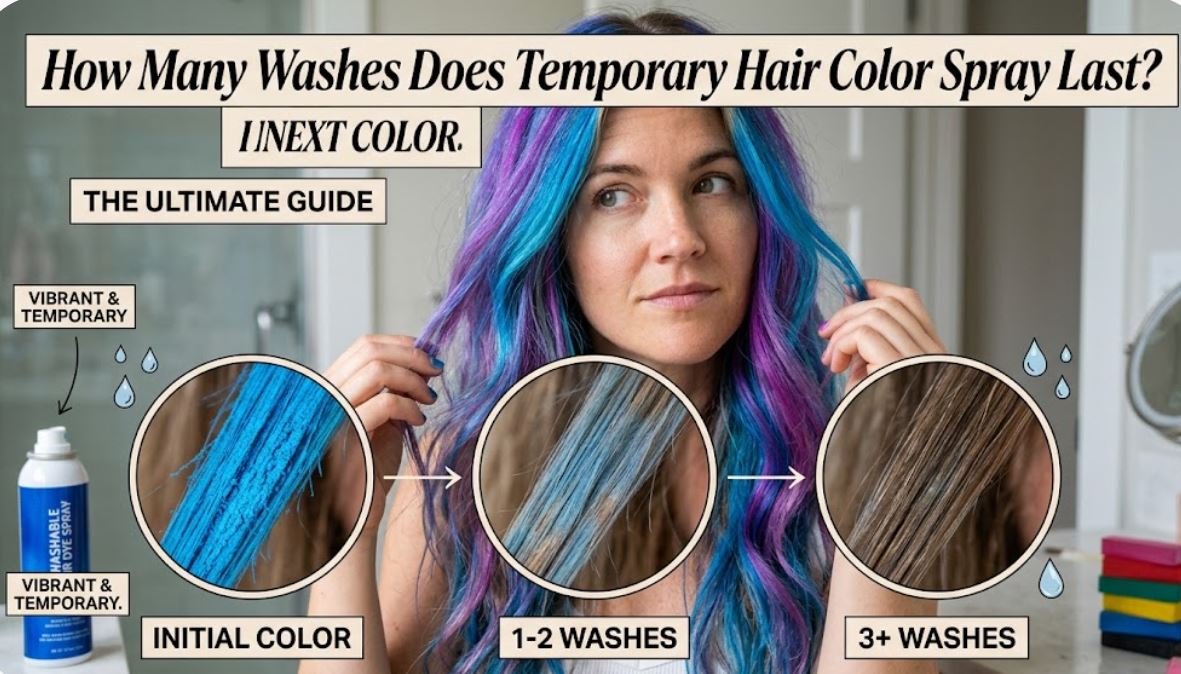
Temporary hair color spray is formulated to last for exactly one wash. Because it is designed as a topical cosmetic rather than a penetrating dye, standard shampoo and warm water will break down the formula and wash it down the drain in a single shower.
However, real-world results can vary. Depending on your hair’s porosity, its base color, the specific chemical formulation of the spray, and the amount of product applied, traces of the pigment can sometimes linger for two to four washes. In extreme cases involving bleached hair and highly pigmented colors, temporary sprays can cause semi-permanent staining.
Understanding the mechanics of temporary hair dye, how it interacts with different hair textures, and the best methods for removal is essential for ensuring your one-day color does not become a multi-week commitment.
The Science of Temporary Hair Color Sprays
To understand why temporary hair color spray washes out quickly, it helps to understand the anatomy of a hair strand. Every strand of hair is protected by the cuticle, an outer layer composed of overlapping, microscopic scales (similar to shingles on a roof). Beneath the cuticle lies the cortex, which holds the hair’s natural moisture and melanin (natural pigment).
Permanent and demi-permanent hair dyes use ammonia or ethanolamines to lift these cuticle “shingles” so that tiny pigment molecules can enter the cortex and permanently alter the hair’s color. Semi-permanent dyes use smaller molecules that partially slip beneath the cuticle without the need for developer.
Temporary hair color sprays, on the other hand, contain heavy, large pigment molecules suspended in a fast-drying solvent (usually alcohol-based). These molecules are far too large to penetrate the cuticle. Instead, they act like a coat of paint, wrapping around the exterior of the hair shaft and drying into a colored film. Because this film is highly water-soluble and sits entirely on the surface, the surfactants in your shampoo can easily grab onto the pigment and wash it away.
Factors That Influence Longevity
While the baseline expectation is one wash, several variables dictate how easily and completely the color will rinse out.
1. Hair Porosity
Porosity refers to your hair’s ability to absorb and retain moisture, which is entirely dictated by the condition of your cuticles.
- Low Porosity (Healthy, Virgin Hair): The cuticles lie completely flat and tightly bound. Temporary spray sits perfectly on the smooth surface and washes off effortlessly in one wash.
- Medium Porosity: The cuticles are slightly raised. The spray adheres well but still washes out easily in one or two washes.
- High Porosity (Bleached, Chemically Treated, or Heat-Damaged Hair): The cuticles are heavily raised, broken, or missing in places. The surface of the hair is rough and porous. When you apply temporary spray to high-porosity hair, the tiny pigment particles can become trapped inside the jagged gaps of the open cuticle. While the surface layer washes off in one wash, the trapped pigment causes “staining” that can take three to five washes—or specialized treatments—to fully remove.
2. Base Hair Color
The contrast between your natural hair color and the color of the spray heavily influences how visible any remaining residue will be.
- Light/Blonde Hair: Platinum, ash blonde, and highlighted hair are highly susceptible to visible staining. A blue or red spray might wash out 90% on the first wash, but the remaining 10% will leave the hair looking faintly green or pink for several additional washes.
- Dark/Brown/Black Hair: Darker hair easily hides faint stains. If a small amount of pigment remains after the first wash, it will be virtually invisible against a dark brown or black base.
3. Color Selection
Not all pigments are created equal. The chemical structure of certain colors makes them more prone to lingering.
- High-Stain Colors: Red, pink, blue, and teal pigments are notoriously stubborn. They have a tendency to grip the hair shaft and often require two to three washes to fully disappear, especially on lighter hair.
- Low-Stain Colors: Pastel colors, metallic shades (gold, silver), and white sprays are generally very easy to remove, completely washing out in one go.
4. Amount of Product Applied
A light, sweeping mist for a subtle highlight will wash out immediately. A heavy, saturated application used to entirely mask your natural hair color will create a thick, dense film. This heavy buildup often requires a “double cleanse” (shampooing twice in the same shower) to break through all the layers of the product.
How to Apply Spray to Prevent Staining
If you want to guarantee that your temporary hair color washes out in exactly one wash, the way you prep and apply the product matters just as much as how you wash it out.
Create a Barrier Never apply temporary color spray to wet or damp hair. Water opens the hair cuticle slightly, which gives the pigment a chance to slip beneath the surface. Apply the spray only to completely dry, styled hair. For added protection—especially if you have bleached hair—apply a lightweight leave-in conditioner or a silicone-based hair serum to your hair before spraying. This creates a microscopic physical barrier between your porous hair shaft and the dye, preventing the pigment from clinging directly to the cuticle.
Keep Your Distance Hold the can 6 to 8 inches away from your head. Spraying too closely blasts the hair with concentrated liquid and propellants, creating a heavy, wet, sticky patch that is difficult to wash out and leaves the hair feeling crunchy.
Layer Gently Apply the color in short, controlled bursts. Allow the first layer to dry completely (about 60 seconds) before adding a second layer. This builds opacity without soaking the hair.
Avoid Friction Once the spray is dry, do not aggressively brush or comb the hair. Brushing breaks the colored film, causing it to flake off onto your shoulders and driving the pigment deeper into the hair’s cuticles.
The Removal Process: Step-by-Step
Do not attempt to brush temporary hair color out of your hair, and do not sleep with it in. The friction from your pillowcase will rub the pigment into the fabric, potentially ruining your linens, and will mat your hair. Temporary color should always be washed out at the end of the night.
Step 1: Saturate with Warm Water Begin your shower by letting warm (not hot) water run over your hair for two to three minutes before applying shampoo. Warm water gently lifts the hair cuticle and begins dissolving the water-soluble film. You will see a large amount of the color run down the drain during this step. Massage your scalp and hair gently with your fingertips to break up the stiff, hairspray-like texture.
Step 2: Use a Clarifying Shampoo Standard hydrating or color-safe shampoos are designed to be gentle, which makes them less effective at stripping heavy topical products. For the best results, use a clarifying shampoo. Clarifying shampoos contain stronger surfactants (like sodium laureth sulfate) that are specifically formulated to cut through heavy product buildup, silicones, and temporary dyes.
Step 3: The Double Cleanse Apply the clarifying shampoo and work it into a rich lather. Focus on the areas where the spray was applied, massaging the lather through the mid-lengths and ends. Rinse completely until the water runs clear. If the hair still feels stiff, sticky, or if you can still see a tint of the color, apply a second round of shampoo.
Step 4: Deep Condition Temporary hair color sprays contain a high concentration of alcohol, which evaporates rapidly to help the pigment dry quickly. This alcohol flash-dries the hair, sapping it of moisture. When combined with a strong clarifying shampoo, your hair will likely feel incredibly dry, brittle, and tangled after washing. You must follow up with a rich, hydrating conditioner or a deep conditioning mask. Leave it on for 5 to 10 minutes to restore the hair’s lipid barrier and smooth the cuticles back down.
Troubleshooting: What to Do If the Color Won’t Wash Out
If you have washed your hair twice and a noticeable stain remains—a common occurrence for blondes who use pink or blue sprays—you will need to employ slightly more aggressive removal tactics over the next few days.
- The Baking Soda Method: Mix one tablespoon of standard baking soda into a dollop of clarifying shampoo. The baking soda acts as a mild abrasive and increases the alkalinity of the shampoo, helping to gently pry open the cuticle and scrub the trapped pigment away. Lather it into the stained areas, leave it for three to five minutes, and rinse thoroughly.
- Vitamin C Treatment: Crush five to ten Vitamin C tablets into a fine powder and mix them with a small amount of anti-dandruff shampoo to create a paste. Apply this paste to the stained dry hair, cover it with a shower cap, and let it sit for 30 to 45 minutes before rinsing. The ascorbic acid breaks down the chemical bonds of the dye.
- Dish Soap (Last Resort): Liquid dish soap (like Dawn) is a heavy-duty degreaser that will strip virtually everything out of the hair, including stubborn temporary dye. This should be used sparingly as a last resort, as it is highly alkaline and will completely strip the hair of its natural oils, leaving it exceptionally dry.
Give your hair a break of at least 48 hours between intense stripping treatments to prevent severe dehydration and breakage. Always follow any stripping method with an intensive moisturizing hair mask.
Frequently Asked Questions
Can I sleep with temporary hair dye spray in my hair? It is highly recommended that you wash temporary hair dye spray out before going to bed. The friction between your hair and your pillowcase will cause the pigment to flake off, potentially staining your bedding and skin. Leaving the heavy, alcohol-based spray on overnight can also lead to severe tangling and dry out your hair shaft.
Will temporary color spray stain my blonde or bleached hair? Yes, lighter and chemically treated hair is much more susceptible to staining. Because bleached hair is highly porous, the pigment particles can get trapped within the raised cuticles. If you have blonde hair, stick to lighter shades or pastel colors, and always apply a protective leave-in conditioner before spraying.
Can I use dry shampoo to remove temporary color? Dry shampoo will not remove temporary hair color spray. Dry shampoo works by absorbing excess oil at the roots, whereas removing temporary color requires water and surfactants to physically break down and wash away the pigmented film. Adding dry shampoo over colored spray will only create a thicker, grittier buildup.
Does temporary hair dye spray damage your hair? The spray itself does not cause permanent structural damage, but the high alcohol content can leave your hair feeling extremely dry and brittle in the short term. The physical act of aggressively brushing the hardened spray or using harsh clarifying shampoos to remove it can cause breakage if you do not follow up with a deep conditioning treatment.

- Temporary Hair Color Spray: Application, Longevity, and Removal - September 22, 2026
- 10 Best Washable Hair Dye Sprays for Dark Hair That Actually Show Up - September 22, 2026
- Washable Hair Dye Spray vs. Hair Chalk: Which Is Better? - September 22, 2026