
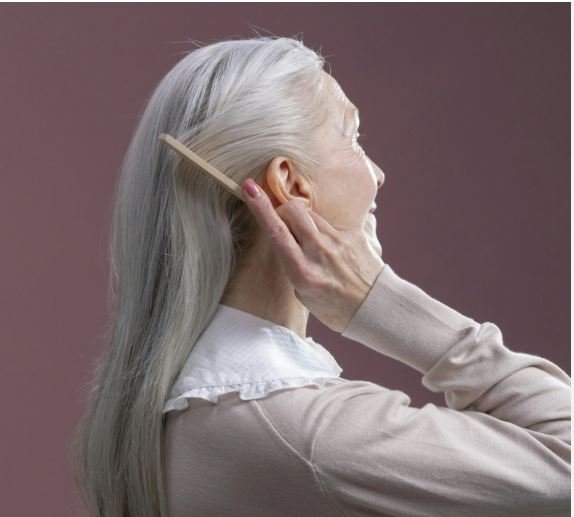
How to Transform Coarse Grey Hair into a Smooth, Luminous Mane
For many, the appearance of the first silver strands marks a significant transition. While “going grey” was once something to be hidden at all costs, the modern era has ushered in the Silver Renaissance. From high-fashion runways to corporate boardrooms, natural silver is a power move. However, there is a distinct difference between “grey hair” and “radiant silver hair.”
Because grey hair lacks the melanin (pigment) that once filled the hair shaft, its structure changes. It often becomes wiry, dry, and prone to dullness. If you’ve noticed your hair feeling more like straw than silk, you aren’t alone. Achieving that glass-like shine requires a specialized approach to hydration, light reflection, and structural integrity.
This guide explores the science of grey hair and the professional-grade strategies you can use to make your silver shine.
Why Grey Hair Changes Texture
To fix the frizz, we first have to understand the biology. When your follicles stop producing melanin, several things happen simultaneously:
- Reduced Sebum Production: As we age, our scalp produces fewer natural oils. This leaves the hair fiber without its built-in lubricant, leading to a rougher cuticle.
- Increased Porosity: Grey hair often has a more “open” cuticle layer. This means it absorbs moisture quickly but loses it just as fast, resulting in a matte, dehydrated appearance.
- Environmental Staining: Without pigment, hair becomes a blank canvas. It easily picks up yellow tones from pollutants, hard water minerals, and even heat styling.
Step 1: The Foundation of Shine – Neutralizing Yellow Tones
The biggest enemy of a “shiny” silver mane is oxidation. When grey hair turns brassy or yellow, it loses its ability to reflect light. Light “sinks” into warm, muddy tones rather than bouncing off cool, clear ones.
The Role of Purple and Blue Pigments
To achieve a mirror-like finish, you must use color theory. Violet sits opposite yellow on the color wheel. Using a purple shampoo or mask once a week neutralizes those dingy yellow hues, restoring the “crisp” white or silver look that looks inherently shinier.
- Pro Tip: Don’t overdo it. Using purple shampoo every day can lead to a “slaty” or over-deposited purple tint. Use it once every 3–4 washes.
Clear Gloss Treatments
If you want instant results, an at-home or salon-grade clear gloss is a game changer. These treatments don’t change the color; they lay down a translucent film that seals the cuticle flat. A flat cuticle is a reflective cuticle.
Step 2: Advanced Hydration Strategies
Because grey hair is naturally more “thirsty,” standard conditioners often fall short. You need to move beyond surface-level softening and focus on lipid replenishment.
1. Pre-Shampoo Treatments
Before you even step into the shower, apply a lightweight oil (like jojoba or camellia oil) to your mid-lengths and ends. This acts as a buffer, preventing the shampoo from stripping away the precious few natural oils your scalp is still producing.
2. The “Squish to Condish” Method
To ensure moisture actually penetrates the wiry grey hair shaft, use the “squish to condish” technique. After applying a deep conditioner, pulse your hair with water in your palms, “squishing” the product into the strands. This forces the moisture into the thirsty cortex of the hair.
3. Deep Conditioning with Proteins and Humectants
Look for ingredients that offer both strength and moisture:
- Keratin or Silk Proteins: To fill in the gaps in the porous cuticle.
- Hyaluronic Acid: To draw moisture from the air into the hair.
- Argan Oil: To provide a protective, light-reflecting seal.
Step 3: Mastering the Wash Cycle
How you wash your hair is just as important as what you use. Grey hair is fragile; treat it like a delicate silk fabric.
- Temperature Matters: Always rinse with cool water. Hot water lifts the hair cuticle, making it look dull and frizzy. Cool water “snaps” the cuticle shut, trapping moisture and creating a smoother surface for light to bounce off.
- The Hard Water Factor: If you live in an area with hard water, minerals like calcium and magnesium are likely building up on your hair, creating a “film” that prevents shine. Consider a shower head filter or a monthly chelating shampoo to strip away mineral buildup.
Step 4: Environmental Protection and Heat Management
Grey hair is essentially “naked” hair. Without melanin, it has no natural defense against UV rays.
UV Protection
Just as the sun bleaches clothes, it “burns” grey hair, turning it yellow and brittle. If you’re spending time outdoors, use a hair-specific UV primer or wear a hat. This prevents the structural degradation that leads to a “fuzzy” texture.
Re-thinking Heat Styling
Grey hair has a lower burning point than pigmented hair. Excessive heat can literally “scorch” the silver, causing permanent yellowing.
- The 150°C Rule: Try to keep your hot tools below 150°C (300°F).
- Ionic Technology: Use a hair dryer with ionic technology. It helps break down water molecules faster, reducing drying time and sealing the cuticle for a frizz-free finish.
Step 5: The “Glass Hair” Styling Routine
To achieve that enviable high-gloss finish, your post-shower routine is where the magic happens. For grey hair, the goal is to create a physical barrier that mimics the smoothness of youthful hair.
1. The Leave-In Layering Technique
Don’t rely on a single product. Start with a water-based leave-in conditioner to hydrate the core, then follow up with a weightless hair oil (like marula or hemisqualane) to lock that moisture in. This “double-bagging” method prevents the air from sucking the hydration out of your silver strands.
2. The Power of Tension
When blow-drying, use a boar bristle brush. Unlike plastic bristles, boar bristles help distribute the scalp’s natural oils down the length of the hair. Use the concentrator nozzle on your dryer and point it downward—from root to tip. This directional airflow flattens the cuticle scales, which is the secret to a mirror-like shine.
3. Finish with a Cold Shot
Most high-quality blow dryers have a “cool shot” button. Use it! Once a section of hair is dry and styled, blast it with cold air for ten seconds. This “sets” the shape and ensures the cuticle stays closed and reflective.
Step 6: Targeted Ingredients for Silver Luster
When reading labels, look for these “holy grail” ingredients specifically beneficial for non-pigmented hair:
| Ingredient | Benefit for Grey Hair |
| Blue Tansy Oil | Naturally calms scalp irritation and provides a subtle, non-staining cooling tone. |
| Rice Protein | Increases hair diameter, making thin silver hair look fuller and more robust. |
| Behentrimonium Chloride | A potent anti-static agent that prevents “flyaway” greys. |
| Squalane | Mimics the hair’s natural lipids to provide shine without a greasy feel. |
Step 7: DIY Remedies for Instant Shine
Sometimes, the best solutions are in your pantry. These two home treatments are particularly effective for “rescuing” dull silver hair.
The Apple Cider Vinegar (ACV) Rinse
The acidity of ACV works perfectly to rebalance the pH of your scalp and hair.
- The Mix: 1 part ACV to 4 parts filtered water.
- The Method: Pour it over your hair after conditioning, let it sit for a minute, and rinse with cold water. It dissolves product buildup and flattens the cuticle instantly.
The Clear Henna (Cassia Obovata) Mask
Often called “neutral henna,” Cassia doesn’t change your hair color but acts as a powerful conditioner. It fills in the structural gaps of the hair shaft, making the hair feel thicker and significantly shinier for up to a month.
Step 8: Internal Health – Shine from Within
You can apply all the serums in the world, but if your body lacks the building blocks of healthy hair, the results will be temporary.
- Omega-3 Fatty Acids: Found in walnuts, flaxseeds, and salmon, these healthy fats lubricate the hair from the inside out, improving the “slip” of your strands.
- Silica and Biotin: These supplements support the strength of the hair matrix, preventing the brittleness that often accompanies grey hair.
- Hydration: It sounds cliché, but chronic dehydration shows up in your hair first. Drink plenty of water to keep the hair bulb hydrated.
Step 9: The Role of the Professional Cut
The way your hair is cut significantly impacts how it reflects light.
- Blunt Edges: A blunt cut creates a solid surface area, which reflects more light than heavily layered or “shattered” ends. If shine is your priority, opt for a bob or a blunt long cut.
- Regular Trims: Grey hair is prone to splitting. Once a hair fiber splits, light scatters in different directions, making the hair look frizzy. A trim every 6–8 weeks is non-negotiable for the “liquid silver” look.
Conclusion: Embracing the Radiance
Making grey hair shiny and smooth isn’t about fighting your natural texture—it’s about understanding its new requirements. By shifting your focus from “covering” to “polishing,” you transform your silver from a sign of aging into a high-definition style statement.
The transition to grey is a journey toward authenticity. With the right moisture balance, heat protection, and toning routine, your hair won’t just look “good for its age”—it will be the most luminous, sophisticated version of itself.
Summary Checklist for Silver Shine:
- [ ] Use a purple toning product weekly to keep silver “crisp.”
- [ ] Wash with cool water to seal the cuticle.
- [ ] Apply a heat protectant before every styling session.
- [ ] Incorporate a weekly deep-conditioning lipid mask.
- [ ] Get regular blunt trims to maximize light reflection.
Your silver is a crown; it’s time to make sure it sparkles.