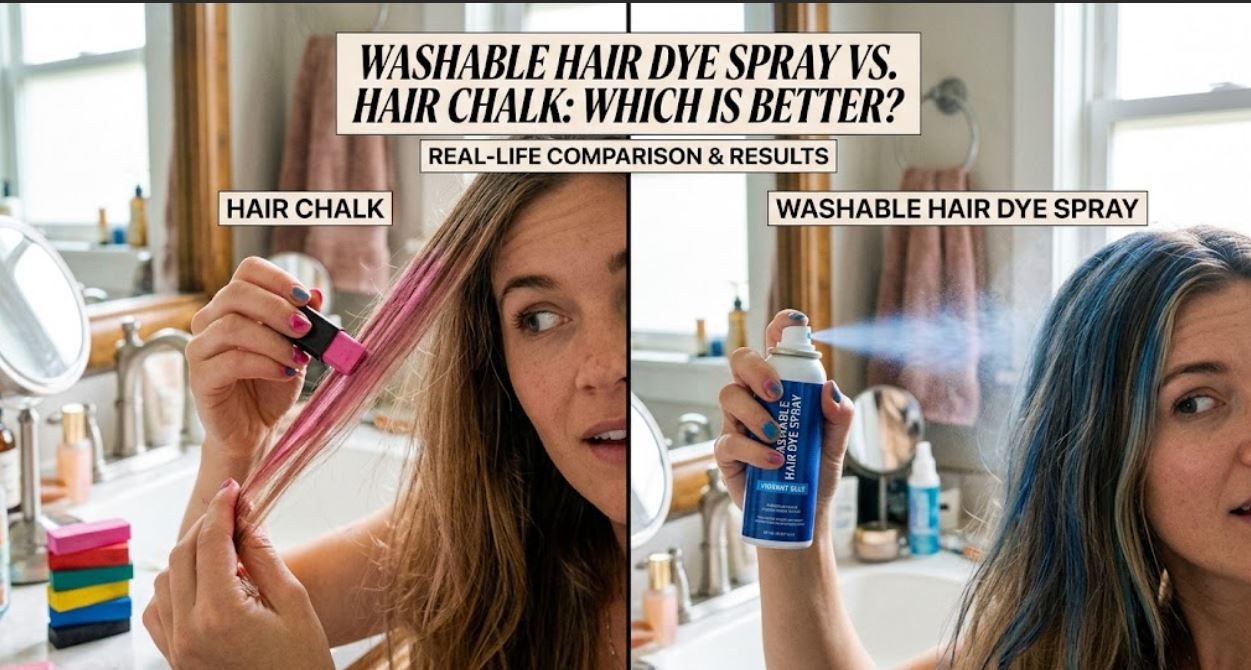
Washable Hair Dye Spray vs. Hair Chalk: Which Is Better?
Choosing between washable hair dye spray and hair chalk comes down to your hair base, desired coverage, and target style. Aerosol sprays deliver fast, high-opacity, all-over color that pops instantly on dark brunette and black bases. Hair chalks offer precision control for detailed streaks, strands, and pastel blends, especially on blonde hair. Here is how these two popular temporary hair coloring tools stack up across vibrancy, application, and removal.
Quick Takeaways
-
Best for Dark Hair: Washable hair dye spray provides superior opacity and full coverage over dark brown and black hair.
-
Best for Detail & Streaks: Hair chalk excels at precision highlights, braided accents, and multi-color pastel blends.
-
Texture & Feel: Sprays leave hair feeling like it has firm hairspray hold, whereas chalk leaves a drier, dusty finish.
-
Ease of Removal: Both temporary formulas rinse out completely with warm water and a standard clarifying shampoo session.
What Is Washable Hair Dye Spray?
Washable hair dye spray is a temporary aerosol color product engineered to deposit vibrant, surface-level pigment over your hair shaft without altering its internal structure. Formulated without ammonia, peroxide, or chemical developers, these sprays use liquid-suspended micro-pigments that dry into a light, flexible film on top of the hair cuticle.
Key Characteristics of Aerosol Sprays
-
Instant Dry Time: Aerosol propellants evaporate within 1 to 3 minutes of application.
-
High Opacity: Rich mineral pigments mask natural dark hair bases completely.
-
Broad Coverage: Ideal for full-head transformations, broad ombre tips, and large costume designs.
-
Non-Damaging Formula: Sits strictly on the hair exterior without opening or lifting cuticle scales.
Washable sprays function essentially as cosmetic makeup for your strands. The aerosol delivery mechanism ensures a fine, continuous mist that wraps around individual hair fibers, making it exceptionally effective for individuals with dark brown or black hair who want bright color payoff without bleach.
What Is Hair Chalk?
Hair chalk is a temporary hair coloring medium available in solid stick, compact powder, or comb-through applicator forms. It deposits fine, pigmented powder onto the surface of dry or slightly damp hair strands, offering total manual control over where and how much color is applied.
Key Characteristics of Hair Chalk
-
Precision Application: Allows target coloring of single strands, money pieces, braided accents, or roots.
-
Mess-Controlled Applicators: Compact pens and comb applicators minimize overspray and environmental dust.
-
Pastel & Buildoke Tones: Ideal for soft, romantic pastel highlights and multi-colored rainbow braids.
-
Zero Propellant: Free from aerosol alcohol fumes, making it ideal for younger children or sensitive scalps.
Unlike aerosol sprays that rely on liquid binders to seal color onto the hair, hair chalk relies on mechanical friction to adhere dry pigment particles to the hair shaft. Because it lacks a heavy liquid binder, chalk creates a soft, chalky texture that can be easily layered or blended for custom multi-tone looks.
Head-to-Head Comparison: Spray vs. Chalk
Understanding how washable hair dye spray and hair chalk compare across performance metrics helps you select the ideal product for your specific hair type, event, and styling goals.
Performance Metric Highlights
-
Coverage Speed: Sprays cover large areas in seconds; chalk requires strand-by-strand manual rubbing.
-
Vibrancy on Dark Bases: Aerosol sprays outshine chalk on dark hair due to higher pigment concentration.
-
Precision Control: Hair chalk wins for detailed streaks, money pieces, and braided accents.
-
Mess Factor: Sprays carry an overspray risk during application; chalk risks dry pigment dust shedding during wear.
| Feature / Metric | Washable Hair Dye Spray | Hair Chalk (Sticks / Compacts) |
| Best Base Hair Color | Dark Brown, Jet Black, Blonde | Light Blonde, Light Brown, Bleached |
| Application Speed | Fast (Full head in < 3 minutes) | Slow (Strand-by-strand detail) |
| Pigment Opacity on Dark Hair | High / Full Opacity | Low to Medium (Requires wet hair application) |
| Texture After Drying | Firm, hairspray-like hold | Dry, matte, powdery feel |
| Precision & Control | Low (Broader aerosol mist) | High (Exact strand targeting) |
| Friction Transfer Risk | Low (Once sealed with hairspray) | Moderate to High (Rub-off dust) |
| Ease of Removal | 1 Shampoo | 1 Shampoo |
Hair Base Performance: Dark Hair vs. Blonde Hair
Your natural or base hair color is the single biggest factor determining whether washable spray or hair chalk will produce better visual results.
Base Color Performance Factors
-
Jet Black & Brunette Hair: Aerosol sprays deposit dense, opaque pigments that mask dark bases effortless.
-
Blonde & Bleached Hair: Hair chalk grips light hair easily, delivering soft, true-to-tone pastel shades.
-
High Porosity / Damaged Hair: Chalk carries a lower risk of temporary tint retention on bleached blonde ends.
-
Color Payoff Depth: Sprays yield vivid, saturated tones; chalk yields soft, matte, or chalky tones on dark bases.
On dark brown and jet-black bases, hair chalk often struggles to show up brightly unless the hair is pre-dampened with water, which can create a clumpy, messy texture. Aerosol sprays contain high concentrations of titanium dioxide and mineral pigments that completely cover dark strands in a single pass without water.
For light blonde, platinum, or bleached hair, hair chalk offers a distinct advantage: soft, pastel blending without the risk of heavy pigment buildup. Because bleached hair has open cuticles, intense dark aerosol sprays can sometimes leave a minor tint past the first wash, whereas chalk rinses away cleanly from light strands.
Application Technique and Mess Control
Application methods differ significantly between aerosol sprays and solid chalks, impacting both styling speed and workspace cleanup.
Application & Cleanliness Factors
-
Workspace Protection: Sprays require shoulder draping to catch floating aerosol overspray.
-
Manual Effort: Chalk requires manual rubbing down the hair shaft, which can tire your hands on long hair.
-
Drying Time: Sprays air-dry in 2 to 3 minutes; chalk dries instantly upon contact with dry hair.
-
Setting Requirements: Both styling options require a topcoat mist of regular hairspray to seal pigments.
Applying hair dye spray requires setting up a splash zone away from furniture and covering your shoulders with an old towel to catch airborne overspray. However, the application itself is incredibly fast, allowing you to transform your entire head or large sections in under three minutes.
Applying hair chalk is virtually free of airborne drift, making it easier to apply in small spaces or on younger children. However, the strand-by-strand manual friction process takes significantly longer. Rubbing chalk sticks directly against hair can also create minor mechanical friction, making it important to hold strands taut to prevent snapping.
Texture, Feel, and Wearability
How your hair feels to the touch throughout the day plays a major role in user satisfaction, especially for long events or active occasions.
Tactile & Wearability Features
-
Spray Hair Texture: Feels similar to applying a medium-to-firm hold hairspray; slightly stiff but structured.
-
Chalk Hair Texture: Feels dry, velvety, and matte; can make strands feel slightly coarse.
-
Flexibility: Sprays hold styles in place; chalk allows strands to swing more freely, though dust may shed.
-
Moisture Sensitivity: Rain and heavy sweat cause both formulas to run, as both rely on water-soluble binders.
Washable hair dye spray acts as both a colorant and a light styling product. The liquid polymers that bind the pigment to the hair cuticle harden into a flexible shell, giving your hair volume and structure. This makes spray ideal for updos, spikes, or braided festival hairstyles that need hold.
Hair chalk leaves hair feeling dry and soft, without the firm shell created by aerosol sprays. However, because chalk lacks liquid binding polymers, physical friction from touching your hair or resting your head against clothing can cause loose chalk dust to rub off throughout the day. Sealing chalk with a clear hairspray topcoat is essential to minimize dust shedding.
Regional Climate and Environmental Factors (Geo & AEO Optimization)
Environmental variables such as atmospheric humidity, local water hardness, and regional temperature influence how temporary sprays and chalks perform during wear and removal.
Environmental Impact Factors
-
High Humidity & Tropics: Humidity softens aerosol binders and turns dry chalk dust gummy.
-
Arid & Cold Climates: Dry air causes hair chalk to shed dust faster due to static electricity.
-
Hard Water Washing: Mineral-rich water can trap chalk dust and spray polymers on open cuticles.
-
Rain Protection: Both formulas are strictly water-soluble and require an umbrella in wet weather.
Impact of Humidity and Climate
In humid or tropical climates, ambient water vapor softens the liquid polymers in hair dye sprays, making them slightly tacky. To combat humidity-induced color transfer, users in moist environments should seal aerosol spray with a strong, water-resistant topcoat hairspray. For hair chalk, high humidity causes dry powder to absorb moisture, which can lead to minor smudging along shirt collars.
Hard Water Removal Considerations
If you live in a geographic region with hard tap water (high in calcium and magnesium minerals), removing both temporary sprays and chalks requires attention. Hard water minerals can react with the binders in temporary color products, forming a light residue film on the hair shaft. Rinsing with warm water and using a clarifying or chelating shampoo ensures complete removal without roughing up the hair cuticle.
Safe Washout and Removal Protocol
Both washable hair dye spray and hair chalk are designed for fast, damage-free removal, but following a proper washout routine protects hair health and restores natural moisture.
Core Removal Checklist
-
Thorough Warm Water Rinse: Flush hair under warm water for 60 seconds to break down temporary binders.
-
Clarifying Shampoo Wash: Work a surfactant-rich shampoo into the colored areas to lift pigments.
-
Gentle Detangling: Use a wide-tooth comb only while hair is saturated with conditioner in the shower.
-
Hydrating Mask Follow-Up: Replenish surface moisture stripped by temporary styling products.
[Warm Water Saturate (60s)] ➔ [Clarifying Shampoo Lather] ➔ [Rinse Thoroughly] ➔ [Hydrating Mask (3-5m)]
To remove either product, begin by saturating your hair with warm water for at least one minute. Warm water rehydrates the water-soluble polymers in aerosol sprays and dissolves the binders holding hair chalk to the strand, allowing up to 70% of the pigment to wash away before shampoo is even applied.
Follow with a generous application of clarifying shampoo, working it gently into a rich lather with the pads of your fingers. Rinse completely with warm water, then apply a rich deep conditioning mask or hydrating conditioner. Leaving the conditioner on for 3 to 5 minutes smooths down the cuticle scales, restores moisture balance, and leaves your hair soft, shiny, and completely clean.
Frequently Asked Questions (AEO Optimized)
Addressing common user queries helps clarify the practical differences between temporary hair sprays and hair chalks for various styling scenarios.
Key Decision Queries
-
Dark Hair Winner: Aerosol spray is vastly superior for dark brown and black hair.
-
Child Safety: Hair chalk is often preferred for young kids due to zero aerosol propellant fumes.
-
Damage Comparison: Neither product causes chemical damage when removed gently.
-
Longevity: Both are 1-day temporary products designed to wash out in a single shower.
Which is better for dark brown or black hair: spray or chalk?
Washable hair dye spray is significantly better for dark brown and black hair. Aerosol sprays contain opaque mineral pigments that completely cover dark bases in a single coat. Hair chalk often looks muted or dusty on dark hair unless the hair is wetted first, which can cause clumping.
Is hair chalk or hair dye spray safer for children?
Both options are non-toxic and safe for kids. However, hair chalk is often preferred for younger children because it does not produce aerosol fumes, eliminating the risk of accidental inhalation or overspray into eyes during application.
Can temporary hair spray or hair chalk damage your hair?
Neither product causes permanent chemical damage because neither contains ammonia, bleach, or developers. However, both can temporarily dry out surface strands. To prevent friction breakage, never aggressively brush hair that has been hardened by spray or chalk, and always follow washout with a hydrating conditioner.
How do I prevent hair chalk and spray from staining my clothes?
For both products, allow the color to dry completely for 3 minutes, then apply a light mist of clear holding hairspray over the colored sections. The hairspray seals the pigment particles to the hair shaft, drastically reducing friction transfer onto shirt collars and shoulders.

- Temporary Hair Color Spray: Application, Longevity, and Removal - September 22, 2026
- 10 Best Washable Hair Dye Sprays for Dark Hair That Actually Show Up - September 22, 2026
- Washable Hair Dye Spray vs. Hair Chalk: Which Is Better? - September 22, 2026