5 Best Hair Straighteners for Damaged Hair: Low-Heat Picks
The best hair straighteners for damaged hair use controllable low heat, even-heating plates, and smooth-gliding designs to reduce unnecessary stress on fragile strands.
Look for ceramic or tourmaline plates, adjustable temperature settings, and floating plates that help reduce pulling and repeated passes.
For fine or damaged hair, lower heat is generally preferable to high temperatures because excessive heat can contribute to dryness, brittleness, and breakage.
The top options include the GHD Platinum+, Cloud Nine Original Iron, Bio Ionic 10X Pro, Remington Shine Therapy 2-Inch Flat Iron, and MiroPure 1-Inch Flat Iron. Your ideal choice depends on how damaged your hair is, its thickness and length, and how much temperature control you need.
Here are the five product reviews, written to fit directly after your previous sections. I’ve kept the focus on damaged hair, low-heat control, plate technology, fewer passes, and who each straightener is best for.
1. GHD Platinum+ Styler — Best Overall for Damaged Hair

The GHD Platinum+ Styler is a strong overall choice for damaged, fine, or color-treated hair because it focuses on consistent heat rather than simply offering extremely high temperatures. Its Ultra-Zone predictive technology monitors the temperature 250 times per second and maintains the plates at the brand’s stated optimum styling temperature of 185°C (365°F). The tool also uses precision-milled floating plates designed for smooth, controlled passes. (ghd)
Why Is the GHD Platinum+ Good for Damaged Hair?
The main advantage is consistent heat distribution. Instead of relying on a high temperature to straighten hair quickly, the Platinum+ is designed to maintain its target temperature as you style. This can make it easier to avoid unnecessary heat spikes and repeated passes.
Its floating plates also help the tool glide smoothly through each section. GHD says the predictive technology responds to hair thickness and styling speed, while its sensors continuously monitor heat across the plates. (ghd)
Key Features
| Feature | GHD Platinum+ |
|---|---|
| Best for | Damaged, fine, and color-treated hair |
| Temperature | 185°C / 365°F |
| Plate type | Precision-milled floating plates |
| Heat technology | Ultra-Zone predictive technology |
| Heat monitoring | 250 times per second |
| Heat-up time | About 20 seconds |
| Auto shut-off | 30-minute sleep mode |
Pros
- Consistent heat control
- Smooth floating plates
- Designed for one-stroke styling
- Works for straightening, waves, and curls
- Universal voltage
Cons
- Fixed 185°C styling temperature rather than a broad manual temperature range
- Premium price
Best for: People with damaged or color-treated hair who prioritize consistent heat and smooth styling over extensive manual temperature adjustment.
2. Cloud Nine Original Iron — Best for Very Low Heat
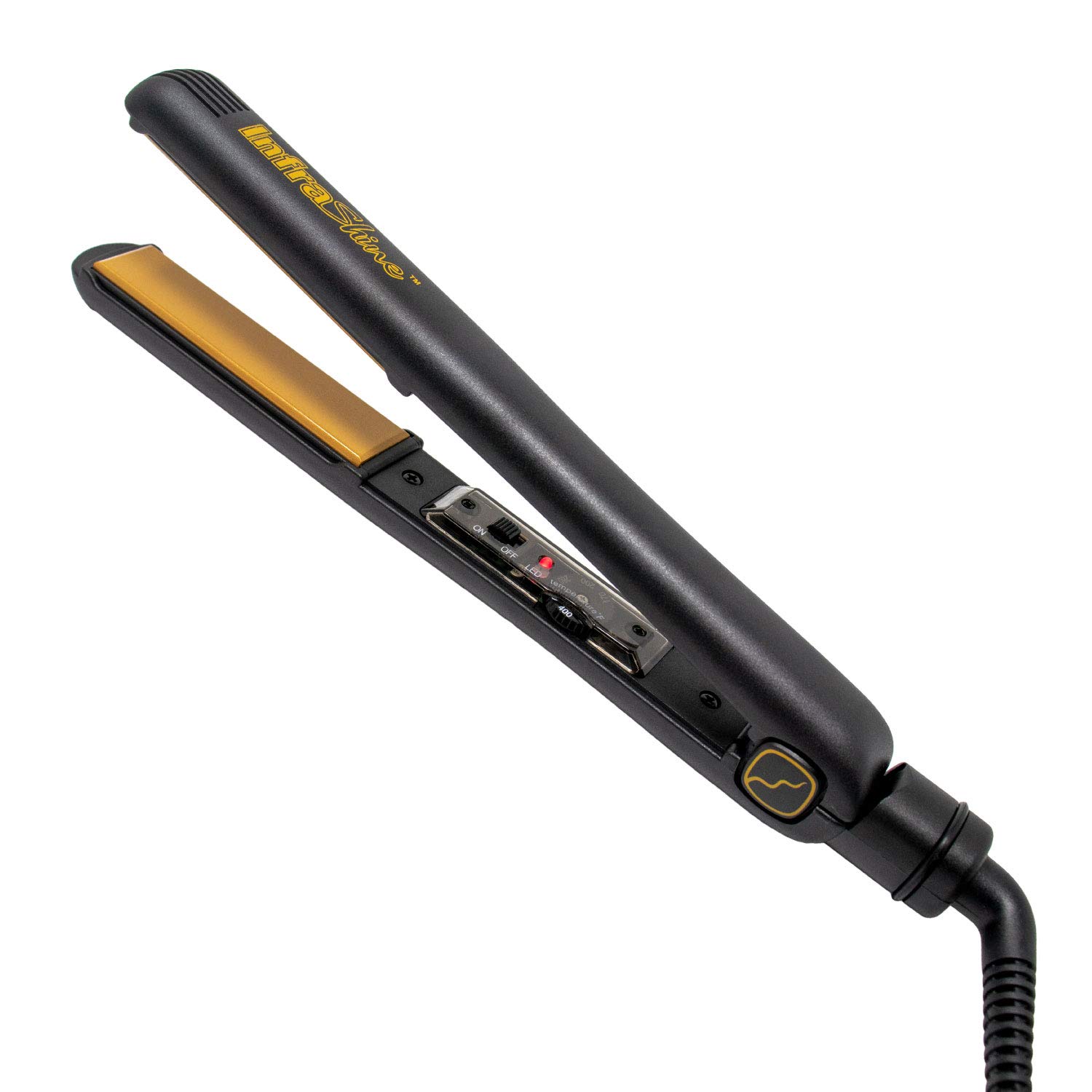
The Cloud Nine Original Iron stands out for damaged hair because it offers a genuinely broad low-temperature range. The current model has 11 heat settings from 100°C to 200°C, giving you much more control than a straightener that starts at a higher temperature. It also includes Revive Mode, which is designed to reduce pressure during styling.
Why Is the Cloud Nine Original Good for Damaged Hair?
For fragile hair, having the ability to start at 100°C (212°F) can be useful when you want to test the lowest effective temperature first. You can gradually increase the heat only if your hair needs more power.
The Original Iron also uses 1-inch Sericite-infused styling plates and heats up in approximately 20 seconds. Its digital display makes the selected temperature easy to monitor while styling.
Key Features
| Feature | Cloud Nine Original Iron |
|---|---|
| Best for | Fine, fragile, and damaged hair |
| Temperature range | 100–200°C |
| Heat settings | 11 |
| Plate size | 1 inch |
| Plate technology | Sericite-infused plates |
| Heat-up time | 20 seconds |
| Extra feature | Revive Mode |
| Auto protection | Hibernation after 30 minutes |
Pros
- Excellent low-temperature range
- Precise temperature adjustment
- Pressure-reducing Revive Mode
- Suitable for different hair types
- 1-inch plates are versatile
Cons
- Premium price
- Lower temperatures may require more passes on very thick hair
Best for: Fine, fragile, bleached, or damaged hair where precise low-temperature control is the highest priority.
3. Bio Ionic 10X Styling Iron — Best for Fewer Passes

The Bio Ionic 10X Styling Iron is designed around smooth, low-friction styling. Its sonic vibrating plates help the hair glide through the tool, while the curved design allows you to create both straight styles and waves. Bio Ionic also provides adjustable heat settings, with temperatures reaching up to 450°F.
Why Is the Bio Ionic 10X Good for Damaged Hair?
One of the biggest concerns when straightening damaged hair is repeatedly applying heat to the same section. The 10X is designed to minimize friction and improve the glide of each pass. Bio Ionic says its sonic vibrating plates help reduce friction and provide a smoother pass. (Bio Ionic)
The tool also uses an Ion Generating Mineral Complex and offers adjustable heat, so you can select a lower setting rather than automatically using its maximum temperature.
Key Features
| Feature | Bio Ionic 10X |
|---|---|
| Best for | Damaged, thick, curly, or frizzy hair |
| Plate technology | Sonic vibrating plates |
| Heat | Adjustable |
| Maximum temperature | 450°F |
| Heat-up time | 60 seconds |
| Main benefit | Reduced friction and smoother passes |
| Extra features | Memory function, auto shut-off |
Pros
- Smooth, low-friction glide
- Sonic vibrating plate technology
- Adjustable temperature
- Suitable for thick and textured hair
- Can create straight styles and waves
Cons
- Expensive
- Maximum temperature is much higher than needed for damaged hair
Best for: Damaged hair that takes multiple passes to straighten, particularly thick, curly, or textured hair. Use the lowest effective temperature rather than its maximum setting.
4. Remington Shine Therapy 2-Inch Flat Iron — Best for Long or Thick Damaged Hair

The Remington Shine Therapy 2-Inch Flat Iron with Argan & Keratin is a practical choice when you have long or thick hair and want to cover more hair with each pass. The uploaded source describes its 2-inch plates, advanced ceramic construction, argan oil and keratin infusion, floating plates, and adjustable heat.
Why Is the Remington Shine Therapy Good for Damaged Hair?
Its wider plates can cover more surface area, which may help reduce the number of sections needed when styling long or thick hair. The floating plate design is intended to provide a smoother glide, while the ceramic surface is designed for even heat distribution.
The source also highlights its micro-conditioner technology and claims up to 50% more shine. These features are primarily focused on the appearance and feel of the finished style rather than actually repairing damaged hair.
Key Features
| Feature | Remington Shine Therapy 2-Inch |
|---|---|
| Best for | Long and thick hair |
| Plate width | 2 inches |
| Plate material | Advanced ceramic |
| Infusion | Argan oil + keratin |
| Plate design | Floating |
| Heat | Adjustable |
| Main benefit | Wide coverage and smooth glide |
Pros
- Wide 2-inch plates
- Ceramic heat distribution
- Floating plate design
- Argan oil and keratin infusion
- Good for long or thick hair
Cons
- Wide plates are less precise for short hair
- Not ideal for detailed styling around bangs or short layers
Best for: Long, thick, or coarse hair that is already damaged and needs efficient styling without repeatedly going over small sections.
5. MiroPure 1-Inch Flat Iron & Curler — Best Value

The MiroPure 1-Inch Flat Iron & Curler is a versatile option for people who want adjustable heat and the ability to straighten or curl their hair with one tool. The uploaded source lists a temperature range of 80°C to 230°C (176°F to 445°F), 3D floating ceramic plates, a 30-second heat-up time, and automatic shut-off after 60 minutes.
Why Is the MiroPure Good for Damaged Hair?
Its wide temperature range allows you to start at a lower setting rather than immediately exposing damaged hair to high heat. The 3D floating ceramic plates are designed to glide through the hair while reducing pulling and snagging.
For fragile hair, the key is to use the lower portion of its temperature range. The maximum 230°C setting is unnecessary for most damaged hair, so its value comes primarily from its adjustability and versatility.
Key Features
| Feature | MiroPure 1-Inch |
|---|---|
| Best for | Versatile everyday styling |
| Plate width | 1 inch |
| Plate type | 3D floating ceramic |
| Temperature range | 80–230°C |
| Heat-up time | About 30 seconds |
| Functions | Straightener + curler |
| Auto shut-off | 60 minutes |
| Cord | 360° swivel |
Pros
- Very broad temperature range
- Low-temperature option
- Floating ceramic plates
- Straightens and curls
- Auto shut-off
- Versatile 1-inch design
Cons
- Maximum temperature is much higher than needed for damaged hair
- Smaller plates may take longer on very thick hair
Best for: Budget-conscious users who want one adjustable-temperature tool for straightening, curling, and occasional low-heat styling.
What Is the Best Hair Straightener for Damaged Hair?
The best hair straightener for damaged hair is one that lets you use the lowest effective temperature while delivering smooth results with as few passes as possible. A good tool should distribute heat evenly instead of creating concentrated hot spots and should glide through the hair without excessive pulling.
For severely damaged or fine hair, precise temperature control is especially useful because you can avoid unnecessarily high settings. Ceramic plates are also a practical choice because they are designed to distribute heat evenly, while floating plates can help maintain smoother contact as you move through each section.
What Temperature Is Safest for Damaged Hair?
There is no single temperature that is safe for every damaged hair type. Fine, fragile, bleached, or over-processed hair generally needs less heat than thick or coarse hair. Start with the lowest setting that can straighten your hair effectively and increase it only when necessary.
The source material recommends around 250–300°F (121–149°C) for fine or damaged hair, while thicker or coarser hair may require a higher setting. The important principle is to match the temperature to the hair rather than automatically using the highest setting.
Why Does Low Heat Matter for Damaged Hair?
High heat can contribute to moisture loss, dryness, brittleness, and cuticle damage. Using a lower temperature can reduce unnecessary thermal exposure, especially when combined with fewer passes over each section.
Low-heat styling can also help preserve the hair’s appearance by reducing the conditions that contribute to frizz and breakage. However, a low-heat straightener does not make heat styling completely risk-free.
Can a Hair Straightener Repair Damaged Hair?
No. A hair straightener cannot repair structurally damaged hair. Its purpose is to style the hair while minimizing additional stress.
If hair is already dry, brittle, bleached, or over-processed, focus on reducing heat exposure, using a heat protectant, conditioning regularly, and avoiding repeated passes. A gentle straightener can help you maintain a polished style without relying on unnecessarily high temperatures.
What Should You Look for in a Straightener for Damaged Hair?
When choosing a straightener for damaged hair, prioritize temperature control, even heat distribution, smooth plates, appropriate plate width, and minimal-pass performance. These features can make a bigger difference than simply choosing the straightener with the highest maximum temperature.
Adjustable Temperature Control
Temperature control allows you to select a setting appropriate for your hair instead of being locked into one heat level. This is particularly important for fine, color-treated, bleached, or damaged hair.
A useful straightener should provide enough adjustment to start low and increase the temperature only when your hair requires it.
Ceramic or Tourmaline Plates
Ceramic plates are a strong option for damaged hair because they are designed to distribute heat more evenly. Even heating can help reduce concentrated hot spots during styling.
Tourmaline is another commonly used plate material in hair-styling tools and is associated with smoother, less frizzy results. For damaged hair, however, the overall heat control and styling technique remain more important than the material name alone.
Floating Plates
Floating plates can move slightly as they pass over the hair. This helps the plates maintain contact without requiring excessive pressure, which can make the tool glide more smoothly.
A smoother glide can also reduce pulling and snagging, particularly when working with fragile sections.
Plate Width and Hair Length
Plate width should match your hair length and styling needs:
- 0.5–1 inch: Better for short hair, bangs, layers, and precision styling.
- 1 inch: A versatile choice for most everyday styling.
- 1.5–2 inches: Useful for long or thick hair because larger sections can be covered more quickly.
The uploaded source similarly highlights plate size as an important factor, noting that narrower plates are useful for short hair and curls, while wider plates can cover more surface area on long or thick hair.
One-Pass Performance
A straightener that produces a smooth result in one or two passes can be preferable for damaged hair. Repeatedly applying heat to the same section increases overall heat exposure.
For this reason, look beyond maximum temperature and consider how effectively the tool straightens at a lower setting. The goal is effective styling with minimal heat exposure, not simply faster styling at maximum heat.
Here are the next four H2 sections, keeping the article focused on AEO/GEO and adding one H3 with bullet points under each.
How Do Low-Heat Hair Straighteners Benefit Damaged Hair?
Low-heat hair straighteners can help reduce additional stress on fragile strands by limiting excessive thermal exposure. They are especially useful when combined with even-heating plates, heat protection, and fewer passes over each section.
What Are the Main Benefits?
- Less heat exposure: Lower temperatures can reduce unnecessary thermal stress.
- Better moisture retention: Gentler styling may help reduce excessive dryness.
- Less breakage risk: Avoiding very high heat can help protect fragile strands.
- Smoother results: Ceramic plates can provide more even heat distribution.
- Fewer touch-ups: Effective styling can reduce the need to repeatedly straighten the same sections.
Which Hair Types Benefit Most From Low-Heat Straightening?
Low-heat styling is particularly useful for hair that is fine, chemically treated, color-treated, or already weakened. However, thick hair can also benefit when the goal is to minimize cumulative heat exposure.
Which Hair Types Should Use Extra Care?
- Fine hair: More vulnerable to excessive heat and breakage.
- Bleached hair: Often needs gentler styling because chemical processing can weaken strands.
- Color-treated hair: Lower heat can help reduce additional stress on treated hair.
- Curly or textured hair: Can benefit from controlled heat and fewer passes.
- Damaged or over-processed hair: Requires careful temperature selection to avoid adding further damage.
- Thick hair: May need more sections rather than simply increasing the temperature.
The source material specifically identifies fine, color-treated, curly, damaged/over-processed, and thick hair as hair types that can benefit from low-heat styling.
How Do You Straighten Damaged Hair Without Causing More Damage?
Using the right straightener is only part of protecting damaged hair. Your technique also determines how much heat your hair receives during each styling session.
What Is the Safest Way to Use a Flat Iron?
- Start with completely dry hair: Do not use a flat iron on wet or damp hair.
- Apply heat protectant: Use a heat-protective product before applying direct heat.
- Divide hair into sections: Smaller sections allow more controlled styling.
- Choose the lowest effective temperature: Increase the heat only when necessary.
- Limit passes: Aim to straighten each section with as few passes as possible.
- Keep the iron moving: Do not hold the heated plates in one place.
- Avoid daily heat styling: Give damaged hair regular breaks from direct heat.
These practices align with the source’s recommendations to use heat protectant, section the hair, limit passes, keep the straightener moving, and only use it on completely dry hair.
How Should You Choose the Right Low-Heat Straightener?
The right straightener depends on your hair’s condition, thickness, length, and styling needs. A tool with excellent temperature control may be more useful for fine damaged hair, while wider plates can make styling long or thick hair more efficient.
Which Features Matter Most?
- Temperature range: Choose a model that allows you to use the lowest effective heat.
- Plate material: Ceramic plates can help provide consistent heat distribution.
- Floating plates: Look for plates that glide smoothly without excessive pulling.
- Plate width: Match the width to your hair length and thickness.
- Heat-up time: Faster heating can make styling more convenient.
- Ergonomic design: A comfortable tool is easier to control during styling.
- Safety features: Automatic shut-off provides an additional safety benefit.
For damaged hair, prioritize temperature control and smooth, efficient styling over maximum heat. The source also highlights temperature range, plate material, size, heat-up time, ergonomics, and safety features as important buying factors.
How Do Low-Heat Hair Straighteners Benefit Damaged Hair?
Low-heat hair straighteners are designed to style the hair while reducing unnecessary exposure to high temperatures. For damaged, fine, or chemically treated hair, choosing a lower effective temperature can help limit additional dryness and brittleness. The benefit becomes greater when the straightener also provides even heat distribution and smooth plate movement.
Can Low Heat Help Reduce Hair Damage?
Using lower heat can reduce the amount of thermal stress placed on the hair cuticle. High temperatures can contribute to moisture loss, dryness, and breakage, while controlled heat allows you to straighten the hair without automatically relying on excessive temperatures.
However, low heat does not make a straightener completely damage-free. The overall result also depends on how often you straighten your hair, whether you use heat protectant, and how many times you pass the tool over each section.
Does Low Heat Help Hair Retain Moisture?
Lower-temperature styling can help minimize excessive moisture loss compared with unnecessary high-heat exposure. This is particularly useful for hair that already feels dry, brittle, or rough from bleaching, coloring, or frequent heat styling.
For the best results, combine a low-heat straightener with regular conditioning and avoid repeatedly applying heat to the same section.
Can Low Heat Reduce Frizz?
A low-heat straightener can create a smoother appearance without requiring maximum heat. Ceramic plates may also help distribute heat more evenly, which can make styling more consistent and reduce the need for repeated passes.
The source material notes that lower-heat styling can help maintain moisture and create smoother-looking hair while reducing excessive heat exposure.
Which Hair Types Benefit Most From Low-Heat Straightening?
Low-heat straightening is especially useful for hair that is naturally delicate or has already been weakened by chemical treatments and frequent styling. Choosing the right temperature for your specific hair type is more important than simply choosing the hottest setting available.
Is Low Heat Good for Fine Hair?
Fine hair generally benefits from a gentler approach because individual strands are more delicate. Start with a low temperature and increase it only if the hair does not straighten effectively. Using smaller sections can also help you achieve a smooth result without repeatedly passing the straightener over the same area.
Is Low Heat Good for Bleached or Color-Treated Hair?
Bleached and color-treated hair can be more vulnerable to dryness and breakage. A lower effective temperature can help reduce additional thermal stress while allowing you to maintain a polished style. Heat protectant is especially important when using direct heat on chemically treated hair.
Is Low Heat Suitable for Curly or Textured Hair?
Curly and textured hair can benefit from controlled heat when the goal is to temporarily create a straighter or smoother finish. Instead of immediately selecting a very high temperature, work in manageable sections and use the lowest setting that produces the desired result.
What About Thick or Coarse Hair?
Thick hair may require more styling time, but increasing the temperature is not always the best solution. Sectioning the hair properly and using a straightener with efficient heat distribution can help reduce the number of passes needed. The source identifies thick hair as another hair type that can benefit from low-heat styling when avoiding long-term heat damage is a priority.
How Do You Straighten Damaged Hair Without Causing More Damage?
The safest approach is to combine a suitable low-heat straightener with careful preparation and controlled styling technique. Even an advanced straightener can contribute to damage if it is repeatedly used at high temperatures or held on the same section for too long.
What Should You Do Before Straightening?
Start with completely dry hair and apply a suitable heat protectant before using the flat iron. Divide your hair into manageable sections so that the plates can work efficiently without requiring repeated passes.
The source specifically recommends using heat protectant, sectioning the hair, and making sure the hair is completely dry before straightening.
How Many Times Should You Pass a Flat Iron Over Hair?
Try to use as few passes as possible on each section. If you need several passes to achieve the desired result, consider whether the section is too large or whether your temperature is too low for your specific hair type.
The goal is not simply to use the lowest temperature possible. Instead, use the lowest effective temperature that can straighten the section efficiently.
Should You Keep the Straightener Moving?
Yes. Move the straightener steadily from the roots toward the ends instead of holding the heated plates in one position. Keeping the tool moving helps prevent prolonged heat exposure on a single area of hair.
Avoid rushing through large sections because this can lead to uneven results and encourage repeated passes.
Can You Straighten Damaged Hair Every Day?
Daily straightening is not ideal for already damaged hair because repeated heat exposure can add cumulative stress. Giving your hair breaks between heat-styling sessions can help reduce overall exposure.
On non-styling days, consider wearing your natural texture or using a heat-free hairstyle. Regular conditioning can also help maintain softness and manageability.
How Should You Choose the Right Low-Heat Straightener?
Choosing the right low-heat straightener comes down to matching the tool’s temperature control, plate design, and size with your hair’s condition and styling needs. For damaged hair, features that help you control and minimize heat exposure are generally more important than a very high maximum temperature.
Why Is Temperature Control Important?
Temperature control lets you adjust the heat according to your hair type. Fine or damaged hair can start at a lower setting, while thicker hair may require a gradual increase. This flexibility helps prevent using more heat than necessary.
Are Ceramic Plates Better for Damaged Hair?
Ceramic plates are commonly preferred for gentle styling because they are designed to distribute heat evenly. More consistent heating can help reduce hot spots and make each pass more predictable.
The source identifies ceramic as a useful plate material for low-heat styling because of its even heat distribution, while tourmaline is associated with smoother, less frizzy results.
Do Floating Plates Matter?
Floating plates can help the straightener adapt to the hair as you move through each section. This can create a smoother glide and reduce the amount of pressure needed during styling.
For fragile hair, a smooth glide is useful because unnecessary pulling or snagging can add mechanical stress to already weakened strands.
What Plate Width Should You Choose?
Choose the plate width according to your hair length and thickness. Narrow plates are useful for short hair, bangs, and detailed styling, while wider plates can cover more surface area on long or thick hair.
A 1-inch straightener is generally a versatile middle ground, while 2-inch plates can make styling longer or thicker hair more efficient. The source also highlights plate size as an important factor when selecting a straightener.
Which Features Matter Most?
For damaged hair, prioritize these features:
- Adjustable or controlled temperature: Lets you avoid unnecessary high heat.
- Even-heating plates: Helps minimize concentrated hot spots.
- Smooth or floating plates: Supports easier, gentler movement.
- Appropriate plate width: Makes styling more efficient for your hair length.
- Fast heat-up: Reduces waiting time without affecting hair protection.
- Automatic shut-off: Adds an important safety feature.
- Comfortable design: Makes it easier to control the tool during styling.
Ultimately, the best low-heat straightener is not necessarily the one with the lowest maximum temperature. It is the one that lets you achieve your desired result with the least effective heat, minimal passes, and controlled movement.
Frequently Asked Questions About Hair Straighteners for Damaged Hair
What Is the Best Hair Straightener for Damaged Hair?
The best hair straightener for damaged hair is one that provides controlled heat, even heat distribution, and smooth plate movement. Among the five picks, the GHD Platinum+ is the best overall option, while the Cloud Nine Original Iron is particularly useful if very low temperature control is your priority.
What Temperature Should I Use on Damaged Hair?
Start with the lowest temperature that can effectively straighten your hair. The source recommends approximately 250–300°F (121–149°C) for fine or damaged hair, while thicker hair may require more heat.
Is Ceramic Better Than Titanium for Damaged Hair?
Ceramic is generally a practical choice for damaged hair because it is designed to distribute heat evenly. Titanium heats quickly and can work well for thick or coarse hair, but it requires careful temperature control because excessive heat can increase the risk of damage.
Can I Straighten Bleached or Color-Treated Hair?
Yes, but use extra care. Choose a lower effective temperature, apply heat protectant, make sure the hair is completely dry, and avoid repeatedly passing the straightener over the same section.
How Many Times Should I Pass a Flat Iron Over Damaged Hair?
Try to use as few passes as possible, ideally one or two controlled passes per section. If you need repeated passes, work with smaller sections and make sure the temperature is appropriate for your hair.
Is Low-Heat Straightening Completely Safe?
No. Low heat can reduce unnecessary thermal exposure, but no hot styling tool is completely risk-free. Using heat protectant, limiting passes, and reducing styling frequency can help minimize additional damage.
Can a Hair Straightener Repair Damaged Hair?
No. A straightener cannot repair structurally damaged hair. It can only help you style the hair while minimizing additional stress when used correctly.
Is Low Heat Good for Fine Hair?
Yes. Fine hair is generally more delicate and can benefit from lower temperatures. Start low and increase the temperature only if necessary to achieve the desired result.
Are Floating Plates Better for Damaged Hair?
Floating plates can help the straightener glide more smoothly over the hair and adapt to each section. This may reduce pulling and snagging, which is useful when working with fragile strands.
Should I Use Heat Protectant With a Low-Heat Straightener?
Yes. A heat protectant should still be used even when styling at a lower temperature. Low heat reduces thermal exposure but does not eliminate the need for proper heat protection.
Can I Use a Low-Heat Straightener Every Day?
It is better to limit frequent heat styling when your hair is already damaged. Even lower temperatures contribute to cumulative heat exposure, so giving your hair regular breaks can help reduce additional stress.
Is a 1-Inch or 2-Inch Straightener Better for Damaged Hair?
It depends on your hair. A 1-inch straightener is more versatile for short, medium, or precision styling, while a 2-inch straightener can be more efficient for long or thick hair because it covers larger sections.

- 7 Best Detangling Brushes for Curly Hair: Thick, Fine, Long & Natural Hair - September 25, 2026
- 5 Best Moisturizing Curl Defining Creams for Soft, Defined Curls - September 24, 2026
- Best Curl Creams for Straight Hair: 5 Top Picks for Women - September 24, 2026