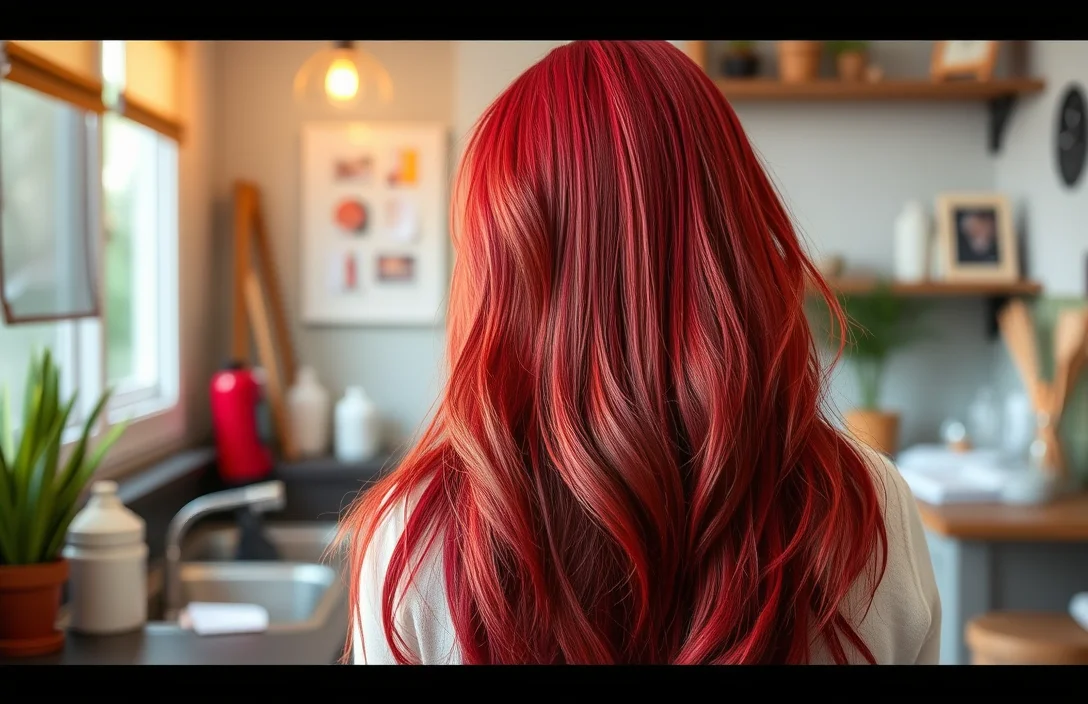
Transform Your Tresses: Effective Techniques to Remove Red Hair Dye
Removing red hair dye can be challenging because red pigments are among the most stubborn color molecules. Whether your hair is dyed bright red, copper, burgundy, or auburn, choosing the right removal method helps minimize damage while improving results.
The best approach depends on your hair’s condition, the type of dye used, and your desired final color. Understanding how hair color works before starting the removal process increases your chances of achieving an even, healthy-looking result.
Why Red Hair Dye Is Difficult to Remove
Before choosing a removal method, it’s important to understand why red hair color lasts longer than many other shades. Red pigments penetrate deeply into the hair shaft and often leave warm undertones behind, even after fading.
Learning the basics of hair structure and dye chemistry helps you select the safest and most effective color removal technique.
How Hair Structure Affects Color Removal
Hair consists of three primary layers:
- Cuticle: The protective outer layer that controls how easily products enter and leave the hair.
- Cortex: The middle layer where natural pigment and artificial hair dye are stored.
- Medulla: The innermost layer that provides structural support but has little impact on hair coloring.
Since permanent hair dye settles inside the cortex, removing red pigment requires products that can lift or dissolve those color molecules without causing excessive damage.
Why Red Pigments Last Longer
Red dye molecules are larger and more concentrated than many other hair color pigments. They bond tightly inside the cortex, making them resistant to fading.
Even after several washes, many people notice lingering orange, copper, or pink undertones. This is why removing red hair often requires multiple treatments instead of a single application.
The Role of Hair pH During Color Removal
Hair pH plays an important role in how color-removing products work.
- Alkaline formulas open the cuticle so color molecules can escape.
- Acidic products close the cuticle to lock in moisture and improve shine after treatment.
Maintaining the proper pH balance helps reduce unnecessary dryness during the stripping process.
Types of Hair Dye and Their Removal Difficulty
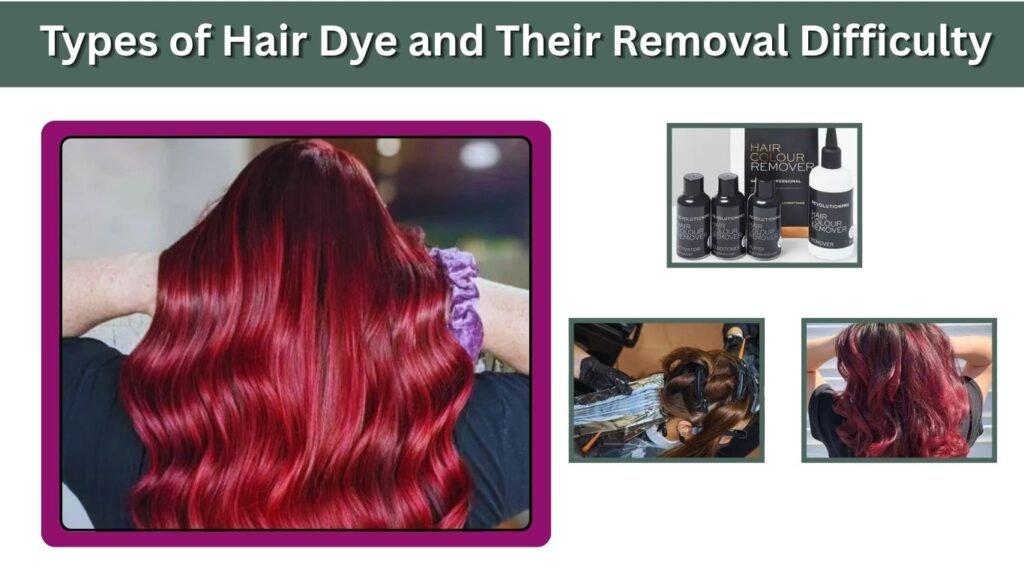
Not every red hair color behaves the same way. The removal process depends largely on the type of dye originally applied.
Understanding your color type allows you to choose the most effective removal method while avoiding unnecessary damage.
Permanent Red Hair Dye
Permanent dyes penetrate deep into the cortex using ammonia and developer.
Because the pigment becomes embedded inside the hair shaft, permanent red shades usually require:
- Professional color removers
- Bleaching sessions
- Multiple correction treatments
These dyes are the most difficult to remove completely.
Semi-Permanent Red Hair Dye
Semi-permanent dyes coat the hair and deposit color without permanently altering the natural pigment.
Although they gradually fade with washing, red tones often linger longer than expected. Specialized color removers or repeated clarifying treatments usually help speed up the fading process.
Temporary Red Hair Color
Temporary dyes remain on the outer surface of the hair cuticle.
They typically fade after several shampoos, making them the easiest type of red color to remove. Clarifying shampoos or regular washing are often enough to eliminate most temporary pigments.
Using Clarifying Shampoo to Fade Red Hair Dye
Clarifying shampoo is one of the safest first steps for removing unwanted red tones. It cleanses the hair thoroughly by removing product buildup, oils, and some artificial color pigments.
While it won’t completely remove permanent dye, it can noticeably reduce the intensity of semi-permanent and fading red shades.
Choose the Right Clarifying Shampoo
Select a shampoo specifically designed for deep cleansing or color fading.
These formulas contain stronger cleansing agents than everyday shampoos and help lift stubborn dye more effectively without immediately resorting to bleach.
Apply the Shampoo Correctly
For the best results:
- Thoroughly wet your hair with warm water.
- Apply a generous amount of clarifying shampoo.
- Massage it evenly from roots to ends.
- Let it sit for 5–10 minutes.
- Rinse thoroughly with warm water.
Repeating this process over several washes gradually fades red pigments without excessive stress on the hair.
Restore Moisture After Clarifying
Clarifying shampoos remove oils along with color residue, which can leave hair feeling dry.
Always follow with a rich moisturizing conditioner or deep conditioning treatment to restore hydration, improve softness, and reduce frizz before your next color removal step.
How to Use Hair Color Removers Safely
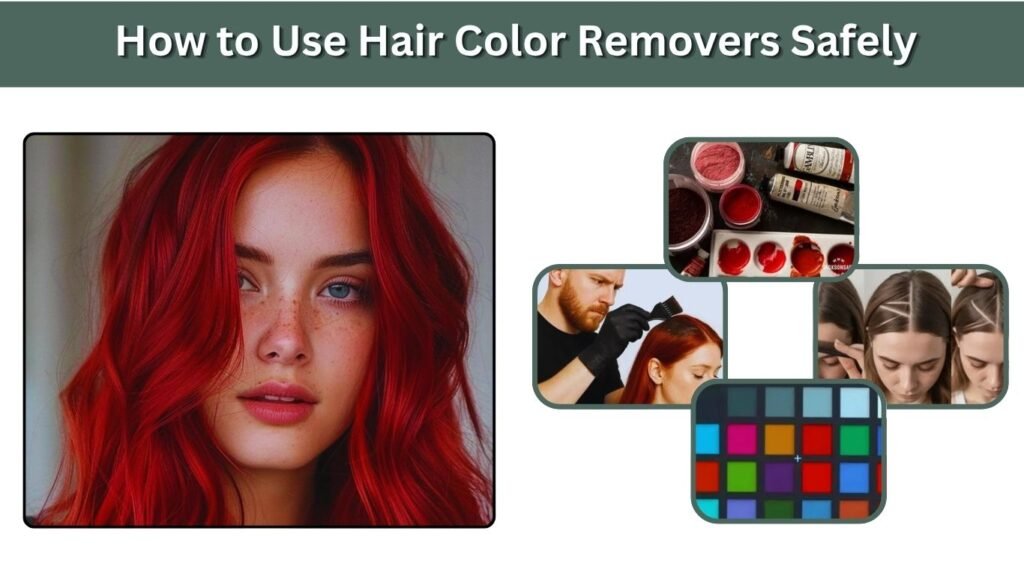
Hair color removers are formulated to break down artificial dye molecules without bleaching your natural hair pigment. They are one of the most effective options for removing permanent red hair dye while causing less damage than bleach.
For the best outcome, always follow the manufacturer’s instructions and avoid over-processing your hair.
Perform a Strand and Patch Test First
Before applying any color remover to your entire head, test a small section of hair.
A strand test helps you:
- See how much red pigment will lift.
- Check for unexpected color changes.
- Determine how long the product should remain on your hair.
Also perform a patch test on your skin at least 24 hours before use to rule out allergic reactions.
Apply the Product Evenly
Even application produces more consistent color removal.
To achieve the best coverage:
- Divide your hair into small sections.
- Wear protective gloves.
- Saturate each section completely.
- Work quickly so all areas process evenly.
Avoid missing sections, as uneven application can leave visible patches of red pigment.
Monitor Your Hair During Processing
Do not leave a color remover on longer than recommended.
Check your hair every few minutes during processing. If the desired amount of color has lifted before the maximum processing time, rinse immediately.
After rinsing, shampoo thoroughly according to the product instructions to remove dissolved dye molecules completely.
DIY Methods to Fade Red Hair Dye Naturally
If your red hair color is semi-permanent or already fading, several home remedies may help reduce unwanted pigment gradually. These methods are generally less aggressive than bleach, although results vary depending on the dye used.
Natural methods usually require multiple applications before noticeable fading occurs.
Baking Soda and Anti-Dandruff Shampoo
This combination is one of the most popular DIY color-fading treatments.
Mix:
- 1 part baking soda
- 3 parts anti-dandruff shampoo
Apply the mixture to damp hair and massage thoroughly. Leave it on for 10–15 minutes before rinsing well.
This method gently removes surface pigments while helping lift semi-permanent color.
Vitamin C Treatment
Vitamin C is mildly acidic and can help loosen artificial dye molecules.
To prepare the treatment:
- Crush 10–15 Vitamin C tablets into a fine powder.
- Mix with shampoo until a thick paste forms.
- Apply evenly to damp hair.
- Leave on for 30–60 minutes.
- Rinse thoroughly and condition afterward.
This treatment works best on recently colored hair and may reduce bright red tones after several applications.
Dish Soap for Stubborn Color Buildup
Dish soap contains stronger cleansing agents than regular shampoo, making it useful for fading stubborn hair color.
Use it sparingly by mixing a small amount with conditioner to reduce dryness.
Apply to damp hair, lather gently, leave on for about five minutes, and rinse thoroughly. Follow immediately with a moisturizing conditioner to restore hydration.
White Vinegar Rinse
White vinegar can help loosen surface pigments while smoothing the hair cuticle.
Mix equal parts white vinegar and warm water. Saturate your hair with the mixture, cover it with a shower cap, and leave it on for approximately 30 minutes before rinsing.
Although this method won’t remove permanent dye completely, it can gradually soften stubborn red tones.
Olive Oil Overnight Treatment
Olive oil is not a true color remover, but it may help loosen fading pigments while deeply moisturizing dry hair.
Warm a small amount of olive oil and apply it evenly throughout your hair. Cover with a shower cap or plastic wrap and leave it overnight.
Wash thoroughly the next morning using a clarifying shampoo for the best results.
Professional Hair Color Correction Options
If home treatments fail or your hair has multiple layers of red dye, visiting a professional colorist is often the safest solution.
Professional hair color correction minimizes damage while producing more predictable results.
Professional Color Removers
Salon-grade color removers are stronger and more precise than most over-the-counter products.
A stylist evaluates your hair history before selecting the appropriate formula, helping remove artificial red pigments while preserving as much of your natural hair as possible.
This method is especially effective for correcting permanent red shades.
Bleaching and Color Correction
For deeply embedded red pigments, bleaching may be necessary.
Professional stylists carefully control:
- Bleach strength
- Processing time
- Sectioning technique
- Hair health throughout the service
Gradual lightening reduces the risk of excessive breakage while preparing the hair for a new color.
Why a Professional Consultation Matters
Every hair color correction is different.
During a consultation, a stylist evaluates:
- Your current hair condition
- Previous coloring history
- Desired final shade
- Risk of damage
Based on this assessment, they recommend the safest treatment plan instead of applying unnecessary chemical processes.
How to Care for Hair After Removing Red Dye
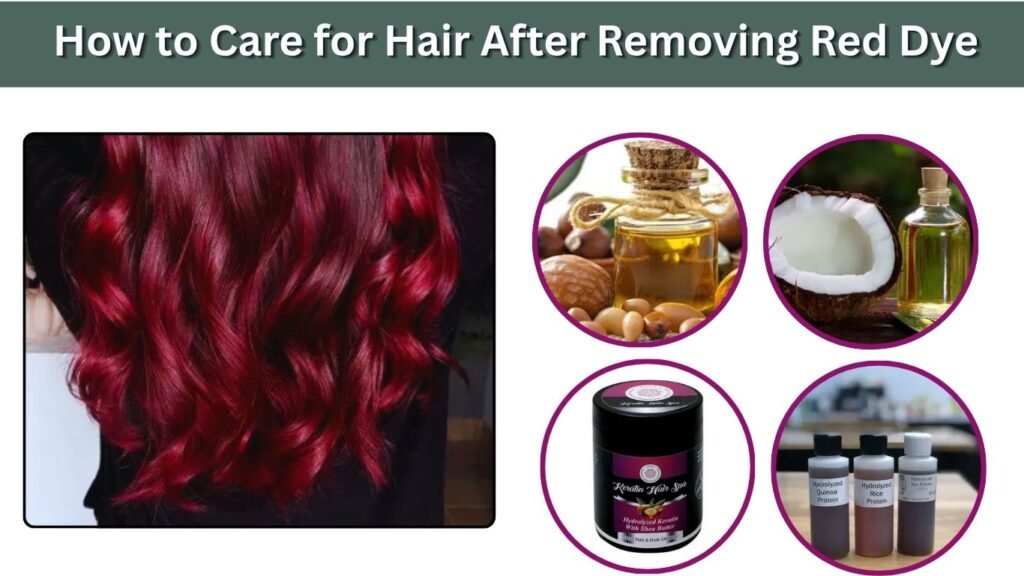
Proper aftercare is just as important as the color removal process. Hair often becomes dry, porous, and more prone to breakage after using color removers, clarifying shampoos, or bleach.
A consistent post-treatment routine helps restore moisture, improve strength, and prepare your hair for future coloring if desired.
Deep Condition After Every Treatment
Hair loses moisture during the color removal process.
Use a deep conditioning mask immediately after stripping color to replenish hydration and improve elasticity. Choose products containing ingredients such as:
- Argan oil
- Coconut oil
- Shea butter
- Keratin
- Hydrolyzed proteins
Leave the treatment on for at least 15–30 minutes for maximum benefits.
Switch to Sulfate-Free Hair Care Products
Once you’ve achieved your desired color, replace clarifying shampoos with sulfate-free formulas.
Gentle shampoos help:
- Preserve natural oils
- Reduce dryness
- Prevent further damage
- Improve long-term hair health
Always pair your shampoo with a moisturizing conditioner designed for color-treated or damaged hair.
Limit Heat Styling
Hair is more fragile after color removal.
Reduce the use of:
- Flat irons
- Curling irons
- Blow dryers
If heat styling is necessary, always apply a heat protectant beforehand to minimize moisture loss and reduce breakage.
Use Weekly Hair Masks
Weekly hair masks help rebuild strength and restore softness.
Look for formulas containing nourishing oils, amino acids, ceramides, or bond-repairing ingredients. Regular treatments improve shine while making hair more resilient against future coloring services.
Schedule Regular Trims
Color-treated hair is more susceptible to split ends.
Trimming every 6–8 weeks removes damaged ends before they travel further up the hair shaft, helping your hair look healthier and feel smoother.
Tips for Successfully Removing Red Hair Dye
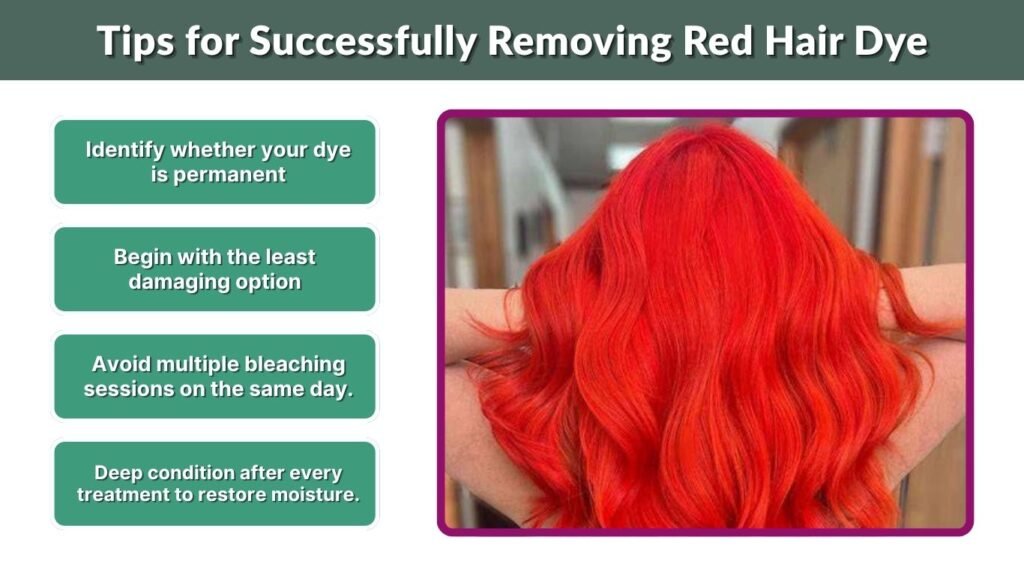
Following a few best practices can improve your results while protecting your hair.
- Identify whether your dye is permanent, semi-permanent, or temporary before choosing a removal method.
- Begin with the least damaging option, such as clarifying shampoo or a color remover.
- Perform a strand test before applying any chemical treatment.
- Avoid multiple bleaching sessions on the same day.
- Deep condition after every treatment to restore moisture.
- Wait several days between treatments to allow your hair to recover.
- Seek professional color correction if your hair has multiple layers of permanent red dye or significant damage.
Final Thoughts
Removing red hair color takes patience, especially when dealing with permanent dyes or multiple layers of pigment. Starting with gentle methods such as clarifying shampoos or color removers can often reduce unwanted tones without causing excessive damage.
For stubborn red shades, professional color correction remains the safest and most reliable option. No matter which method you choose, prioritizing hair health through proper conditioning and aftercare will help maintain strong, shiny, and manageable hair throughout the process.
Frequently Asked Questions
Can you remove red hair dye without using bleach?
Yes. Color removers, clarifying shampoos, and Vitamin C treatments can help fade or remove artificial red dye without bleach. However, permanent red colors may still require professional lightening if complete removal is the goal.
How many times can I use a color remover?
Most manufacturers recommend waiting several days between applications. Using color removers too frequently can dry out the hair and increase the risk of breakage.
Why does my hair look orange after removing red dye?
Red hair dye often leaves behind warm pigments. As the red fades, underlying orange or copper tones become visible. Applying a toner or ash-based hair color can help neutralize these warm undertones.
Does clarifying shampoo completely remove permanent red hair dye?
No. Clarifying shampoo mainly removes buildup and gradually fades artificial pigments. It works best on semi-permanent or faded colors but is unlikely to completely remove permanent dye.
Should I dye my hair immediately after removing red color?
It’s better to wait until your hair regains moisture and strength. Deep condition for several days before applying another permanent color to reduce the risk of uneven results and damage.
What’s the safest way to remove stubborn red hair dye?
If multiple home treatments fail, visiting a professional colorist is the safest solution. A stylist can assess your hair’s condition and choose the most effective color correction method while minimizing damage.

- 7 Best Detangling Brushes for Curly Hair: Thick, Fine, Long & Natural Hair - September 25, 2026
- 5 Best Moisturizing Curl Defining Creams for Soft, Defined Curls - September 24, 2026
- Best Curl Creams for Straight Hair: 5 Top Picks for Women - September 24, 2026