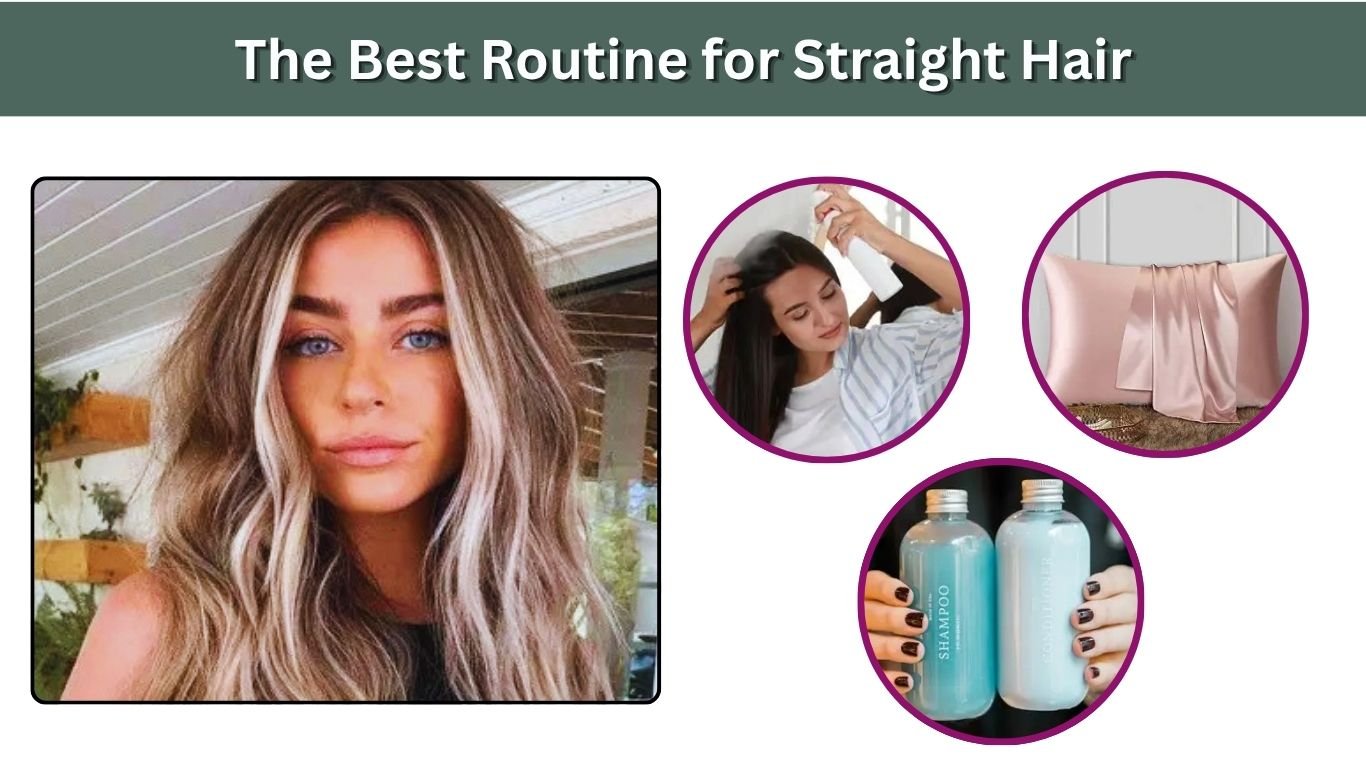
The Best Routine for Straight Hair: Lasting Shine, Volume, and Health
Straight hair possesses a unique combination of natural advantages and everyday challenges. Its round cross-section and smooth, tightly packed cuticle reflect light effortlessly, creating that glossy, silky look many strive to achieve. At the same time, that very smoothness allows scalp oils to travel from root to tip without obstruction, often leaving straight hair limp, flat, and greasy by day’s end. A truly effective straight hair routine does not fight against these natural tendencies; it works with them. It balances thorough yet gentle cleansing, weightless conditioning, smart styling for lift and movement, and protective habits that keep the hair fresh. This guide lays out the best routine for straight hair scientifically grounded, step-by-step, and optimized to answer your questions directly so you can enjoy bouncy, healthy, luminous hair every day.
Key Takeaways
- Straight hair’s round follicle and smooth cuticle make it naturally shiny but also prone to oil buildup and limpness.
- The ideal routine balances cleansing frequency, lightweight moisture, and root-lifting techniques.
- Product choice is critical: look for clear, sulfate-free shampoos, spray leave-ins, and volumizing stylers without heavy butters or oils.
- Regular clarifying, heat protection, and gentle overnight care preserve style and prevent damage.
- Small shifts like reverse washing or using dry shampoo strategically—can dramatically extend the life of your style.
Straight Hair: The Foundation of Your Routine
To build the best routine, you first need to understand what makes straight hair behave the way it does. Every strand is shaped by the follicle it grows from, and that shape dictates how oil moves, how light reflects, and how much volume your hair can hold.
The Structure of Straight Hair
- The follicle that produces straight hair is perfectly round, creating a cylindrical shaft. This round cross-section has no natural kinks or curls to interrupt the flow of sebum.
- The cuticle layer on straight hair typically lies flatter and has a higher number of overlapping scale layers compared to curly textures. This smooth surface creates a high-shine effect, as light bounces off uniformly.
- Sebum, the natural oil produced by the scalp, travels down the straight shaft with minimal resistance. This is why straight hair often develops a greasy look at the roots quickly, while the ends may remain normal.
How These Traits Shape Your Hair Care Needs
- Oil management becomes the central priority. Too much washing strips the scalp and triggers overproduction of oil; too little washing leaves hair flat and stringy.
- Conditioners must be lightweight. Heavy creams and butters that curly hair craves will quickly weigh straight hair down and make it look greasy.
- Volume is elusive because gravity and oil work against lift. Your routine must incorporate root-lifting cleansers, volumizing stylers, and drying techniques that create space at the roots.
Connecting to the next step: Once you know that oil control and weightless moisture are the twin pillars of straight hair care, you can design a daily and weekly routine that hits both perfectly.
The Core Daily and Weekly Straight Hair Routine
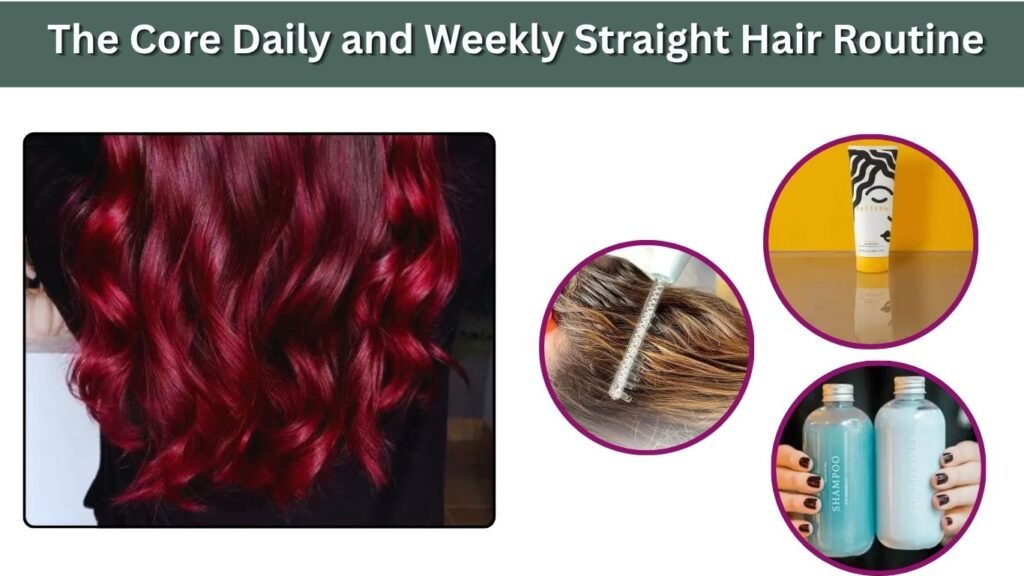
The foundation of beautiful straight hair lies in the balance you strike between cleansing away oil and buildup while delivering just enough moisture to keep ends smooth and healthy.
Cleansing for Balance, Not Stripping
- Frequency: Most people with straight hair benefit from washing every 1–2 days. Very fine, oily hair may need daily washing, while medium-textured straight hair can often go every other day. Listen to your scalp.
- Shampoo selection: Choose a clear, sulfate-free shampoo formulated for volume or daily use. Sulfates can be overly stripping, causing the scalp to rebound with more oil. Look for gentle cleansers like cocamidopropyl betaine or decyl glucoside.
- Double cleansing technique: If you use dry shampoo or styling products regularly, use two rounds of shampoo. The first quick wash removes surface oil and product, the second cleanse thoroughly cleans the scalp. A clarified scalp allows the root to lift fully.
- Focus on the scalp: Massage the shampoo into your scalp using your fingertips, not nails, for 60 seconds. Let the suds run down and cleanse the lengths passively—this prevents drying out the ends.
Conditioning Without Weighing Down
- Reverse washing: For hair that falls flat instantly after conditioning, try this trick: apply a lightweight conditioner to mid-lengths and ends first, rinse, then shampoo the scalp. This deposits moisture where needed while leaving zero residue near the roots.
- Lightweight conditioner types: Look for terms like “volumizing,” “light,” or “daily” conditioners. Gels or spray leave-in conditioners are often better than thick creams. Avoid products heavy in shea butter, coconut oil, or silicones that build up.
- Application zone: Apply conditioner only from the ears down. The hair near your scalp is already nourished by natural sebum and does not need extra emollients.
- Rinse thoroughly with cool water: A final cool rinse helps seal the cuticle flat, maximizing shine and reducing frizz.
Weekly Clarifying and Deep Care
- Clarifying shampoo: Once a week, use a purifying or clarifying shampoo that contains ingredients like salicylic acid, apple cider vinegar, or mild sulfonates. This deep-cleanses away any lingering silicone, dry shampoo, and mineral buildup from hard water that can dull shine.
- Scalp scrub: Once every 1–2 weeks, use a scalp scrub with gentle exfoliants like sugar or jojoba beads, or a chemical exfoliant with salicylic acid. This removes the dead skin and excess oil that can clog follicles and make the hair look flat at the root.
- Deep conditioning mask: Use a lightweight, protein-free moisturizing mask once a week, applied to the ends only. Look for glycerin, aloe vera, and panthenol. Avoid masks labeled “intensive repair” for curly hair, as they are usually too heavy.
Connecting to styling: A perfectly cleansed and conditioned base—oily roots cleaned, ends lightly hydrated—sets you up for a styling session that delivers lasting volume and movement without the hair falling flat by noon.
Styling for Volume, Shine, and Movement
Straight hair can either look sleek and polished or bouncy and full. The difference lies almost entirely in the products you apply before drying and the techniques you use.
Pre-Styling: The Product Cocktail
- Volumizing mousse or foam: Apply a golf-ball-sized amount of lightweight mousse to damp hair, focusing on the roots. Mousse contains polymers that coat the shaft and create body without stiffness.
- Heat protectant: Never skip this. Look for a spray-on heat protectant that contains ingredients like hydrolyzed wheat protein or PVP/DMAPA acrylates copolymer. It forms a breathable shield that prevents moisture loss and cuticle damage from hot tools.
- Root lift spray: For special occasions, a root lift spray applied directly to the crown before blow-drying can create noticeable elevation. These often contain starch or polymers that expand with heat.
- Texturizing spray (if air-drying): A salt spray or lightweight sugar spray adds grip and piecey texture to straight hair that can otherwise look flat when air-dried.
Blow-Drying Technique for Bounce and Smoothness
- Flip and dry roots first: Flip your head upside down and use your hairdryer on medium heat to rough-dry the roots until they are about 70% dry. This sets the lift.
- Section and round brush: Divide hair into sections. Use a large round metal-barrel or ceramic brush. Place the brush under the hair near the root, point the dryer’s nozzle downwards (to smooth the cuticle), and pull tension as you roll the brush away from your head. This creates the smooth, bouncy bend.
- Cool shot to set: Each section should be blasted with the cool shot button for 5 seconds before releasing. This locks the hydrogen bonds into the new shape and dramatically extends the style’s life.
- Finish with a lightweight shine spray or dry oil mist: Just one or two sprays into the mid-lengths and ends, not the roots. Avoid serums that can overload fine straight hair.
Heat-Free Styling for Lasting Body
- Overnight rollers: On damp hair, set large Velcro or foam rollers at the crown and around the face. Sleep in them overnight for root lift and soft bends without heat damage.
- Twist and pin: For subtle volume, twist large sections of damp hair away from your face, pin them into flat coils, and release when dry.
- Sock bun or high ponytail overnight: Pull hair into a loose, very high ponytail on top of your head with a soft scrunchie before bed. In the morning, you will have uplifted roots and a soft curve in the ends.
Connecting to maintenance: Once you have achieved the style, the next step is to preserve it. A good nighttime routine and smart refresh habits will keep you from having to restyle from scratch every morning.
Maintenance and Protection: Preserving Your Style and Hair Health
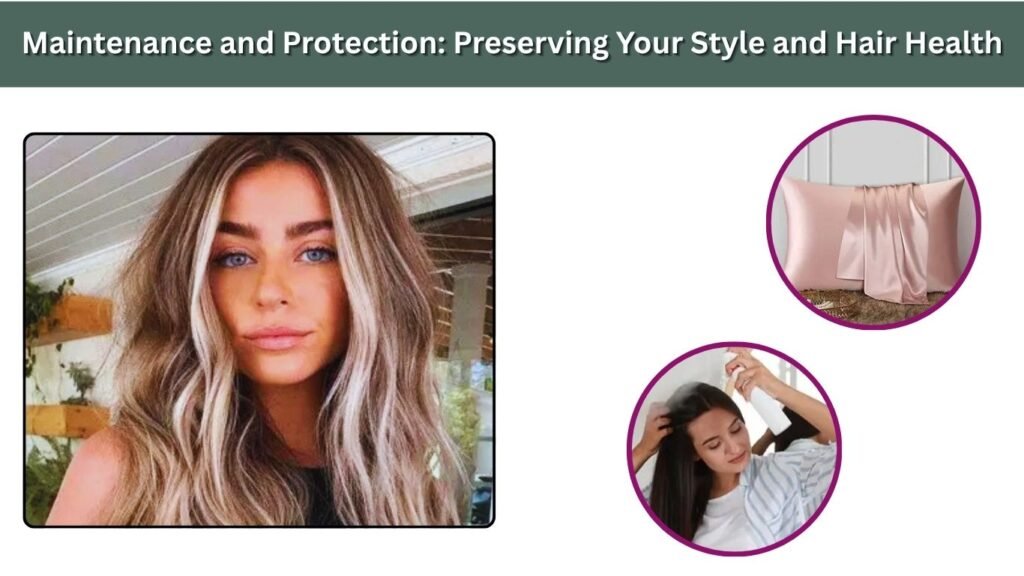
Straight hair shows oil and crease marks easily, so between-wash care is just as important as wash-day technique. Protecting your hair overnight and refreshing it correctly can double the life of your style.
Nighttime Routine for Straight Hair
- Silk or satin pillowcase: Cotton pillowcases create friction that ruffles the cuticle and creates tangles and bedhead. Satin preserves smoothness and prevents static.
- Loose protective styles: Never go to bed with your hair loose. Pull it gently into a loose high ponytail or a low, loose bun with a silk scrunchie. This prevents tangles and creasing from tossing and turning.
- Dry shampoo before bed: If your scalp tends to get oily overnight, apply dry shampoo to the roots before sleeping. It absorbs oil as it is produced, and by morning it will be fully blended. You will wake up with fresh-looking volume.
Refreshing Second-Day Hair
- Dry shampoo for roots: Apply dry shampoo to the roots in sections, let it sit for 2–3 minutes, then massage it in and brush through. This absorbs oil and adds grip and volume.
- Texturizing spray for mid-lengths and ends: A light mist of texturizing spray brings back a piecey, lived-in look and enhances any bend created the day before.
- Smoothing flyaways: If static or flyaways appear, use a tiny drop of lightweight oil or a smoothing cream in your palms, rub them together, and lightly glide them over the top layer.
- Low-heat touch-ups: If your ends have flipped oddly, a quick pass with a flat iron on low heat or a round brush and dryer for 30 seconds can fix the section without full restyling.
Trimming and Preventing Damage
- Regular trims: Straight hair’s smoothness can hide split ends, but they are still there. Get a trim every 8–12 weeks to prevent splits from traveling up and causing breakage and flat, frizzy ends.
- Minimize over-brushing: Over-brushing can stretch and snap strands and stimulate oil glands. Brush twice a day with a mixed-bristle brush (boar and nylon) that distributes oils from root to end without tearing.
- Heat tool hygiene: Clean your flat iron and round brushes regularly. Product buildup on tools scorches the hair and creates dullness. Always use the lowest effective temperature setting.
Connecting to product choice: All these techniques rely on having the right products at each step—products that are specifically formulated to be weightless and non-greasy. The next section is your complete cheat sheet for choosing wisely.
Choosing the Right Products: A Straight Hair Cheat Sheet
Product selection is where the science meets the mirror. The wrong ingredients can turn straight hair greasy and flat within hours; the right ones create lasting body and shine.
Ingredient Guide for Straight Hair Products
| Product Type | Ingredients to Look For | Ingredients to Avoid | Why It Matters for Straight Hair |
|---|---|---|---|
| Shampoo | Cocamidopropyl betaine, decyl glucoside, sodium C14-16 olefin sulfonate (gentle), salicylic acid (for clarifying) | Sodium lauryl sulfate (harsh), heavy silicones (dimethicone in shampoos) | Gentle cleansers remove oil without over-stripping. Harsh sulfates trigger rebound oil production. |
| Conditioner / Mask | Hydrolyzed silk protein, panthenol, glycerin, fatty alcohols (cetearyl alcohol lightweight), aloe vera | Shea butter, coconut oil, castor oil, petrolatum | Lightweight emollients add slip and moisture without coating the hair and weighing it down. |
| Leave-In / Detangler | Cetrimonium chloride, behentrimonium methosulfate (very light), hydrolyzed wheat protein, panthenol | Dimethicone-heavy serums, thick butters | A fine spray or light lotion detangles without residue that kills volume. |
| Volumizing Styler | VP/VA copolymer, polyquaternium-11, starch, hydrolyzed rice protein | Heavy oils, waxes (beeswax, candelilla wax) | Polymers create film that lifts roots and adds texture without weight; waxes drag hair down. |
| Heat Protectant | PVP/DMAPA acrylates copolymer, hydrolyzed keratin, amodimethicone (water-soluble silicone) | Alcohol denat. (if too high up in ingredient list) | Forms a protective barrier that also adds body; water-soluble silicones add slip without buildup. |
| Dry Shampoo | Rice starch, corn starch, tapioca starch, silica, kaolin clay | Aluminum starch octenylsuccinate (can be heavy), talc | Starch absorbs oil and adds texture at roots; fine powders avoid visible white residue. |
| Finishing Product | Cyclomethicone (evaporating silicone), isohexadecane, argan oil (lightweight) | Phenyl trimethicone-heavy serums, mineral oil | A quick-evaporating shine spray or mist adds polish without greasiness. |
Connecting to the full routine: With this ingredient map, you can audit your current shelf and make swaps that elevate your entire regimen. Next, we answer the most common straight hair questions to clear up any remaining doubts.
Frequently Asked Questions
How often should I wash straight hair?
Most people with straight hair need to wash every 1–2 days. Those with very fine, oily hair may need daily washing with a gentle shampoo, while those with medium texture can often stretch to every other day. The key is to watch your scalp—if it feels greasy and looks flat, it is time to wash. Over-washing with harsh shampoos can make oil worse, so always use a mild formula.
What is the best way to add volume to straight hair without teasing?
The most effective method is a combination of root-lifting products and blow-drying technique. Apply a lightweight volumizing mousse to damp roots, flip your head upside down, and dry the roots until they are 70% dry. Use a large round brush to lift sections at the crown, and set with a cool shot. For a heat-free option, set damp hair in large Velcro rollers overnight.
Why does my straight hair get greasy so fast?
Straight hair’s round shaft allows sebum to travel from the scalp to the ends quickly and easily. This natural process keeps hair healthy, but in straight hair, it becomes very visible. Using heavy conditioners near the scalp, touching your hair frequently, and over-brushing can all speed up the appearance of grease. Switching to a lightweight conditioner applied only to the ends and using dry shampoo at the roots before bed can help.
Can I use coconut oil on straight hair?
Coconut oil is often too heavy for straight hair. It can be difficult to wash out, leading to buildup that makes the hair look greasy and limp. If you want to use it, apply a tiny amount to the very ends only, 30 minutes before washing, as a pre-shampoo treatment. For daily moisture, choose lighter oils like argan, grapeseed, or a silicone-free serum.
How do I prevent my straight hair from getting static in winter?
Static happens when the hair has a positive charge and low moisture. To fight it, use a humidifier in your bedroom, switch to a moisturizing (but lightweight) conditioner, and apply a tiny amount of leave-in cream or hair oil to your palms and smooth them over the top layer. Avoid plastic combs; use a wooden or mixed-bristle brush. Spraying your hairbrush with a little hairspray and running it through can also tame flyaways.
Is air-drying or blow-drying better for straight hair?
It depends on your goal. Air-drying is gentler and causes less damage, but straight hair often dries completely flat without any root lift. Blow-drying with the proper technique and heat protectant gives you volume and bounce. The best compromise is to let hair air-dry 50%, then blow-dry the roots only using a low or medium heat setting to achieve lift.
What ingredients should I avoid in conditioner for straight hair?
Avoid heavy butters (shea, cocoa), heavy oils (coconut, castor, olive), and large amounts of dimethicone or non-water-soluble silicones. These ingredients build up quickly, weigh the hair down, and make it look greasy after a few hours. Look for lighter fatty alcohols like cetearyl and cetyl alcohol, along with glycerin and hydrolyzed proteins.
How can I keep my straight hair looking fresh between washes?
Use a lightweight dry shampoo applied to the roots before bed to absorb oil overnight. In the morning, brush it through. If the ends look dry, use a tiny drop of shine spray or lightweight oil. A quick spritz of texturizing spray can also bring back movement and body. If you have kinks from sleeping, a quick blast with a hairdryer and a round brush on the top layer will smooth them out without washing.
Building the best routine for straight hair is all about embracing its natural strengths while cleverly managing its tendencies. The smooth, round shaft is designed for shine—nourish it with lightweight, clarifying care so that gleam never becomes grease. Its lack of curl is a blank canvas for volume—use root-lifting techniques and non-weighing products to create bounce that lasts. And because straight hair shows every misstep, treat it gently at night, protect it from heat, and trim it regularly. When your wash days, product choices, and refresh habits align, straight hair rewards you with effortless gloss, movement, and the kind of healthy swing that feels as good as it looks.

- 7 Best Detangling Brushes for Curly Hair: Thick, Fine, Long & Natural Hair - September 25, 2026
- 5 Best Moisturizing Curl Defining Creams for Soft, Defined Curls - September 24, 2026
- Best Curl Creams for Straight Hair: 5 Top Picks for Women - September 24, 2026