Does Conditioner Weigh Down Hair?
Conditioner can absolutely weigh down your hair – especially if you’re applying it wrong or using the wrong formula. Over 60% of people with fine hair report this issue, yet most don’t realize their application technique is the real culprit. Understanding how to use conditioner properly can transform your hair’s volume and texture.
Conditioner weighs down hair when applied incorrectly or contains heavy ingredients like silicones and thick emollients. For fine hair, limit conditioner to the bottom third of hair strands, use only a dime-sized amount, and rinse thoroughly for at least 30 seconds to prevent buildup that weighs roots down.
Does Conditioner Weigh Down Hair? (The Truth)?
Conditioning agents create a thin film over the hair cuticle to smooth frizz and lock in moisture. This film adds physical mass to each strand, which can pull the hair closer to the scalp.
Cationic surfactants and silicones are the primary ingredients responsible for this effect. These molecules attach to the negatively charged damaged areas of the hair shaft to create a protective layer.
Fine hair has a smaller diameter and less internal structure. This makes it more susceptible to the weight of these film-formers, leading to a flat appearance.
For instance, a person with fine, straight hair might find that a heavy butter-based conditioner makes their roots look greasy by midday.
Moisture refers to the water content inside the hair cortex. Heaviness is the result of external buildup on the cuticle.
| Ingredient Type | Example | Effect on Hair | Best For |
|---|---|---|---|
| Silicones | Dimethicone | High shine, heavy coating | Thick, curly hair |
| Fatty Alcohols | Cetyl Alcohol | Softness, moderate weight | Normal to dry hair |
| Humectants | Glycerin | Hydration, low weight | Fine or oily hair |
Esthetician tip: Apply conditioner only from the mid-lengths to the ends. Keep product away from the scalp to maintain natural volume at the roots.
Product choice depends on your hair density. High-end options like Oribe ($40) often use lightweight polymers, while drugstore options like Pantene ($6) may rely more on heavier silicones.
Expect to see a difference in volume within one to two washes after adjusting your application technique. Always patch test new leave-in products on a small area to check for scalp irritation.
Identify Your Hair Porosity And Type
Hair porosity controls how fast your strands absorb and hold onto products. Low porosity hair resists absorbing conditioner, so heavy formulas can coat the outside and make roots look flatter. High porosity hair drinks in conditioner quickly, but it can also grab and hold residue, which may feel greasy or stringy.
Start by matching porosity to texture, because texture tells you what your hair is likely doing. Fine hair is often more prone to looking heavy, medium hair tends to balance better, and coarse hair can tolerate richer conditioners but still builds up if you use too much or skip clarifying. For straight to wavy hair, buildup shows up fastest at the roots. For curly to coily hair, buildup can show up as limp clumps or dry ends that feel rough even after conditioning.
Quick Porosity Clues
Low porosity hair usually feels smooth, looks shiny, and takes longer to get fully saturated in the shower. High porosity hair tends to feel rough or dry, tangles faster, and may look dull because moisture and oils escape quickly. Medium porosity hair often feels consistent, absorbs reasonably, and holds styling better between washes.
| Porosity | How Hair Behaves | Common “Weight” Signs |
|---|---|---|
| Low | Repels water at first, slower absorption | Flat roots, waxy feel, product film |
| Medium | Absorbs evenly | Light bounce when you use the right amount |
| High | Absorbs quickly, can lose moisture fast | Greasy slip, stringy ends, residue that returns quickly |
For oily to combination skin types, this same idea applies to scalps too: if your scalp produces more oil, low or medium porosity hair can get an “over-conditioned” look faster. For dry or sensitive scalps, high porosity hair may need more moisture, but it also needs lighter, more targeted application to avoid residue.
Trichology-style tip: apply conditioner where hair is driest, start with a pea-size amount, and scale up only if your ends still feel rough after rinsing.
Lightweight Ingredients For Volume
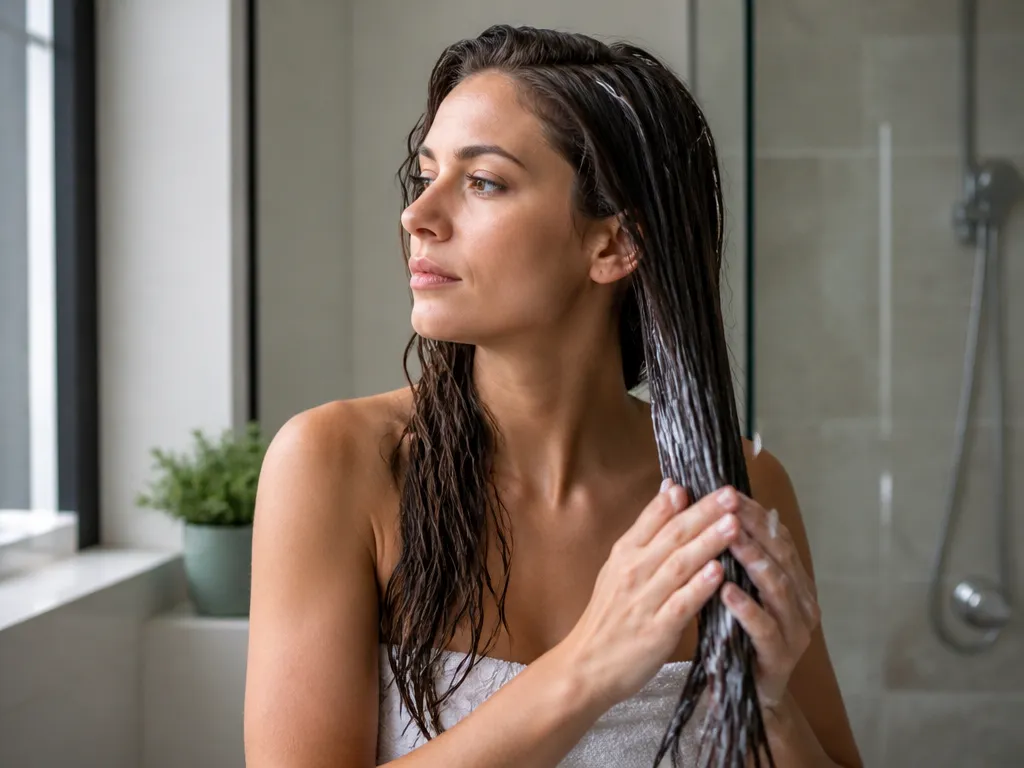
Lightweight conditioners rely on humectants and hydrolyzed proteins to hydrate the hair without adding heavy lipids. These ingredients penetrate the hair shaft or form a thin, breathable film that prevents the hair from collapsing.
Structural Proteins
Hydrolyzed proteins are broken down into smaller molecules that can enter the hair cuticle. They fill in gaps in the hair shaft to provide structure and lift without the grease of a heavy oil. This is ideal for fine or damaged hair that feels limp.
For example, hydrolyzed wheat or silk proteins create a temporary scaffolding on the hair. This makes the individual strands feel thicker and more resilient.
Use these products if your hair feels “mushy” when wet. They restore the balance between moisture and strength to prevent the hair from lying flat against the scalp.
Correct Conditioner Application Technique
For fine or straight hair types, conditioner application technique directly impacts whether hair feels heavy or maintains volume. The right method ensures hair receives hydration without weighing down the roots or causing buildup that leads to flatness.
Where To Apply
Focus application on the mid-lengths to ends, where hair is oldest and most porous. This prevents excess product from accumulating at the roots, which can contribute to flatness.
Determining The Right Amount
The amount of conditioner used varies significantly based on hair thickness and length. Using too much product is a common mistake that leads to residue and flatness.
For fine hair types, start with less product and add more only if needed. It’s easier to add product than to remove excess once applied.
Rinsing Protocols
Proper rinsing is crucial to prevent product buildup that weighs hair down. Rinse with cool water to help close the hair cuticle and seal in moisture while removing excess product.
Expert tip: The final rinse should take twice as long as the application process. Most people rush this step, leaving behind residue that causes flatness.
Common Application Mistakes To Avoid
Placement And Hair Type Errors
Applying product directly to the scalp clogs follicles and adds unnecessary weight to the roots. This is especially problematic for oily hair types or those with low porosity hair.
Fine hair requires lightweight formulations. Heavy ingredients like shea butter or coconut oil can overwhelm thin strands and make them look stringy.
For instance, using a heavy mask designed for thick, curly hair on fine, straight hair often results in a flat appearance regardless of how much you rinse.
Choose products based on your hair diameter. High-end: Pureology Hydrate Sheer ($34). Drugstore: Maui Moisture Lightweight Hydration ($7). Both avoid heavy oils that flatten fine hair.
Rinsing And Water Quality
Inadequate rinsing leaves a film of surfactants and emollients on the hair shaft. This residue attracts dust and pollutants, which makes hair feel dirty faster.
Hard water complicates this process because minerals like calcium and magnesium bind to conditioner. This creates a waxy buildup that is difficult to remove with standard shampoo.
| Water Type | Effect on Conditioner | Result |
|---|---|---|
| Soft Water | Rinses easily | Bouncy, clean feel |
| Hard Water | Binds to minerals | Waxy or tacky residue |
Esthetician tip: Rinse your hair with cool water for 30 seconds at the end of your shower to seal the cuticle and remove lingering product.
For example, if your hair feels tacky or stiff even after a long rinse, you may have mineral buildup from your home water supply.
Use a clarifying shampoo once every 1 to 2 weeks to strip these minerals. This resets the hair and prevents the “heavy” feeling that occurs when conditioner cannot be fully rinsed away.
Drugstore Vs High-end Solutions
Drugstore conditioners often contain similar key ingredients to their high-end counterparts but may lack the precise formulation technology that prevents buildup on fine hair. Premium salon products typically feature more targeted delivery systems that distribute conditioning agents only where needed rather than coating the entire hair shaft.
Drugstore brands like Pantene’s Lightweight Conditioner and Suave Professionals offer budget-friendly options that use lightweight polymers instead of heavy silicones for fine hair types. These formulations provide moisture without the weight that causes flat roots and limp strands.
Salon products such as Kérastase Bain Densité and Oribe’s Gold Lust line feature concentrated active ingredients that strengthen hair from within while creating volume at the root. The higher price point reflects specialized extraction methods that preserve ingredient integrity and targeted application technology.
Clarifying treatments can remove product buildup that weighs down fine hair. A simple rinse made with one part apple cider vinegar to three parts water effectively dissolves mineral deposits and styling product residue without stripping natural oils.
| Product Type | Price Range | Key Benefits | Best For |
|---|---|---|---|
| Drugstore Lightweight | $5-$10 | Basic moisture, silicone-free options | Budget-conscious fine hair care |
| Premium Salon | $25-$50 | Targeted delivery, volume enhancement | Fine to medium hair needing lift |
| DIY Clarifying | $1-$5 | Buildup removal, pH balancing | All hair types weekly maintenance |
Trichologists recommend alternating between regular conditioning and clarifying treatments for fine hair. The key is choosing products specifically formulated without heavy proteins and silicones that tend to accumulate at the root.
Pro Tips For Lasting Volume
For fine or limp hair, use clarifying shampoos once weekly to remove product buildup that can flatten strands. Clarifying shampoos contain stronger surfactants that dissolve excess oils and residues regular shampoos might leave behind.
Proper Conditioning Technique
Always apply conditioner from mid-lengths to ends, avoiding the scalp and roots where volume is most crucial. Leave-in conditioners should be used sparingly and only on the ends of fine hair to prevent weighing down.
Temperature control during rinsing affects hair cuticle behavior. Cool water rinses help seal the cuticle, creating smoother strands that reflect light better and appear fuller. Hot water can lift the cuticle, making hair more susceptible to damage and frizz.
| Hair Density | Recommended Conditioner Type | Application Frequency |
|---|---|---|
| Fine/Low Density | Lightweight, volumizing formulas | Every other wash or less |
| Medium Density | Balanced moisture formulas | Every wash |
| Thick/High Density | Rich, moisturizing formulas | Every wash |
When selecting products, look for ingredients like hydrolyzed wheat protein and panthenol that add volume without heavy buildup. For fine hair, avoid silicones like dimethicone that can coat strands and reduce body.
“Hair stylist tip: After applying conditioner, rinse with cool water for 30 seconds to help seal the cuticle and create natural lift at the roots.”
For those with particularly fine hair, consider alternating between regular and volumizing conditioners. Use heavier formulas when your hair needs extra moisture, and switch to lightweight versions when volume is the priority.
Quick Summary
Your hair porosity determines how products interact with your strands. Low porosity hair often resists absorption and develops a waxy film, while high porosity hair may feel greasy or stringy due to residue buildup. Matching your conditioner type to your hair texture is essential for success.
| Ingredient Type | Example | Best For |
|---|---|---|
| Silicones | Dimethicone | Thick, curly hair |
| Fatty Alcohols | Cetyl Alcohol | Normal to dry hair |
| Humectants | Glycerin | Fine or oily hair |
Beauty Routine Cheat Sheet
Expected Timeline For Results
You can expect to see a noticeable difference in hair volume within one to two washes after adjusting your application technique.
Frequently Asked Questions
Where Should I Apply Conditioner To Avoid Flat Hair?
Use the placement guidance above and adjust the amount to your hair’s length, density, and dryness.
Is A Lightweight Conditioner Better Than A Deep Conditioner For Fine Hair?
Yes, fine hair usually does better with volumizing or lightweight formulas. Deep conditioners are often too heavy for daily use on fine hair and should be limited to once a week.
Do I Really Need To Use Conditioner If My Hair Is Very Oily?
Yes, but you can switch to a lightweight leave-in spray or a rinse-out conditioner used sparingly. Skipping it entirely can leave the ends dry, which leads to split ends and breakage.
Is Expensive Salon Conditioner Worth It Compared To Drugstore Brands?
High-end options often have higher concentrations of active ingredients and fewer heavy waxes. However, for basic hydration, a drugstore brand with silicone-free ingredients works just as well for most people.
How Often Should I Use A Clarifying Shampoo To Remove Conditioner Buildup?
You should use a clarifying shampoo once every 1 to 2 weeks. This removes the product residue that makes hair feel heavy and restores natural bounce and volume.

- 7 Best Detangling Brushes for Curly Hair: Thick, Fine, Long & Natural Hair - September 25, 2026
- 5 Best Moisturizing Curl Defining Creams for Soft, Defined Curls - September 24, 2026
- Best Curl Creams for Straight Hair: 5 Top Picks for Women - September 24, 2026