How to Revive Heat-Damaged Hair: A Science-Backed Restoration Guide
Heat styling tools promise sleekness and definition, but when temperatures climb too high or protection is skipped, the hair’s internal architecture pays a steep price. Heat damage is a cascade of structural breakdown—proteins denature, the protective cuticle lifts, and moisture escapes uncontrollably. The result is hair that looks fried, feels brittle, and refuses to hold its natural shape. Reviving it demands more than a single miracle product; it requires a systematic, science-based approach that rebuilds the fiber from the inside out and seals it from the outside in. This guide maps out every step of that revival, from understanding exactly what heat does to your strands, to layering the right ingredients, to maintaining progress with daily habits—all optimized to help you reclaim strength, elasticity, and shine.
Key Takeaways
- Heat damage begins at the molecular level: keratin proteins lose their native shape, disulfide bonds break, and the cuticle scales crack open.
- Effective revival prioritizes the protein-moisture balance—first rebuilding internal scaffolding with hydrolyzed proteins, then replenishing plasticity with deep hydration, and finally locking it in with biomimetic lipids.
- Bond-building treatments can relink broken disulfide bridges, offering a permanent structural repair that goes beyond cosmetic smoothing.
- Ingredient selection is critical: look for small-molecule proteins, film-forming humectants, ceramides, and fatty alcohols to restore each layer of the hair.
- A consistent low-manipulation routine, protective nighttime care, and internal nutritional support bridge the gap between damage and durable recovery.
Understanding Heat Damage and Hair Structure
Each strand of hair is a complex biological fiber built from three concentric layers: the outermost cuticle, the fiber-rich cortex, and in some strands, a central medulla. Heat attacks every layer, but its most destructive actions unfold in the cortex, where the hair’s strength and curl pattern reside.
The Hair Shaft Layers and Heat’s Impact
- The cuticle is formed by 6–12 overlapping layers of flat, scale-like cells that protect the interior. Under high heat, these scales lift, crack, and even fuse together, creating permanent roughness.
- The cortex contains long chains of keratin proteins twisted into alpha-helical coils and cross-linked by disulfide bonds. Temperatures above 150°C (300°F) begin to unravel these coils, converting alpha-keratin into a disordered beta-keratin structure—a transformation that is irreversible.
- Water trapped inside the cortex can rapidly turn to steam when heated, forming microscopic bubbles within the fiber. This phenomenon, known as bubble hair, causes sudden, catastrophic weakness at those points.
- Melanin granules within the cortex, which give hair its color, are also heat-sensitive; oxidation from heat can lighten and dull the natural pigment.
How Heat Alters Curl Pattern and Strength
- The helical shape of curly and coily hair is maintained by a precise sequence of hydrogen bonds and disulfide cross-links. Heat temporarily breaks hydrogen bonds (which is how straightening happens) but can also snap disulfide bonds permanently, leading to a limp, straightened texture that does not revert.
- Over time, repeated heating exhausts the hair’s ability to re-form these bonds. The cortex becomes riddled with voids where protein chains have collapsed, resulting in a dramatic loss of tensile strength.
- The protective 18-MEA lipid layer that coats the cuticle is vaporized at high temperatures, leaving the surface hydrophilic and prone to rapid water uptake and loss—the root of chronic dryness.
This structural knowledge directly informs the repair sequence: protein treatments fill cortical voids, moisture restores plasticity, and lipid sealing replaces the lost 18-MEA barrier. Each step maps to a specific layer of the damaged fiber.
Common Causes of Heat Damage
Heat damage rarely results from a single pass of a tool. It accumulates silently, worsened by common habits that multiply the stress on each strand.
Excessive Temperature and Direct Contact
- Flat irons set above 185°C (365°F) and curling wands above 190°C (375°F) can exceed the hair’s thermal tolerance within seconds. The keratin degradation threshold is about 150°C for wet hair and 180°C for dry hair; beyond these, protein denaturation accelerates sharply.
- Hot blow dryers used without a diffuser on high heat can focus air streams hot enough to boil internal water, causing bubble hair.
- Direct metal or ceramic contact without a protective barrier delivers concentrated thermal energy, charring the cuticle and creating scorch marks.
Heat Styling on an Improper Hair State
- Applying heat to damp or wet hair is especially hazardous. The water-to-steam expansion inside the cortex creates internal pressure that ruptures the fiber from within.
- Skipping a heat protectant leaves the cuticle completely exposed. Protectants work by forming a sacrificial film that evaporates first, redistributing heat and slowing temperature rise.
- Passing flat irons over the same section multiple times compounds damage exponentially, as already weakened proteins are stressed again before they can recover.
Identifying these causes allows you to immediately halt further destruction. The revival methods that follow are designed to address the specific structural injuries left behind by each of these heat-styling missteps.
Recognizing Heat-Damaged Hair
Before you begin any treatment, you must accurately assess how far the damage extends. Heat-damaged hair sends clear visual and tactile signals.
Visual and Tactile Signs
- Loss of curl pattern: Natural curls and coils appear loosened or completely straight in patches, often beginning at the ends where heat exposure is most frequent.
- Bubble hair: Small, white, bead-like nodules along the shaft indicate internal cavities where steam expanded. These points snap with minimal tension.
- Extreme frizz and flyaways: The lifted, fractured cuticle no longer lies flat, scattering light and creating a rough, puffy texture.
- Dullness and color fading: A smooth cuticle reflects light; a heat-roughened one diffuses it, making hair look lackluster. Oxidized melanin also appears lighter and warmer.
- Split ends and mid-shaft breaks: The cuticle peels away, and the cortex unravels, leading to splits that travel upward.
Porosity and Elasticity Changes
- High porosity: Damaged hair sinks quickly in a water float test and absorbs water within seconds, then dries almost as fast. The hair feels constantly thirsty yet never stays hydrated.
- Loss of elasticity: Take a wet strand and gently stretch. Healthy hair extends 30–50% and returns. Heat-damaged hair either snaps immediately with no stretch (protein collapse) or stretches excessively without returning (moisture imbalance with structural weakness).
Reading these signs accurately guides you toward the correct protein-to-moisture ratio. High porosity and snap-breakage demand protein reinforcement; excessive stretch with a gummy feel calls for more structured hydration and bond repair first.
The Science of Heat Damage Repair: Protein and Moisture Interplay
Revival is fundamentally a restoration of the hair’s two interdependent components: the protein scaffolding that provides strength and the moisture content that provides flexibility. An imbalance in either stalls progress.
Protein: The Rebuilder of Cortex Strength
- Heat-denatured keratin leaves gaps in the cortex. Small hydrolyzed proteins—typically under 1,000 Daltons in molecular weight—can penetrate beneath the lifted cuticle and temporarily hydrogen-bond to the remaining keratin, filling those voids.
- This process increases the hair’s tensile strength, reduces breakage, and restores a more defined curl pattern by reinforcing the internal structure against gravity.
- Overuse can cause protein overload, making the hair rigid and brittle. The key is matching protein treatment frequency to the degree of damage.
Moisture: The Restorer of Flexibility
- Water molecules act as internal plasticizers, breaking some hydrogen bonds to allow the hair to bend without snapping. Humectants like panthenol, glycerin, and sodium PCA attract and retain this water.
- Heat-damaged high-porosity hair loses moisture quickly, so deep conditioning under heat or steam is essential to drive water and emollients deep into the cortex.
- Sealing is non-negotiable: without a lipid barrier, any moisture gained will evaporate within hours.
The Protein-Moisture Balance Table for Heat-Damaged Hair
| Sign / Attribute | Protein-Deficient (Needs Strength) | Moisture-Deficient (Needs Flexibility) | Balanced, Reviving Hair |
|---|---|---|---|
| Feel When Wet | Gummy, over-stretchy, mushy | Rough, hard, stiff, straw-like | Smooth, slight slip, firm yet pliable |
| Wet Stretch Test | Stretches far, little return, may feel weak | Snaps immediately with no stretch | Stretches 30–50% and springs back |
| Dry Feel | Limp, lacks body, undefined | Brittle, frizzy, coarse | Soft, defined, resilient |
| Porosity | Very high, but may feel waterlogged | High, absorbs water fast but remains dry | Normal to slightly high, controlled hydration |
| Recommended Action | Strengthening protein treatment (hydrolyzed keratin/silk) | Deep moisture with emollients; seal with ceramide-rich oil | Alternate light protein and deep moisture weekly |
| Key Ingredients | Hydrolyzed wheat protein, keratin, silk amino acids, bis-aminopropyl diglycol dimaleate | Panthenol, aloe vera, glycerin (moderate), shea butter, fatty alcohols | Hydrolyzed proteins, squalane, jojoba oil, ceramides |
This table serves as your decision engine throughout the revival process. Testing your hair weekly against these signs ensures you pivot between protein and moisture without guessing, preventing overload or persistent weakness.
Step-by-Step Revival Routine
A strategic sequence resets the hair, rebuilds the cortex, replenishes moisture, and locks in gains. Follow this order precisely for cumulative improvement.
1. Clarify and Remove Build-up
- Heat-damaged hair often accumulates silicones, mineral deposits from hard water, and product residue that block repair agents. Start with a clarifying shampoo (look for sodium C14-16 olefin sulfonate or cocamidopropyl betaine) once a month, or a chelating shampoo with EDTA or phytic acid if you have hard water.
- This step strips away the film that prevents proteins and conditioners from bonding. After clarifying, the hair’s surface charge is reset, allowing the upcoming treatments to adsorb efficiently.
2. Reconstruct with Strategic Protein
- Choose a protein treatment based on the table’s guidance. For most heat-damaged hair, a medium-weight hydrolyzed keratin or silk amino acid treatment is ideal. If your hair feels gummy and stretches endlessly, start with a bonding treatment that relinks disulfide bonds.
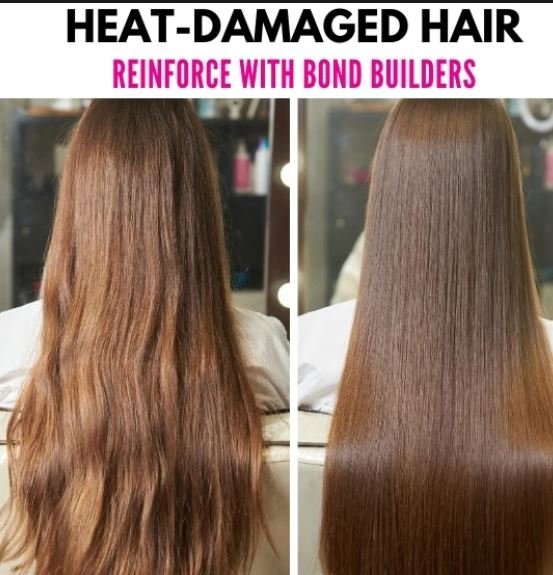
- Bond builders containing bis-aminopropyl diglycol dimaleate work by seeking out broken sulfur-sulfur bonds and reconnecting them across the protein chain, offering the closest thing to permanent structural repair.
- Apply to clean, towel-dried hair. Use gentle heat from a thermal cap or steamer for 15–20 minutes. The warmth slightly lifts the cuticle, allowing small protein molecules to reach the cortex.
- Rinse thoroughly, as residual protein can build up and cause stiffness.
3. Deep Hydrate and Condition
- Immediately follow protein with a rich deep conditioner. Look for fatty alcohols (cetearyl, stearyl) that fill inter-cuticular spaces, and humectants like panthenol and sodium PCA that bind water inside the cortex.
- Cationic surfactants such as behentrimonium methosulfate neutralize the damaged hair’s negative charge, causing the cuticle scales to lay flat. This dramatically increases slip and reduces friction during detangling.
- Apply heat for 20–30 minutes. A steamer is particularly beneficial for high-porosity hair because it uses moist heat to infuse water deep into the fiber without drying it out.
4. Seal and Protect
- After rinsing out the deep conditioner, apply a leave-in conditioner and then a few drops of a biomimetic oil. Jojoba oil mimics natural sebum and seals without heaviness. Ceramide-rich oils like sunflower and safflower oil integrate into the cuticle’s lipid layers, restoring the barrier.
- For a stronger seal, use a silicone-free serum with film-forming polymers or a light butter like mango or capuacu, applied to the very ends.
- This step prevents moisture efflux, extending the benefits of your deep treatment for days.
5. Heat-Free Styling for Recovery
- Commit to zero direct heat for at least 6–8 weeks. Air dry your hair in twists, braids, or a smooth bun. These styles hold the cuticle flat while drying, boosting shine and reducing frizz.
- If you must use a blow dryer, use a diffuser on the lowest heat setting and keep it 15 cm away, constantly moving.
This five-phase routine—Reset, Reconstruct, Hydrate, Seal, Style—maps exactly to the hair’s anatomy: clean the surface, rebuild the inner scaffold, plasticize with water, restore the external lipid barrier, and lock in the new shape without further stress.
Key Ingredients That Reverse Heat Damage
Ingredient science is the bridge between the routine and visible results. Each category repairs a specific layer of the damaged fiber.
Bond Builders and Disulfide Re-linking Agents
- Bis-aminopropyl diglycol dimaleate: Found in Olaplex, this molecule actively searches for broken disulfide bonds and reconnects them, permanently increasing strength.
- Hydrolyzed keratin: Mimics native keratin’s amino acid profile, temporarily fills voids, and forms hydrogen bonds that reduce breakage.
- Silk amino acids: Low-molecular-weight, penetrate deeply, and provide a flexible, breathable film that improves elasticity.
Moisture Magnets
- Panthenol (Pro-Vitamin B5): Penetrates the cortex, binds water, and also forms a smooth film on the cuticle, reducing brittleness and flyaways.
- Glycerin: A powerful humectant, but must be used with caution on high-porosity hair in dry climates. Always pair with a sealing oil to prevent reverse moisture loss.
- Sodium PCA and honey: Part of the skin’s natural moisturizing factor; they attract and hold water while buffering exchange with the environment.
Cuticle Smoothers and Sealants
- Ceramides NP, AP, EOP: Biomimetic lipids that intercalate into the cuticle’s lipid bilayers, directly replacing the heat-stripped 18-MEA layer and restoring cuticular cohesion.
- Jojoba oil: A liquid wax ester chemically similar to human sebum; it seals without clogging or weighing hair down.
- Fatty alcohols (cetyl, stearyl, cetearyl): Align flat against the cuticle, dramatically reducing the coefficient of friction and preventing inter-fiber abrasion.
What to Avoid
- Drying alcohols (SD alcohol, denat. alcohol): Evaporate quickly, pulling moisture from hair.
- Harsh sulfates (SLS, SLES): Strip natural lipids and exacerbate porosity.
- Heavy, non-permeable silicones (dimethicone with low evaporation): Can build up, block moisture, and require clarifying to remove—adding stress.
Your product selection should directly address the damage patterns you’ve identified. If the cuticle is rough and porous, ceramides and fatty alcohols are critical; if elasticity is lost, small-molecule proteins and bond builders take priority.
Building a Post-Heat Damage Hair Care Regimen
Consistency transforms one-off treatments into true revival. Design a weekly schedule that maintains the protein-moisture equilibrium without overburdening fragile strands.
Washing Schedule and Techniques
- Wash every 7–10 days to avoid hygral fatigue. In between, use a gentle co-wash or cleansing conditioner with decyl glucoside to refresh curls without stripping.
- Pre-poo with a penetrating oil like coconut or avocado oil (only if your hair tolerates it) or a rich conditioner applied to dry hair 30 minutes before shampooing. This reduces water uptake and the swelling that stresses a damaged cuticle.
Layering Products: LCO or LOC
- Adopt the Liquid-Cream-Oil or Liquid-Oil-Cream sequence based on your porosity. High-porosity heat-damaged hair usually responds best to LCO: a water-based leave-in spritz, then a cream moisturizer for emollience, then a few drops of oil to seal.
- The cream step should contain fatty alcohols and butters; the oil step should be light and ceramide-rich.
Frequency of Treatments
- Light protein / bond builder: Every 2–3 weeks if hair is showing gummy signs, or bi-weekly if strength is the primary need.
- Deep moisturizing treatment: Weekly, using heat or steam.
- Clarifying: Once every 4 weeks, or whenever buildup is noticeable.
Sticking to this regimen creates a reinforcing cycle: each wash-day infusion of protein and moisture builds on the last, gradually restoring the cortex’s integrity and the cuticle’s smoothness.
Protective Styling and Daily Habits for Recovery
How you treat your hair between wash days determines whether your repair efforts stick or slip away.
Low-Manipulation Protective Styles
- Two-strand twists, flat twists, loose braids, or a tucked-under bun keep ends protected and reduce friction that can rip up lifted cuticles.
- Avoid tight ponytails or extensions that pull on already fragile roots. Tension can compound with heat-induced fragility to cause breakage at the hairline.
- Refresh styles with a water-based spray and a light sealant rather than fully restyling daily.
Nighttime Care: Silk and Satin
- Sleep on a silk or satin pillowcase, or wrap your hair in a satin scarf. Smooth textiles reduce cuticle abrasion by up to 50% compared to cotton, preserving the cuticle smoothing achieved during deep treatments.
- Loose pineapple (high ponytail) positioning prevents tangling and mid-shaft stress while you sleep.
Minimizing Future Heat Exposure
- If you eventually reintroduce heat, use a high-quality protectant with silicones or polymers that provide a thermal buffer. Never exceed 180°C, and pass only once over each section.
- Invest in tools with precise digital temperature controls. Ionic technology can speed drying, reducing total exposure time.
- Embrace heat-free stretching methods like banding, threading, or roller sets for straight styles.
These daily habits act as a protective shell around your treatment gains, preventing fresh damage while giving the revived cortex time to stabilize with the help of protein and lipid infusions.
Scalp Health and Nutritional Support
Revival isn’t just topical. The new growth that will eventually replace the damaged length depends entirely on the condition of the scalp and the nutrients supplied through the bloodstream.
Scalp as Growth Engine
- A healthy follicle sits in an environment rich in blood flow and free of inflammation. Weekly scalp massages (5 minutes) stimulate circulation, delivering oxygen and amino acids to the dermal papilla.
- Use a lightweight scalp serum with niacinamide (vasodilator), peppermint oil (stimulating), or salicylic acid (gentle exfoliation) to keep follicles clear. Avoid heavy butters directly on the scalp.
- Dehydration, stress, and product buildup can constrict follicle activity, slowing the replacement of damaged hair with healthy new strands.
Diet for Hair Regrowth
- Hair is non-essential protein: nutritional deficiencies show up first in the strands. Prioritize cysteine and methionine (eggs, poultry, legumes) as the sulfur-rich amino acids that form keratin’s disulfide bonds.
- Iron and ferritin are critical for cell division in the hair matrix. Low iron is a common, reversible cause of brittle, slow-growing hair. Pair iron-rich foods with vitamin C for absorption.
- Zinc and biotin support protein synthesis and keratin infrastructure.
- Omega-3 fatty acids reduce follicular inflammation and help produce the natural oils that coat emerging hair.
- Drink enough water: systemic hydration maintains the moisture gradient from inside the body to the hair’s cortex.
Internal support forms the second half of the repair equation. While you reconstruct existing heat-damaged strands with topical treatments, feeding the follicle ensures that the new hair pushing through the scalp is inherently stronger, more resilient, and better able to resist future styling stress.
Frequently Asked Questions
Can heat-damaged hair be fully repaired?
True, complete reversal of keratin denaturation and lost cuticle cells is not possible once the hair exits the follicle. However, bond-building treatments can permanently relink some broken disulfide bonds, and protein/moisture protocols can dramatically restore strength, elasticity, and appearance. The aim is to rehabilitate the existing length while steadily trimming away the most damaged ends as healthier new growth comes in.
How long does it take to revive heat-damaged hair?
Visible improvement in texture and manageability can appear within 2–4 weeks of consistent weekly deep treatments and zero-heat styling. Significant structural recovery typically takes 3–6 months, depending on the extent of damage. Full replacement with healthy new hair depends on your growth rate—roughly 1–1.5 cm per month—so plan to maintain the revival routine for at least six months while you grow out and gradually cut away the damaged portion.
Can I still use heat while trying to repair my hair?
For maximum recovery, eliminate all direct heat for at least 6–8 weeks. If you must use a blow dryer, use a diffuser on the lowest heat/cool setting with a protectant. The less thermal stress you apply, the faster the hair’s internal hydrogen bonds and cuticle can stabilize with the help of proteins and lipids.
What is the best protein treatment for heat damage?
For most heat-damaged hair, a treatment combining hydrolyzed keratin (molecular weight 500–1500 Da) and bis-aminopropyl diglycol dimaleate (a bond builder) yields the best results. The keratin fills cortical voids temporarily, while the bond builder creates permanent disulfide cross-links. Silk amino acid treatments are excellent for finer hair that needs flexible strength.
How do I know if I need more moisture or protein?
Perform the wet stretch test. If a wet strand stretches well beyond its normal length and feels mushy without returning, you need protein. If it snaps immediately with little to no stretch, you need moisture. Refer to the Protein-Moisture Balance Table to adjust your next treatment accordingly.
Does Olaplex really work for heat damage?
Olaplex’s active ingredient, bis-aminopropyl diglycol dimaleate, has been shown to relink broken disulfide bonds, which are a primary victim of heat damage. It works best on that specific type of fracture. Users often report a significant return of strength, reduced breakage, and improved curl memory after several treatments.
Can natural oils fix heat damage?
Natural oils cannot permanently repair broken bonds or refill cortical protein voids, but they play a critical sealing and conditioning role. Ceramide-rich oils (sunflower, safflower, hemp seed) and jojoba oil help reconstruct the lipid barrier, prevent moisture loss, and smooth the cuticle, making the hair more manageable and less prone to further breakage.
Should I cut off all heat-damaged hair?
A big chop is the fastest way to remove damage, but it’s not the only path. You can adopt a “trim as you grow” strategy: remove 0.5–1 cm every 8–12 weeks while intensively treating the remaining length. This method allows you to retain length while gradually eliminating the most porous, split ends, giving you the best of both recovery and length retention.
Reviving heat-damaged hair is a practice in patience and precision. By understanding exactly how high temperatures dismantle the cuticle and cortex, you can apply a repair sequence that reconstructs the internal protein framework, restores moisture plasticity, and locks in every gain with a renewed lipid barrier. Every wash day, every ingredient choice, and every protective style builds upon the last, gradually transforming fried, fragile strands into hair that is stronger, shinier, and more resilient. With consistent care and a commitment to gentle handling, your hair can not only recover its health but emerge better equipped to withstand the styling choices you make tomorrow.

- 7 Best Detangling Brushes for Curly Hair: Thick, Fine, Long & Natural Hair - September 25, 2026
- 5 Best Moisturizing Curl Defining Creams for Soft, Defined Curls - September 24, 2026
- Best Curl Creams for Straight Hair: 5 Top Picks for Women - September 24, 2026