Can You Use Human Hair Conditioner On Dogs?
Struggling with your dog’s dry coat or flaky, irritated skin? You’re not alone, and it happens fast because grooming products that feel “gentle” on humans can be too harsh for dogs. The pH and skin barrier are different, so the real question is safety, not whether it smells nice. Here’s what to do instead, step by step.
Human hair conditioner is not a safe swap for dogs because many formulas are built for a human skin pH around 5.5. Dog skin is closer to 6.5 to 7.5, and that mismatch can disrupt the acid mantle and trigger irritation. If you need conditioning, reach for dog-friendly oatmeal or aloe vera options and patch-test.
Can You Use Human Hair Conditioner On Dogs?
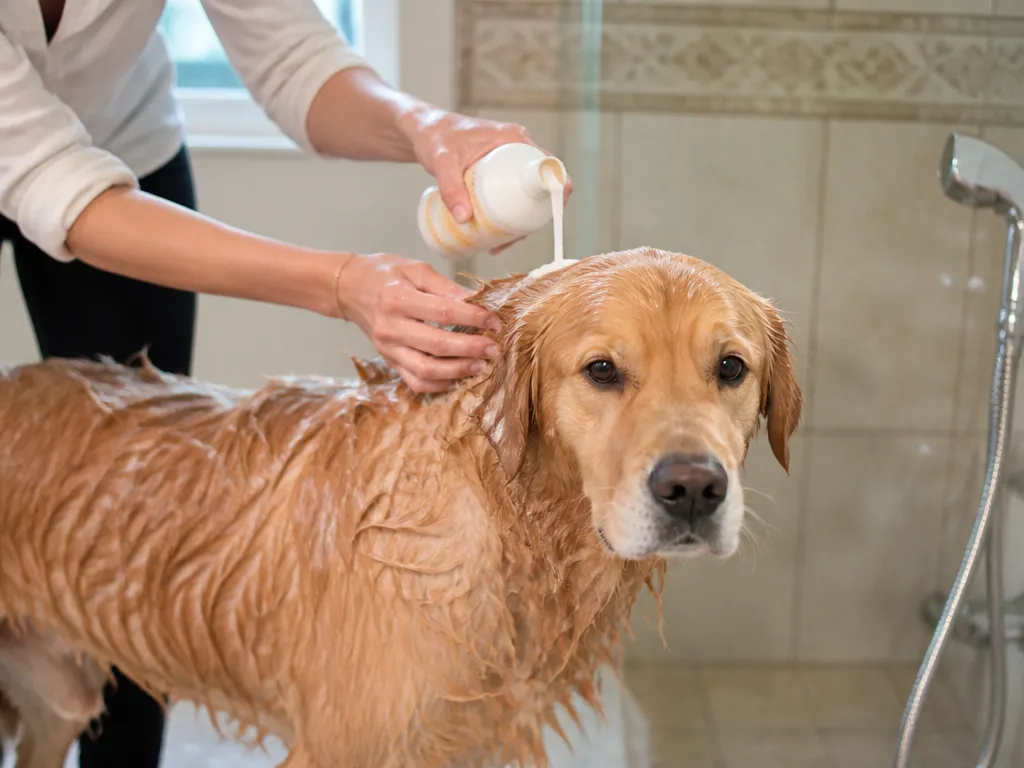
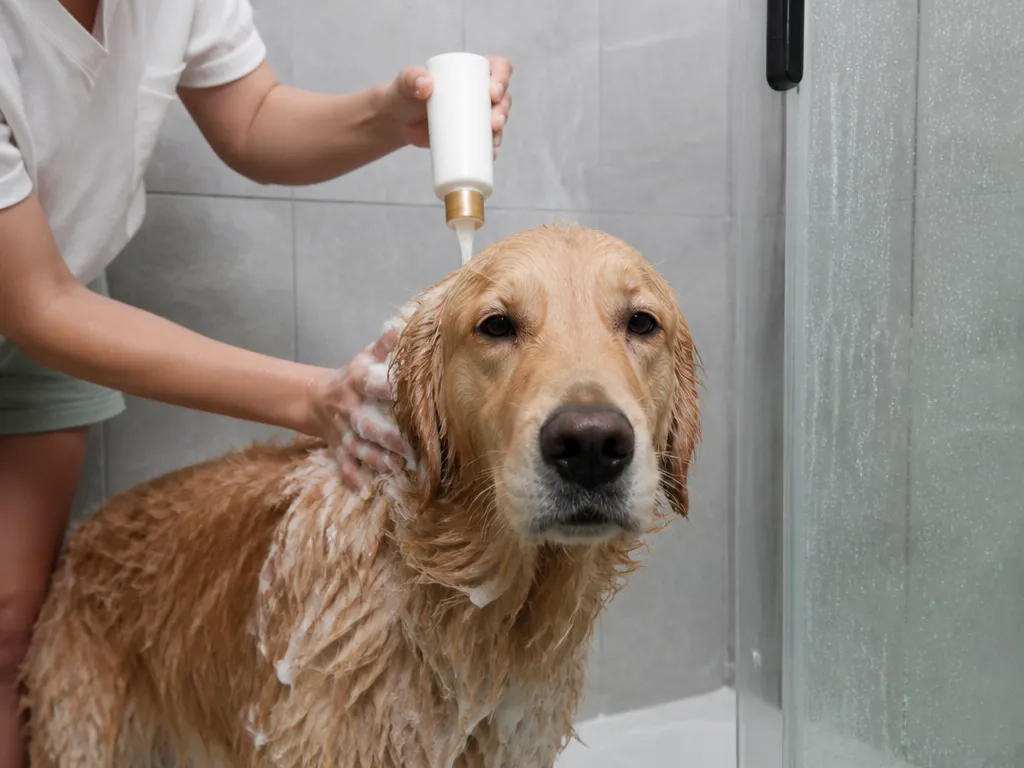
Human hair conditioner is generally a bad match for dogs and can irritate their skin, especially when left on the coat long enough to let ingredients absorb. Human products are made around human scalp and hair needs, which are different from canine skin barrier and tolerance. For routine grooming, it is safer to use a dog conditioner formulated for their skin and eye-to-mouth exposure risk.
Canine skin has a different pH and a different fat-and-moisture balance than human skin, so conditioners that feel “gentle” on your scalp can be too stripping or too occlusive on your dog’s coat. Dogs also groom themselves, so anything you apply may be licked off and swallowed, which is a bigger concern than with human-only use.
Why Human Formulas Fail Pets
Many human conditioners are built to improve shine and detangle for hair that is not the same as dog coat. Common “beauty” additives can irritate sensitive skin or cause gastrointestinal upset if ingested. Fragrance is a frequent culprit, and some formulas include solvents or essential oil blends that a pet’s skin cannot handle as well.
Dermatologist-adjacent grooming rule: patch-test any new product on a small area first, especially for dogs with allergies, hotspots, or eczema-like patches.
Safety Expectations For Your Dog
Swapping in human conditioner is most likely to be a short-term comfort experiment, not a long-term solution, because the risk is exposure, not just contact. If you are dealing with dry skin, flaky coat, or frequent licking, stick to a dog-specific conditioner and focus on rinse time and complete removal.
| Ingredient to watch | Why it can be risky for dogs | What to choose instead |
|---|---|---|
| Essential oils (tea tree, peppermint, citrus oils) | Can irritate skin and may be harmful if ingested | Fragrance-free or vet-formulated conditioners |
| Strong fragrance allergens | Triggers itch and redness in sensitive coats | Unscented formulas for reactive skin |
| Menthol or cooling agents | May irritate sensitive areas like belly and paws | Conditioners without “tingle” additives |
| Thick occlusives with residue | More licking, more irritation cycle | Lightweight conditioners that rinse clean |
Skin-type expectation by dog: oily coats may tolerate certain conditioning agents better, but sensitive and allergy-prone dogs are the ones most likely to react. For dry, itchy, or eczema-prone skin, choose a fragrance-free dog conditioner and rinse thoroughly, since left-behind residue is what often worsens the problem.
If you want a practical routine anchor, dog grooming goes cleanser first (dog shampoo), then conditioner (only on coat lengths), then rinse well, towel dry, and brush. Morning versus evening is less about timing and more about monitoring, so after an evening bath, you can better observe itch overnight and rinse again if needed.
Compare Canine And Human Ph Levels
Human skin is usually slightly acidic at about pH 4.5 to 5.5, which helps keep the skin’s acid mantle intact. Canine skin is also acidic, but the exact target pH can vary more by breed, coat type, and environment, so the “safe range” is not the same person to person.
When you switch products between species, the pH and formulation system can shift the skin’s surface environment. Conditioner formulas for human hair often aim to change feel on hair shafts, then include surfactants, fatty conditioners, and fragrance that may sit on or disturb skin barriers in dogs.
Acid Mantle And Barrier Basics
The acid mantle is the thin film of natural oils, sweat, lipids, and a low pH environment that helps keep microbes balanced and reduces moisture loss. In practical terms, a stable pH helps skin cells hold onto water and keeps irritation signals from ramping up.
Barrier damage can look like rough texture, tightness, itch, dullness, or more frequent redness. Dry, compromised skin also tends to react more strongly to fragrance and certain preservatives, even if those ingredients feel “light” in a hair product.
Conditioners can push pH indirectly, even when the product does not say “pH.” For example, rinse-off formulas often contain buffers, cationic conditioning agents, and sometimes alkaline components to manage slip and detangling, which can leave residues that alter the skin’s surface chemistry.
For instance, a dog’s skin that is already borderline dry or inflamed may tolerate only a narrow range of surface conditions. In that scenario, a human hair conditioner can aggravate itch or redness because it interferes with the film that normally protects the outermost skin layer.
Signs Of Acid Mantle Disruption
Signs that the skin barrier is struggling include increased scratching, flaky or greasy scaling, persistent redness around ears, chin, or belly, and a dull coat that looks “lifeless” even after grooming. Many pet parents notice odor changes too, since barrier disruption can make the skin environment friendlier to odor-causing microbes.
Look for patterns after exposure, since repeated use makes it easier to spot a cause-and-effect link. Patch-test style caution helps here too: apply a small amount of any new rinse-adjacent product to a limited area and watch for irritation for 24 to 48 hours.
Dermatologist tip: If a product makes skin feel slick or “coated,” that residue can keep the pH and lipid balance off, especially on already reactive skin.
| Skin indicator | What pH or barrier disruption often looks like |
|---|---|
| Itch or redness | Skin inflammation signals barrier stress and higher sensitivity to irritants |
| Dry flakes or scaling | Moisture retention drops when surface lipids do not organize well |
| Oiliness or odor | Microbe balance can shift when the acid mantle is less stable |
| Rough, uneven texture | Outer layer looks less smooth after residue and irritation cycles |
Skin types matter for how fast this shows up. Dogs with dry, sensitive, or allergy-prone skin often flare sooner than dogs with thicker, oilier barrier support, and frequent bathing can tighten the “tolerance window” even more.
Avoid These Toxic Red Flag Ingredients
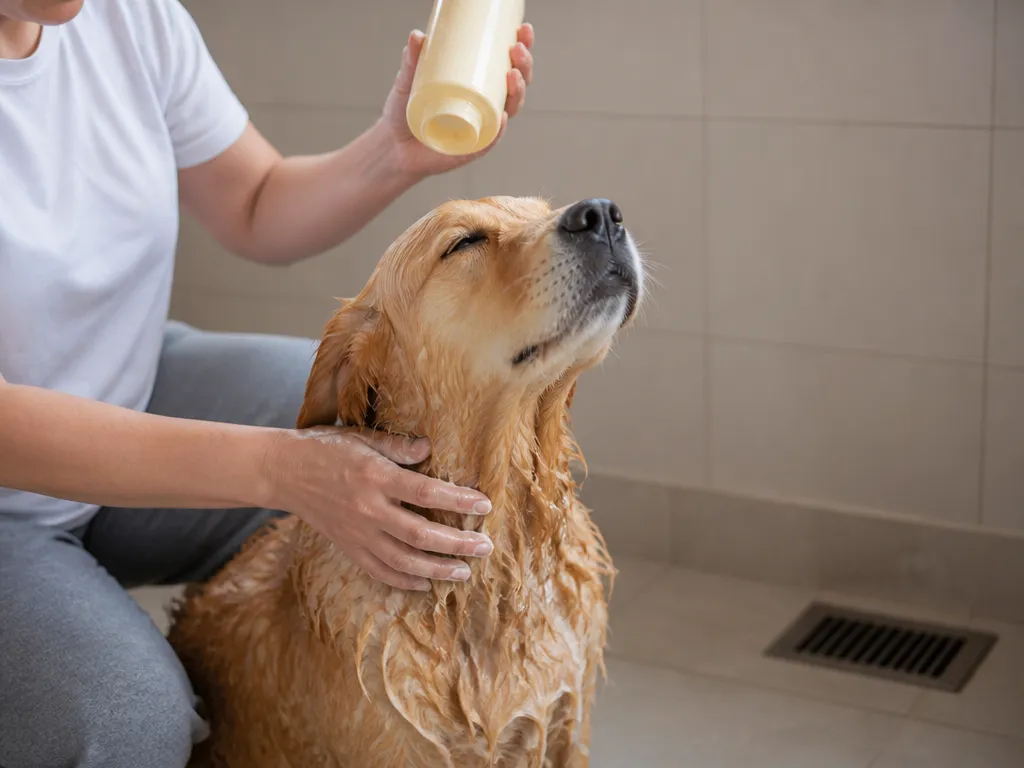
Certain chemicals in human conditioners cause severe skin irritation or systemic toxicity in dogs. These substances penetrate the thin canine epidermis faster than human skin.
Chemical Preservatives And Acids
Salicylic acid is a common ingredient in human products designed to exfoliate the scalp. Dogs can absorb this compound through their skin, which may lead to salicylate poisoning.
Parabens like methylparaben act as preservatives but can cause allergic contact dermatitis. This is common for dogs with sensitive skin or existing allergies.
For instance, a dog with atopic dermatitis may develop red, itchy bumps immediately after contact with these preservatives.
Fragrances And Essential Oils
Synthetic fragrances often contain phthalates that irritate the respiratory system. Dogs have a much stronger sense of smell, making these scents overwhelming and potentially triggering.
Certain essential oils are neurotoxic to canines. Tea tree oil and peppermint oil can cause tremors or lethargy if the dog licks the conditioned fur.
In practice, using a “refreshing” mint conditioner on a dog can lead to accidental ingestion and toxicity.
| Item | Amount/Specification | Notes |
|---|---|---|
| Salicylic Acid | Any concentration | Risk of systemic toxicity |
| Parabens | Methyl/Propylparaben | Endocrine disruptor and allergen |
| Tea Tree Oil | High concentrations | Neurotoxic if ingested |
| Synthetic Fragrance | Listed as “Parfum” | Respiratory and skin irritant |
Esthetician tip: Always perform a patch test on a small area of the dog’s belly. Wait 24 hours to check for redness or swelling before applying any product to the full body.
Look For These Soothing Ingredients
High-quality canine conditioners rely on natural botanical extracts to maintain skin barrier health and coat texture. These ingredients work to calm irritation and provide moisture without disrupting the slightly alkaline pH of a dog’s skin. Using products with these specific components helps prevent the dryness often caused by frequent bathing.
Oatmeal is a primary choice for dogs with sensitive or itchy skin. It contains avenanthramides, which are antioxidant compounds that reduce inflammation. This ingredient is particularly helpful for breeds prone to seasonal allergies or contact dermatitis.
Aloe vera provides deep hydration for the skin underneath the fur. It acts as a humectant to pull moisture into the epidermis, making it useful for dogs with dry, flaky skin. Since dogs often lick themselves after a bath, ensure the aloe source is pure and free of artificial fragrances.
Coconut oil adds a natural shine to the coat while providing a protective layer. This fatty acid helps smooth the hair cuticle, which makes detangling easier for long-haired breeds like Goldendoodles or Shih Tzus. It also has mild antimicrobial properties that support skin health.
| Ingredient | Primary Benefit | Best For |
|---|---|---|
| Colloidal Oatmeal | Itch relief and inflammation reduction | Sensitive or allergy-prone skin |
| Aloe Vera | Hydration and soothing | Dry, flaky, or irritated skin |
| Coconut Oil | Shine and cuticle smoothing | Dull coats and difficult detangling |
| Vitamin E | Antioxidant skin protection | Aging skin or environmental stress |
Pro tip: Always perform a patch test on a small area of your dog’s belly before applying a new conditioner to their entire body.
Watch For Negative Reaction Symptoms
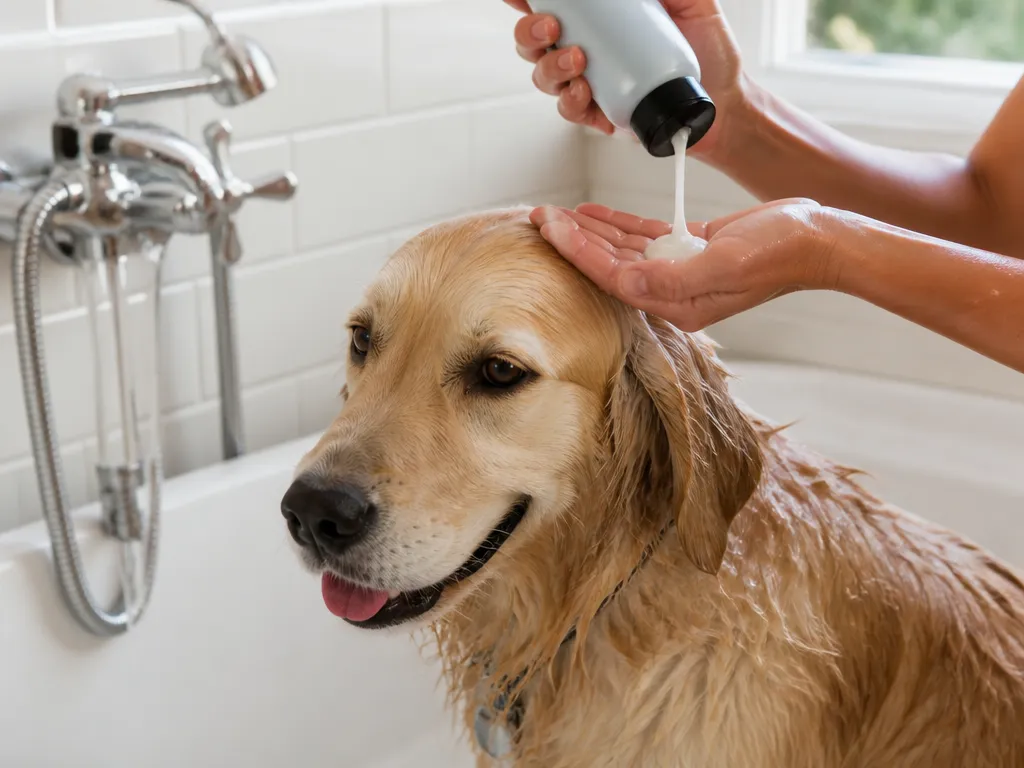
Adverse reactions to human conditioners usually appear as localized inflammation or systemic itching. These symptoms can occur when synthetic fragrances or other ingredients irritate the canine skin barrier.
Esthetician tip: Always perform a patch test on a small area of the leg and wait 24 hours before a full bath to check for sensitivity.
| Symptom | Likely Cause | Immediate Action |
|---|---|---|
| Hives | Fragrance allergy | Immediate rinse |
| Flaking | pH imbalance | Oatmeal bath |
| Redness | Chemical irritant | Vet consultation |
For instance, a dog with atopic dermatitis may react more strongly to parabens found in human formulas. You might see immediate swelling around the paws or belly.
Skin irritation can appear within minutes or take several days to manifest. If redness persists after a thorough rinse, stop using the product immediately.
Expect the skin to return to normal within 48 to 72 hours after the irritant is removed. If the dog continues to scratch, it may require a medicated shampoo to restore the skin barrier.
Choose Dog-specific Conditioning Products
Dog-specific conditioners are the safest pick because they are made for canine skin barrier needs and are less likely to include human hair irritants. Human hair products can be too fragranced or too “active” for dogs, and some ingredients that feel fine for people can trigger itching or dryness in pets.
When you shop, pick formulas that are gentle and low-risk for sensitive skin, especially if your dog is prone to dryness or licking. Look for conditioning ingredients like glycerin, panthenol, and colloidal oatmeal, then skip heavy fragrance and essential-oil blends if your dog reacts to smells.
Budget-friendly Pet Grooming Finds
Budget dog conditioners can work well for most dogs when they focus on barrier comfort instead of strong scent or “deep repair” claims. This works best for oily to combination dogs because lighter moisturizers condition without leaving a greasy feel.
| Product | Price | Key Ingredient | Best For |
|---|---|---|---|
| Fragrance-light dog conditioner (sensitive skin) | Drugstore | Panthenol | Dry, itchy-prone coats |
| Oat-based dog conditioner | Budget | Colloidal oatmeal | Rough texture and comfort needs |
High-end Veterinary-grade Solutions
High-end veterinary-grade conditioners are worth it when your dog has chronic dryness, flaking, or a history of skin sensitivity. This works best for normal to dry skin types in dogs, and it can be easier to stick with when you need consistent results without trial-and-error.
Veterinarian tip: If your dog’s coat improves but itch returns quickly, you may need a different rinse level or an allergy-focused plan rather than a “stronger” conditioner.
Diy Safe Conditioning Alternatives
DIY options should be simple, because the biggest risk is accidentally introducing irritants like strong scents or concentrated botanicals. This works best for dogs with mild dryness, not for dogs with active redness, suspected dermatitis, or thick flaking.
Ingredient safety red flags to avoid in any conditioning product, including “natural” brands, are essential oils (fragrance-heavy formulas), alcohol denat. in leave-on style products, and aggressive fragrance allergens. Active human hair treatments like salicylic acid, glycolic acid, or retinoid-type compounds are also a hard pass for dogs, since they can irritate canine skin.
Morning and evening routines do not apply here because this is rinse-based grooming, but timing still matters for comfort. Condition during your normal bath routine, then dry fully so damp skin does not trigger itch, especially for dogs with normal to dry skin.
Apply Conditioner Safely And Effectively
Proper conditioning technique is essential for maintaining your dog’s coat health and avoiding skin irritation. The application method can significantly impact how well the product works and whether it causes any adverse reactions.
Pre-conditioning Preparation
Before applying any conditioner, thoroughly brush your dog’s coat to remove loose fur and tangles. This ensures even distribution and prevents matting during the conditioning process.
Thorough rinsing is critical to prevent residue buildup, which can attract dirt and cause skin irritation. Use your fingers to work through the coat while rinsing to ensure all product is removed.
Expert tip: For double-coated breeds, consider using a leave-in conditioner on the outer coat while thoroughly rinsing the undercoat to maintain proper insulation and protection.
After conditioning, gently towel dry your dog before allowing them to air dry completely. This helps maintain the benefits of the conditioning while preventing dampness from causing skin issues.
Quick Summary
Many human products contain fragrances, essential oils, or phenoxyethanol that can trigger redness and itching. Because dogs lick their coats, these ingredients also pose a risk of gastrointestinal upset. It is essential to patch-test any new product on a small area for 24 hours to check for hives or swelling. After bathing, prevent licking for 20 to 30 minutes to ensure safety. The most important takeaway is to use vet-formulated products to protect your dog’s skin and internal health.
| Risk Factor | Safe Alternative |
|---|---|
| Human pH (5.5) | Dog pH (6.5 – 7.5) |
| Fragrances & Essential Oils | Unscented, Vet-Formulated |
| Human Conditioners | Oatmeal or Aloe Vera Dog Formulas |
Frequently Asked Questions
Is It Safe To Use Human Hair Conditioner On Dogs?
Generally, it is not recommended because humans have a skin pH of about 4.5 to 5.5, while dogs are closer to 6.5 to 7.5. Using human products can disrupt a dog’s acid mantle and lead to skin irritation.
What Happens If I Use Human Conditioner On My Dog Once?
A single application usually won’t cause permanent damage, but you must rinse the coat thoroughly to avoid residue. Monitor your pet for 24 hours for any signs of redness or itching.
Which Ingredients In Human Conditioners Are Most Risky For Dogs?
Avoid any product containing tea tree oil or strong artificial fragrances, as these can be toxic if ingested or irritating to the skin. Always read the label for harsh sulfates that can dry out their coat.
Why Is The Ph Difference So Important For Dog Skin?
Dogs have thinner skin than humans, and a pH mismatch can strip away essential protective oils. This makes their skin more susceptible to infections and environmental allergens.
Are Dog-specific Conditioners Worth The Price Over Human Ones?
Yes, because they are formulated at a pH of 6.5 to 7.5 to match canine biology. This ensures the coat stays hydrated without compromising the skin barrier.

- 5 Best Moisturizing Curl Defining Creams for Soft, Defined Curls - September 24, 2026
- Best Curl Creams for Straight Hair: 5 Top Picks for Women - September 24, 2026
- How Many Washes Does Temporary Hair Color Spray Last? - September 24, 2026