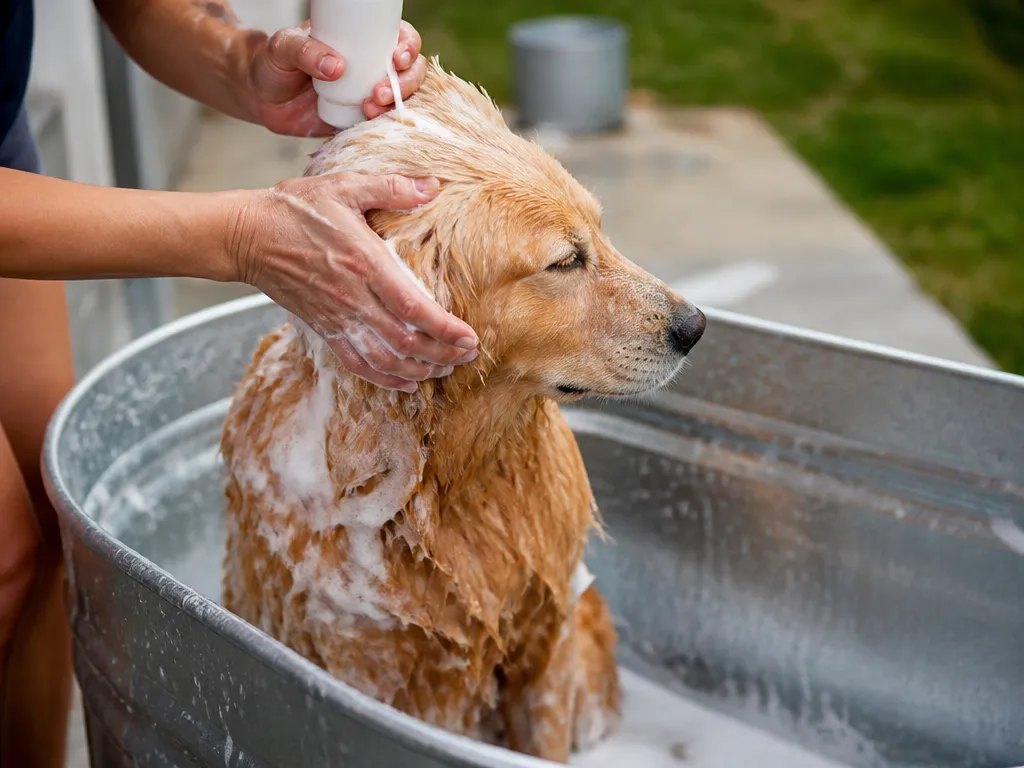
Can You Use Hair Conditioner On Dogs?
Running out of pet shampoo and reaching for your own bottle is a common mistake that often leads to dry, itchy skin for your dog. Your hair care products are formulated for the human scalp, which has a drastically different protective barrier than a dog’s skin. Using the wrong product can strip away essential oils and lead to irritation. Best for: All dog breeds. Use caution if: Your dog has pre-existing skin allergies or open wounds.
Human hair conditioner is not recommended for dogs because it can disrupt their natural pH balance. Human skin sits at a pH of around 5.5, while a dog’s skin is more alkaline, typically between 6.5 and 7.5. Always choose canine-specific conditioners containing oatmeal or aloe vera to maintain their skin barrier.
Can You Use Hair Conditioner On Dogs?
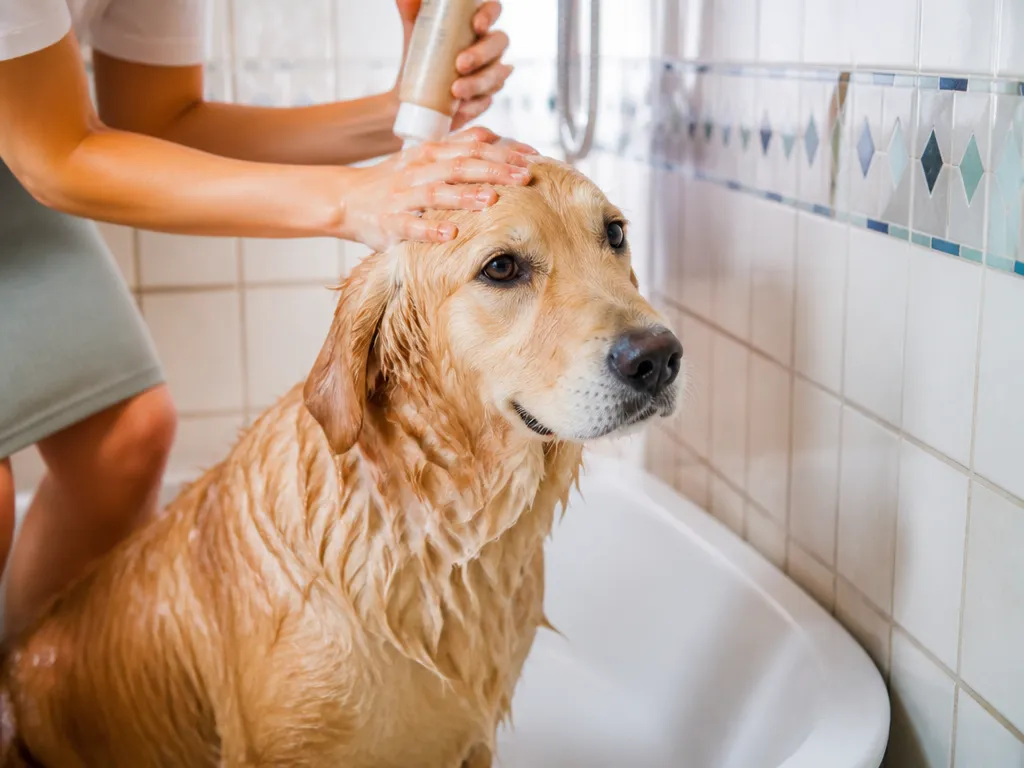
Human hair conditioners often contain chemical additives, fragrances, and preservatives that irritate a dog’s delicate skin barrier. These products are formulated for the specific thickness and oil production of human scalps, which differ significantly from canine physiology.
Applying these formulas to a pet carries several risks for their skin health and comfort. You should always opt for products specifically labeled for veterinary or canine use to ensure the safety of your animal.
Dermatologist tip: When managing skin sensitivity in both humans and pets, always perform a patch test on a small area of the skin before applying a new product all over the body.
If you find that your dog has dry, itchy skin, look for canine-specific conditioners that prioritize soothing ingredients like oatmeal or aloe vera. These components provide moisture without disrupting the natural balance of their coat. Avoid any products containing essential oils like tea tree or peppermint, as these can be toxic to dogs even in diluted amounts.
| Feature | Human Conditioner | Canine Conditioner |
|---|---|---|
| pH Balance | Acidic (approx. 4.5-5.5) | Neutral (approx. 6.5-7.5) |
| Fragrance | Strong/Synthetic | Mild/Natural |
| Safety | Not for ingestion | Lick-safe formulations |
Dog Skin Ph Differences
Canine skin maintains a significantly higher pH level than human skin, typically resting between 6.5 and 7.5. Human skin is acidic, usually measuring around 5.5, which creates a protective acid mantle to ward off bacteria and environmental stressors.
This difference helps explain why products made for human skin may irritate dogs. Human conditioners can strip away the natural oils that protect a dog and leave the barrier vulnerable to dryness, irritation, and infection.
| Species | Average pH Level | Skin Barrier Nature |
|---|---|---|
| Human | 5.5 (Acidic) | Thick, multi-layered |
| Dog | 6.5 – 7.5 (Neutral) | Thin, sensitive |
Barrier Function And Sensitivity
Dogs possess a much thinner skin barrier than humans, having only 3 to 5 cell layers compared to our 10 to 15 layers. This structural difference means that any topical application penetrates the skin of a dog far more rapidly and deeply than it does on a human.
Esthetician Tip: Never assume a “gentle” or “pH-balanced” human product is safe for animals. Always look for veterinary-grade formulas that specifically cite the neutral pH range required for canine physiology.
For instance, a human conditioner intended for oily hair may contain surfactants that are effective for human scalps but cause severe flaking and itching on a dog. Using human-grade items on pets often leads to a cycle of scratching that creates micro-tears, further weakening the skin and inviting secondary yeast or bacterial infections.
Toxic Ingredients To Avoid
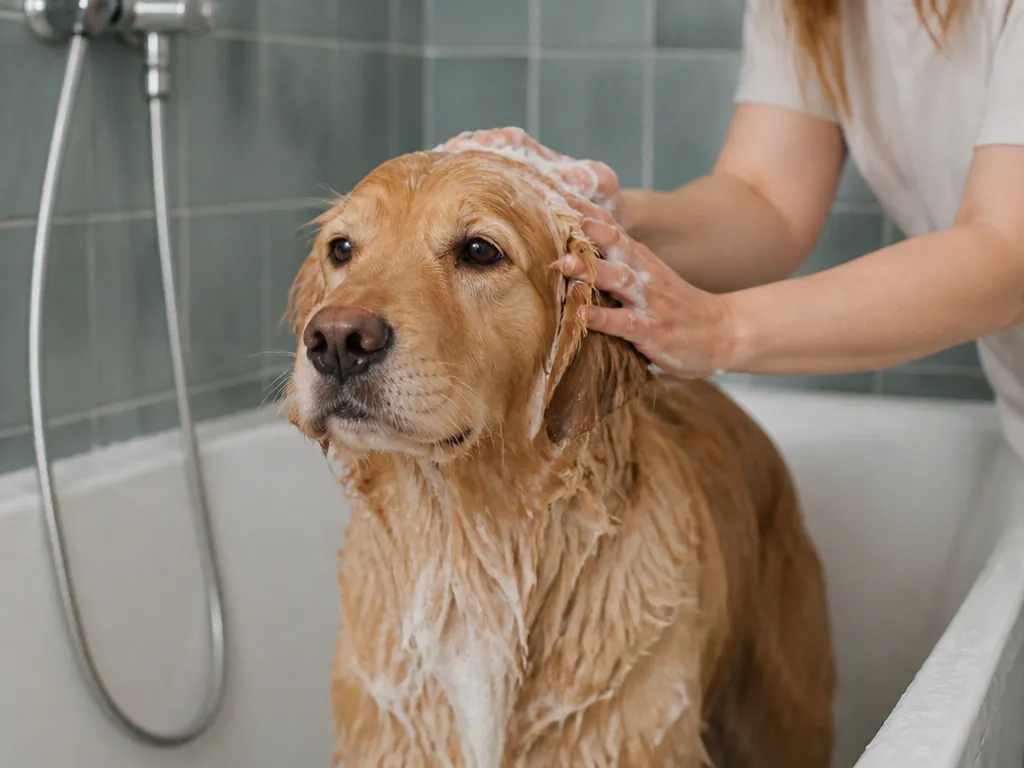
Human hair conditioners contain chemical compounds that disrupt the delicate lipid barrier of canine skin, leading to inflammation and severe dryness. These products rely on synthetic fragrances, silicones, and stabilizers that are safe for human scalps but toxic or irritating when ingested or absorbed by a dog.
Harmful Additives And Their Risks
Fragrances remain the primary offender in human products, often containing phthalates that cause allergic skin reactions in dogs. Essential oils, while popular in natural beauty, present a significant danger to pets because many varieties are toxic if licked during self-grooming.
| Ingredient | Common Use | Dog Safety Status |
|---|---|---|
| Tea Tree Oil | Scalp health | Highly Toxic |
| Parabens | Preservative | Endocrine Disruptor |
| Propylene Glycol | Humectant | Potential Irritant |
| Artificial Fragrance | Scent | Allergen |
For instance, tea tree oil causes tremors and lethargy in dogs even in small doses. Preservatives like methylisothiazolinone or parabens, which keep human products shelf-stable for years, often trigger contact dermatitis in dogs.
Dermatologist tip: Always check the ingredient list for hidden essential oils like peppermint, wintergreen, or pine, as these can cause respiratory distress or skin blistering in sensitive breeds.
Always perform a patch test on a small area of the dog’s inner thigh if you suspect a reaction. If redness, swelling, or excessive scratching occurs, rinse the area with cool water and contact your veterinarian immediately.
Proper Dog Bathing Technique
Effective bathing relies on lukewarm water and specific canine-formulated products that respect the unique pH balance of a dog’s skin. Over-bathing strips the natural oils necessary for a healthy coat, while incorrect water temperatures cause unnecessary stress or physical discomfort.
Esthetician tip: Just like human skincare, consistency is key to maintaining a healthy barrier. Aim for a bath once every 4 to 8 weeks depending on the breed and activity level.
Frequency requirements vary based on coat type and lifestyle. Dogs with oily skin or those prone to outdoor adventures require more frequent attention, while others maintain their coat health with monthly sessions. Always use a dedicated canine shampoo, as human-grade options contain surfactants that are far too harsh for the higher pH levels of a dog’s epidermis.
| Bathing Factor | Recommendation |
|---|---|
| Water Temperature | Lukewarm (tepid) |
| Frequency | Every 4-8 weeks |
| Product Type | Canine-specific only |
Complete Rinsing Methods
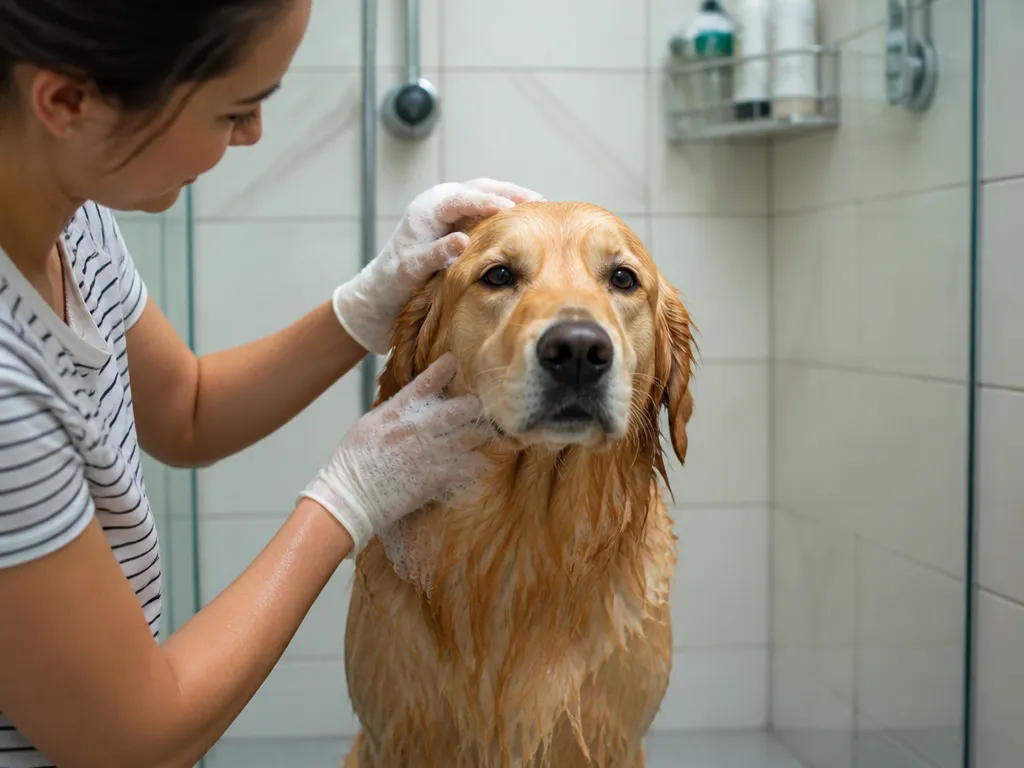
Thorough removal of all product residue is essential to prevent skin irritation and matting in canine coats. Residual surfactants or conditioning agents can trap debris against the skin, leading to potential contact dermatitis or localized hot spots.
Step-by-step Rinsing Protocol
Expert Tip: Always rinse from the top of the neck down toward the tail. This prevents product-heavy water from running into the ears or eyes, which can cause significant discomfort or infection.
Professional grooming standards emphasize that residue left on the skin acts as an irritant for sensitive or allergy-prone dogs. If your dog exhibits signs of scratching after a bath, perform an additional rinse with plain water to ensure the skin barrier remains clear of any leftover formulation.
| Action | Goal | Frequency |
|---|---|---|
| Initial Rinse | Remove loose dirt | Every bath |
| Post-Conditioning Rinse | Remove slick residue | Every bath |
| Towel Blotting | Reduce drying time | Every bath |
Professional Dog Conditioners
Canine conditioners use a pH balance between 6.5 and 7.5 to support the skin barrier of a dog. This specific range helps prevent the dryness and irritation common with human products.
Breed-specific Recommendations
Different coat types require specific formulations. Long-haired breeds like Poodles or Golden Retrievers need detangling agents to manage knots.
For instance, a heavy cream conditioner with shea butter or coconut oil helps prevent mats in curly or thick hair.
Short-haired dogs with oily skin should use lightweight, water-based formulas. These prevent the coat from feeling greasy after a bath.
| Brand | Price Point | Key Ingredient | Best For |
|---|---|---|---|
| Earthbath | Budget | Aloe Vera | All Coats |
| Zesty Paws | Mid-range | Omega Fatty Acids | Dry Skin |
| Chris Christensen | Luxury | Silk Proteins | Long Hair |
Vet-approved And Budget Options
Veterinary brands focus on hypoallergenic ingredients. They often exclude synthetic fragrances that trigger allergies in sensitive breeds.
Budget options like Earthbath are effective for weekly maintenance. High-end lines like Chris Christensen are better for show-quality shine and extreme detangling.
Professional tip: Always perform a patch test on a small area of the belly before a full bath to check for redness or itching.
Consistency in application is key for results. Expect to see a softer coat after 2 to 3 uses.
Diy Dog Conditioner Recipes
Homemade conditioners use pH-balanced ingredients to soothe skin and smooth fur without harsh chemicals. These recipes avoid the high acidity and fragrances found in human products.
Oatmeal And Water Soak
Colloidal oatmeal is a gold standard for dogs with sensitive or itchy skin. It creates a protective barrier that locks in moisture and reduces inflammation.
Mix one cup of finely ground oats with two cups of warm water. Stir until the mixture is smooth and creamy.
For instance, apply this to a dog with seasonal allergies after a mild shampoo. Let it sit for five minutes before rinsing with cool water.
Coconut Oil Gloss
Virgin coconut oil is a heavy occlusive that works best for dogs with very dry skin or coarse coats. It adds a high shine and prevents tangles in long-haired breeds.
Warm two tablespoons of coconut oil until it is liquid. Mix it with one tablespoon of warm water to help it spread evenly through the fur.
In practice, massage this into the ends of the coat. Avoid the skin on the face to prevent clogged pores or eye irritation.
Aloe Vera Hydrator
Pure aloe vera gel is a humectant that attracts water into the skin. It is an excellent choice for dogs with sun-exposed skin or mild irritation.
Combine equal parts pure aloe vera gel and distilled water. Shake the mixture in a spray bottle for easy application.
Apply this as a leave-in treatment on a damp coat. This method works well for short-haired breeds that need a quick refresh between baths.
| Recipe | Best Skin Type | Main Benefit |
|---|---|---|
| Oatmeal | Sensitive/Itchy | Calms Irritation |
| Coconut Oil | Very Dry | Adds Shine |
| Aloe Vera | Normal/Irritated | Hydration |
Esthetician tip: Always perform a patch test on a small area of the leg and wait 24 hours to check for redness before applying any DIY mixture to the whole body.
Quick Summary
Human hair conditioner is not recommended for dogs because it can disrupt their natural pH balance. Human skin is about pH 5.5, while dog skin is more alkaline, typically between 6.5 and 7.5. Human formulas can strip essential protective oils and lead to dryness, itching, and irritation, especially since a dog’s thinner skin barrier allows products to penetrate more quickly and deeply. The safest option is a canine-specific conditioner with soothing ingredients like oatmeal or aloe vera.
Beyond pH mismatch, human conditioner ingredients and residue can create additional risks. Rinse thoroughly to prevent buildup, since dogs often lick their fur after bathing. Check labels and avoid tea tree oil, xylitol, parabens, added fragrances, and other irritating additives. For sensitive or flaky skin, seek veterinary guidance and use a pH-balanced, canine-labeled conditioner.
| Category | Human Hair Conditioner | Canine Conditioner (from article guidance) |
|---|---|---|
| Skin pH match | Acidic, around 4.5 to 5.5 | Neutral range, about 6.5 to 7.5 |
| Rinse time | Thorough rinsing is recommended to avoid residue | Also requires thorough rinsing |
| Soothing ingredients to look for | Not designed for canine barrier needs | Oatmeal or aloe vera |
| Avoid | Tea tree oil, xylitol, parabens, and harsh additives/fragrance | Choose labels that exclude those items |
Frequently Asked Questions
Can I Use Human Hair Conditioner On My Dog Safely?
Human hair conditioner is not recommended for dogs, even in small amounts, because it is not designed for canine skin and can cause irritation. Use a canine-specific conditioner instead, and rinse it thoroughly according to the product directions.
How Long Until I See Results If I Use Conditioner On My Dog?
You can see some softness and easier brushing right away after rinsing, because conditioner temporarily smooths the hair shaft. If you are trying to help with dryness, plan on evaluating after 1 to 2 weeks of appropriate dog-specific baths and skin care.
Can This Help With Dog Dandruff Or Dry Itchy Skin, Or Is It A Bad Idea?
Conditioners can make the coat feel better, but if your dog’s issue is true dandruff, yeast, or allergies, using the wrong product can worsen inflammation. If itching is significant or skin is inflamed, skip DIY and ask your vet for the right shampoo and treatment plan.
What Should I Do First If My Dog Has Sensitive Skin Or Acne-like Bumps?
If your dog has sensitive skin, do a patch test on a small area, wait 24 hours, and watch for irritation. Avoid conditioners with strong fragrances or essential oils, and remember some ingredients can be irritating or allergenic even if they feel “gentle” to humans.
Is Dog Conditioner Or “Expensive” Human Hair Conditioner Worth It Compared With Drugstore Options?
For most pet owners, the best value is a dog-specific conditioner that is formulated for canine skin, because you are less likely to deal with fragrance and sensitivity issues. “Expensive” human products are not automatically safer, so choose based on simple, fragrance-reduced formulas and how your dog’s skin reacts.

- Temporary Hair Color Spray: Application, Longevity, and Removal - September 22, 2026
- 10 Best Washable Hair Dye Sprays for Dark Hair That Actually Show Up - September 22, 2026
- Washable Hair Dye Spray vs. Hair Chalk: Which Is Better? - September 22, 2026