Homemade Deep Conditioning Hair Conditioner: Natural Recipes for Soft, Healthy Hair
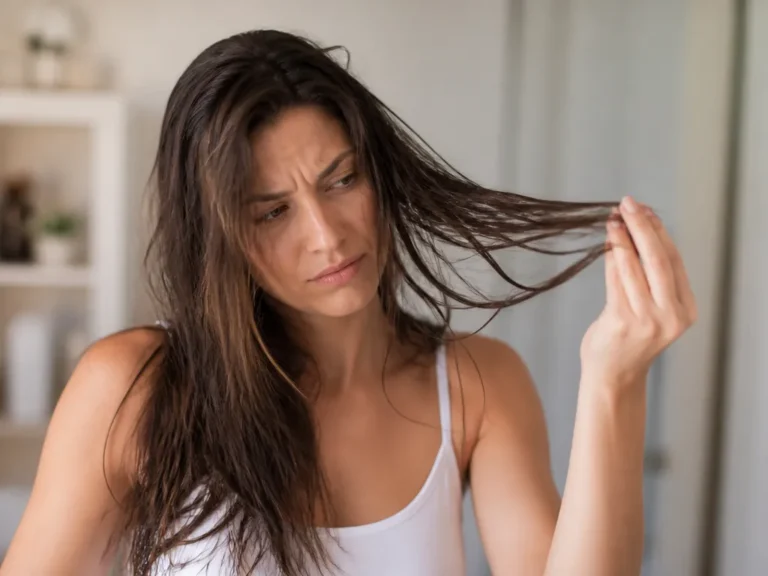
Dry, rough, tangled hair can make wash day feel like a chore. If your regular conditioner leaves your hair soft for only a few hours, a homemade deep conditioning hair conditioner may be worth trying. A good DIY deep conditioner can combine moisturizing ingredients such as aloe vera, honey, avocado, and natural oils with your regular conditioner to improve softness, slip, and manageability.
The important part is choosing ingredients based on what your hair actually needs. Fine hair may need a lightweight recipe, while thick, curly, coily, or damaged hair may benefit from a richer treatment. Homemade does not automatically mean better or safer, so preparation, ingredient choice, and storage also matter.
| Hair Problem | Helpful Homemade Ingredients |
|---|---|
| Dry, rough, frizzy hair | Aloe vera, honey, conditioner, avocado |
| Tangled, curly, or coily hair | Conditioner, aloe vera, coconut oil, shea butter |
What Is a Homemade Deep Conditioning Hair Conditioner?
A homemade deep conditioning hair conditioner is a DIY treatment designed to give the hair more conditioning than a quick rinse-out conditioner.
The main purpose is to improve the feel, flexibility, softness, slip, and manageability of the hair.
Unlike shampoo, which primarily cleanses the hair and scalp, a deep conditioner focuses on conditioning the hair fiber.
The relationship is simple:
Shampoo → removes dirt and buildup → deep conditioner → improves lubrication and manageability → easier detangling and styling.
A homemade treatment can be made entirely from natural ingredients, or you can use a commercially formulated conditioner as the base and add one or two natural ingredients.
For beginners, the second option is often easier because a commercial conditioner already contains ingredients designed specifically for conditioning hair.
What Does Deep Conditioning Actually Do?
Deep conditioning does not permanently repair damaged hair.
Instead, conditioning ingredients can coat and lubricate the hair surface, helping reduce friction between individual strands.
This can make hair feel:
- Softer
- Smoother
- Less tangled
- Easier to comb
- Less rough
- More manageable
- Less frizzy
That temporary improvement can make a major difference during wash day, particularly for curly, coily, dry, or chemically treated hair.
What Ingredients Are Best for Homemade Deep Conditioning?
You do not need a kitchen full of ingredients to make an effective DIY hair conditioner.
The best approach is to understand what each ingredient contributes and then choose ingredients according to your hair’s needs.
Aloe Vera for Lightweight Moisture
Aloe vera gel is popular in homemade hair treatments because it has a smooth, slippery texture.
It can help a conditioner spread through the hair more easily and may make the hair feel softer and more manageable.
For DIY hair care, use plain aloe vera gel rather than a product loaded with fragrance or unnecessary additives.
Aloe vera works particularly well when you want a lighter treatment.
It can be useful for:
- Fine hair
- Wavy hair
- Curly hair
- Dry hair
- Hair that needs more slip
However, aloe vera is not a miracle hair-growth treatment. Its main role here is conditioning support and texture.
Honey for Moisture
Honey is a humectant, meaning it can attract and retain water.
That makes it a popular ingredient for moisturizing hair treatments.
You only need a small amount.
Too much honey can make your hair sticky and difficult to rinse.
For a single-use recipe, around ½ teaspoon to 1 teaspoon is usually enough to experiment with.
Coconut Oil for Dry Hair
Coconut oil can be useful when hair needs additional lubrication.
It is especially popular for dry and coarse hair.
However, coconut oil is not suitable for everyone.
Some people find that it makes their hair:
- Heavy
- Greasy
- Stiff
- Difficult to wash
If your hair is fine, start with only a few drops or leave coconut oil out completely.
Avocado for a Richer Hair Mask
Avocado is commonly used in homemade hair masks because it contains fats and gives the treatment a creamy texture.
Mashed avocado can be useful for a richer DIY treatment, particularly when the hair feels very dry.
The downside is that avocado can be difficult to rinse if it is not blended extremely well.
For that reason, use a blender and strain the mixture if necessary.
Shea Butter for Thick, Dry Hair
Shea butter provides a rich, creamy texture and can make a DIY hair mask feel more moisturizing.
It can be particularly useful for thick, coarse, curly, and coily hair.
But shea butter can overwhelm fine hair.
If your hair becomes flat or greasy easily, use a very small amount or choose a lighter recipe.
How to Make a Homemade Deep Conditioner
There are many DIY recipes online, but a simple formula is often easier to use and troubleshoot.
A good beginner recipe is:
Simple Aloe and Honey Deep Conditioner
Ingredients:
- 2 tablespoons regular conditioner
- 1 tablespoon aloe vera gel
- ½ teaspoon honey
- ¼ teaspoon coconut oil, optional
Use a protein-free conditioner if you specifically want a protein-free treatment.
Mix the ingredients in a clean bowl immediately before application.
The conditioner acts as the main conditioning ingredient, while aloe vera contributes slip and honey adds humectant properties.
The small amount of oil adds richness without making the treatment excessively greasy.
How to Prepare It
- Put the conditioner into a clean bowl.
- Add aloe vera gel.
- Add honey.
- Add a few drops of coconut oil if desired.
- Mix until completely smooth.
- Apply immediately to damp hair.
Do not prepare a large jar and leave it sitting in the bathroom.
Fresh homemade mixtures containing water can spoil because they usually do not contain a properly tested cosmetic preservation system.
How Should You Apply Homemade Deep Conditioner?
Even a good recipe can disappoint if it is applied incorrectly.
The application process should focus on even coverage and gentle handling.
Start With Clean, Damp Hair
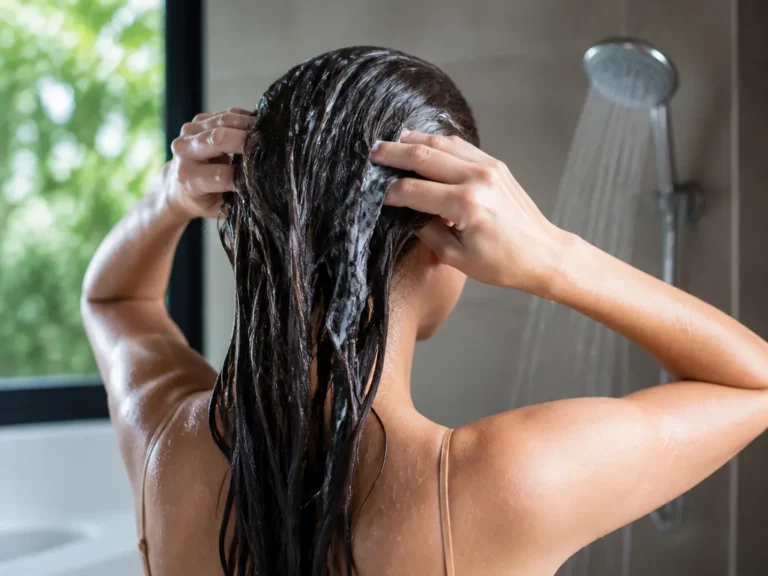
Wash your hair with your normal shampoo.
Then gently squeeze out excess water.
The hair should remain damp because water helps spread the conditioner.
Hair that is dripping wet can dilute the treatment too much, while completely dry hair can make distribution more difficult.
Divide Thick or Curly Hair Into Sections
If you have thick, curly, or coily hair, divide it into four to eight sections.
This allows you to distribute the conditioner more evenly.
Apply the treatment to one section at a time.
Concentrate on the Lengths and Ends
The lengths and ends often need more conditioning than the scalp.
Apply the treatment from approximately the mid-lengths down toward the ends.
If your scalp is oily or sensitive, avoid coating it with a heavy DIY mask.
Detangle While the Hair Has Slip
This is one of the biggest benefits of deep conditioning.
Once the conditioner is distributed, gently work through the hair using your fingers.
Then use a wide-tooth comb or appropriate detangling brush if needed.
Start at the ends and gradually move upward.
Never force a comb through a knot.
How Long Should Homemade Deep Conditioner Stay on Hair?
You usually do not need to leave a homemade deep conditioner on overnight.
For most DIY treatments, 15 to 30 minutes is a practical starting point.
Can You Use Heat?
Gentle warmth can make the treatment feel more comfortable.
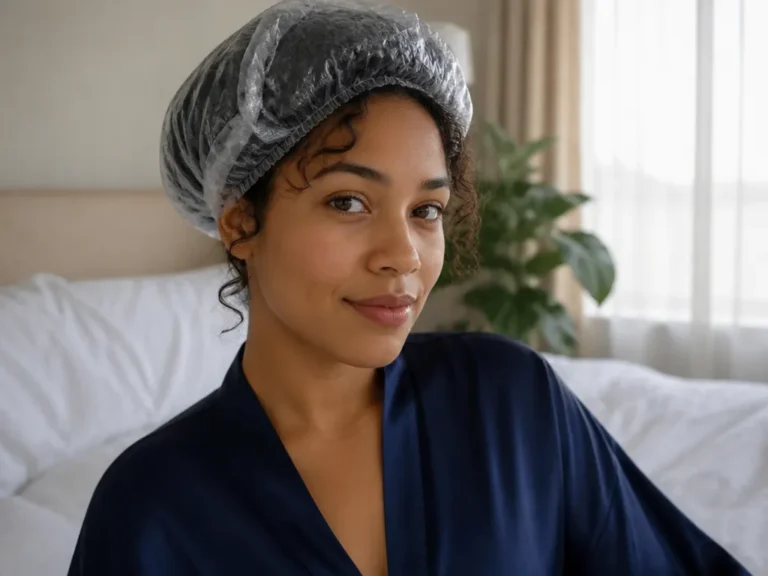
A shower cap can help prevent the conditioner from drying out.
If you use a heated cap, follow its instructions and avoid excessive heat.
You do not need very hot temperatures to deep condition your hair.
Should You Leave It Overnight?
There is generally little reason to sleep with a homemade hair mask.
Longer contact does not automatically mean better conditioning.
Overnight application can also increase exposure to ingredients that may irritate the scalp.
A controlled 15–30 minute treatment is easier and less messy.
Which Homemade Deep Conditioner Is Best for Your Hair Type?
One recipe does not work equally well for everyone.
Hair thickness, texture, chemical processing, styling habits, and product buildup can all affect how your hair responds.
Deep Conditioner for Dry Hair
For dry hair, use a richer conditioner with aloe vera, honey, and a small amount of oil.
Try:
- 2 tablespoons rich conditioner
- 1 tablespoon aloe vera
- ½ teaspoon honey
- ¼ teaspoon coconut or olive oil
Apply to damp hair and leave for 20–30 minutes.
If your hair still feels dry afterward, look at your entire routine rather than simply adding more oil.
Over-cleansing, heat styling, and chemical treatments can contribute to dryness.
Deep Conditioner for Curly Hair
Curly hair often benefits from a treatment with good slip.
Aloe vera and conditioner can make detangling easier.
Apply the treatment in sections and work through the curls gently.
Avoid aggressively combing through curls when there is not enough conditioner.
Deep Conditioner for 4C Hair
4C hair can benefit from a rich conditioning treatment because gentle detangling and moisture management are important for reducing mechanical stress.
Try a richer conditioner with:
- Aloe vera
- A small amount of honey
- A small amount of coconut or olive oil
Apply section by section.
Do not try to detangle the entire head at once.
Allow the conditioner to provide enough slip first.
Deep Conditioner for Fine Hair
Fine hair can become weighed down easily.
Use a lightweight recipe:
- 2 tablespoons lightweight conditioner
- 1 tablespoon aloe vera
- ¼ teaspoon honey
Skip the oil initially.
If your hair feels soft but flat after rinsing, reduce the amount of conditioner or shorten the treatment frequency.
Deep Conditioner for Chemically Treated Hair
Coloring, bleaching, relaxing, and straightening can change the physical properties of the hair.
A deep conditioner can improve the hair’s surface feel and manageability.
However, it cannot reverse chemical processing.
For chemically treated hair, combine conditioning with:
- Lower heat exposure
- Gentle detangling
- Regular trimming when necessary
- Heat protection
- Less frequent chemical processing
How Often Should You Deep Condition Your Hair?
For many people, once a week is a good starting point.
You may need more or less depending on your hair.
Dry and Coily Hair
Once a week may work well if your hair responds positively.
Some people may prefer deep conditioning more frequently during particularly dry periods.
Fine or Oily Hair
You may only need a deep conditioner every one or two weeks.
Too much rich product can make fine hair limp or greasy.
Chemically Processed Hair
Regular conditioning can help maintain softness and manageability.
However, the treatment frequency should still depend on how your hair feels.
The key relationship is:
More dryness → potentially more conditioning.
More buildup or heaviness → less product or less frequent deep conditioning.
What Are the Benefits of Homemade Deep Conditioning?
A well-designed DIY deep conditioner can provide several practical benefits.
Helps Improve Softness
Conditioning ingredients can make rough-feeling hair feel smoother.
Makes Detangling Easier
Better slip reduces friction during combing.
This can be particularly useful for long, curly, coily, or thick hair.
Helps Reduce the Feeling of Dryness
Humectants, conditioners, and oils can help hair feel more moisturized.
Can Reduce Frizz
Frizz can be influenced by dryness, humidity, damage, friction, and hair texture.
A conditioning treatment can improve smoothness and manageability, although it cannot eliminate every type of frizz.
Makes Hair Easier to Style
When hair is soft and detangled, styling often becomes easier.
This can also reduce the need for aggressive brushing or manipulation.
What Should You Avoid in Homemade Hair Conditioner?
Natural does not automatically mean harmless.
Some popular DIY ingredients can be unnecessarily harsh.
Avoid Baking Soda
Baking soda is not needed for deep conditioning.
It can make hair feel rough or dry and may irritate the scalp.
Be Careful With Lemon Juice
Lemon juice is acidic and can irritate the scalp.
There is no need to add concentrated lemon juice to a moisturizing hair mask.
Avoid Undiluted Vinegar
Strong acidic mixtures can cause irritation.
A homemade deep conditioner should be comfortable to use.
If a product burns or causes significant irritation, rinse it out.
Be Careful With Essential Oils
Essential oils are concentrated.
Adding large amounts does not make a hair mask more effective.
If you have sensitive skin, fragrance sensitivity, or a history of reactions, avoid unnecessary essential oils.
Can Homemade Deep Conditioner Prevent Hair Breakage?
It can help reduce mechanical breakage by making hair easier to detangle and reducing friction.
But it cannot prevent every type of breakage.
Breakage can also result from:
- Excessive heat
- Chemical processing
- Tight hairstyles
- Rough brushing
- Over-manipulation
- Severe dryness
- Damaged ends
The best strategy is to combine conditioning with gentle hair handling.
Deep Conditioning and Detangling
This is where the relationship between conditioner and breakage becomes especially useful.
Conditioner → more slip → less friction → easier detangling → potentially less mechanical stress.
That is a more realistic benefit than claiming that a homemade mask can “repair” every damaged strand.
Can It Repair Split Ends?
No.
Once a hair strand has split, a conditioner may temporarily make it feel smoother, but it cannot permanently fuse the split end back together.
Trimming is the reliable way to remove split ends.
Can You Store Homemade Deep Conditioner?
This is one of the most important safety considerations.
If you make a mixture containing:
- Aloe vera
- Water
- Fresh avocado
- Banana
- Yogurt
- Eggs
- Other fresh ingredients
do not assume that it can safely sit in a container for weeks.
Water-based DIY mixtures can support microbial growth.
Refrigeration can slow some forms of spoilage, but it does not transform a homemade mixture into a properly preserved cosmetic.
The Safest Approach
Make only enough for one treatment.
Use it immediately.
Discard the leftovers.
If you want a product that can remain in your bathroom for months, a commercially formulated conditioner with an appropriate preservative system is a safer and more predictable option.
Homemade Deep Conditioner vs Store-Bought Deep Conditioner
Homemade treatments can be inexpensive and customizable.
Store-bought deep conditioners have the advantage of controlled formulation and preservation.
A commercial conditioner may contain carefully selected:
- Conditioning agents
- Fatty alcohols
- Humectants
- Emollients
- Oils
- Preservatives
- pH adjusters
A DIY treatment does not automatically outperform a commercial product simply because the ingredients are natural.
When DIY Makes Sense
A homemade treatment can be useful if you:
- Enjoy simple DIY hair care
- Want to experiment with ingredients
- Need a quick treatment
- Prefer a small-batch recipe
- Already have suitable ingredients
When a Commercial Product Makes More Sense
A formulated product may be preferable if:
- Your hair is severely damaged
- You need predictable results
- You want long-term storage
- You have a sensitive scalp
- You do not want to experiment with preservation
Common Homemade Deep Conditioning Mistakes
Using Too Many Ingredients
A long ingredient list does not guarantee better results.
Start with three or four ingredients.
If something goes wrong, you can identify the likely cause more easily.
Using Too Much Oil
Oil can make hair feel soft, but excessive oil can create buildup and make hair difficult to wash.
Start with a small amount.
Applying a Heavy Mask to Fine Hair
Fine hair can become flat quickly.
Use a lightweight conditioner and skip heavy oils.
Detangling Too Aggressively
A conditioner cannot protect hair from excessive mechanical force.
Work slowly from the ends upward.
Leaving the Mask on Too Long
More time does not automatically produce better results.
A 15–30 minute treatment is usually enough for a simple DIY routine.
Ignoring Your Scalp
If your scalp becomes itchy, irritated, or uncomfortable after using a homemade treatment, rinse it out and stop using the offending mixture.
Hair lengths and scalp should not be treated as exactly the same thing.
How to Build a Simple Deep Conditioning Routine
You do not need a complicated seven-step wash day.
A simple routine can look like this:
Step 1: Cleanse
Wash your scalp and hair according to your hair’s needs.
Step 2: Condition
Apply your regular conditioner if needed.
Step 3: Deep Condition
Apply your homemade treatment to damp hair.
Step 4: Detangle
Use the conditioner to provide slip while gently detangling.
Step 5: Rinse
Remove the treatment thoroughly.
Step 6: Moisturize and Style
Use your normal leave-in conditioner or styling product if needed.
Step 7: Protect
Reduce unnecessary friction and excessive heat between wash days.
This simple system is usually more sustainable than constantly changing DIY recipes.
Frequently Asked Questions
1. What is the best homemade deep conditioner for dry hair?
A simple mixture of rich conditioner, aloe vera gel, honey, and a small amount of coconut oil is a practical starting point. Adjust the oil according to how your hair responds.
2. How long should I leave homemade deep conditioner on my hair?
Leave it on for about 15–30 minutes. You generally do not need to leave a homemade deep conditioner overnight.
3. Can I use homemade deep conditioner on curly or 4C hair?
Yes. Curly and 4C hair can benefit from a conditioning treatment that provides good slip. Apply it in sections and detangle gently rather than pulling through knots.
4. How often should I use homemade deep conditioner?
Once a week is a reasonable starting point for dry hair. Fine or oily hair may need it less often, while very dry hair may benefit from more frequent conditioning if it does not become heavy or coated.
5. Can homemade deep conditioner make hair grow faster?
Deep conditioning does not directly make hair grow faster. Its main benefits are improved softness, manageability, lubrication, and easier detangling. These benefits may help reduce mechanical breakage, allowing you to retain more of the length you grow.
Final Thoughts
A homemade deep conditioning hair conditioner can be a simple way to give dry, rough, tangled hair some extra care without creating a complicated routine.
The best approach is to match the recipe to your hair rather than copying a recipe blindly. Aloe vera and honey can support a lighter moisturizing treatment, while coconut oil, avocado, or shea butter can make a formula richer for thick or very dry hair.
Start with a small recipe, use it fresh, and pay attention to how your hair feels afterward. If your hair becomes soft, flexible, and easier to detangle, you have a useful routine. If it becomes greasy, stiff, sticky, or heavy, simplify the formula rather than adding more ingredients.
Most importantly, deep conditioning should support your overall hair routine—not replace gentle cleansing, careful detangling, heat protection, and sensible styling habits.

- How to Make Deep Conditioner for Natural Hair: 8 Easy DIY Recipes - September 29, 2026
- Natural Homemade Deep Conditioner for Natural Hair: Easy DIY Recipes - September 29, 2026
- From Kitchen to Cuticle: Natural Deep Conditioner Recipes for Every Hair Porosity - September 29, 2026