Protein-Free Deep Conditioner Recipe: Natural, Moisturizing & Easy to Make
If your hair feels dry, stiff, rough, tangled, or straw-like after using protein treatments, a protein-free deep conditioner may be exactly what your wash day needs. A good natural deep-conditioning recipe should focus on moisture, softness, slip, and reducing friction, rather than adding more protein.
This recipe uses simple ingredients that work together: aloe vera for lightweight hydration and slip, honey for moisture retention, a rich conditioner for conditioning, and a small amount of oil to help soften and seal the hair. It is especially useful for dry, curly, coily, or textured hair, although the amounts can be adjusted for fine or oily hair.
| Hair Need | Best Recipe Focus |
|---|---|
| Dry, rough, frizzy hair | Conditioner + aloe vera + honey |
| Curly/coily or easily tangled hair | Conditioner + aloe vera + a little oil |
What Is a Protein-Free Deep Conditioner?
A protein-free deep conditioner is a hair treatment made without added protein ingredients such as hydrolyzed keratin, hydrolyzed wheat protein, hydrolyzed rice protein, collagen, silk protein, or hydrolyzed soy protein.
Instead of trying to strengthen the hair with protein, the treatment focuses on conditioning and moisture.
This distinction matters because hair does not respond identically to every ingredient.
Some people love protein-containing products because they make their hair feel stronger and more structured. Others find that frequent protein treatments leave their hair feeling hard, dry, rough, stiff, or less flexible.
A protein-free deep conditioner gives those people an alternative.
The goal is not to prove that protein is bad for hair. It is to create a treatment that prioritizes softness and manageability without deliberately adding hydrolyzed proteins.
Why Choose a Protein-Free Deep Conditioner?
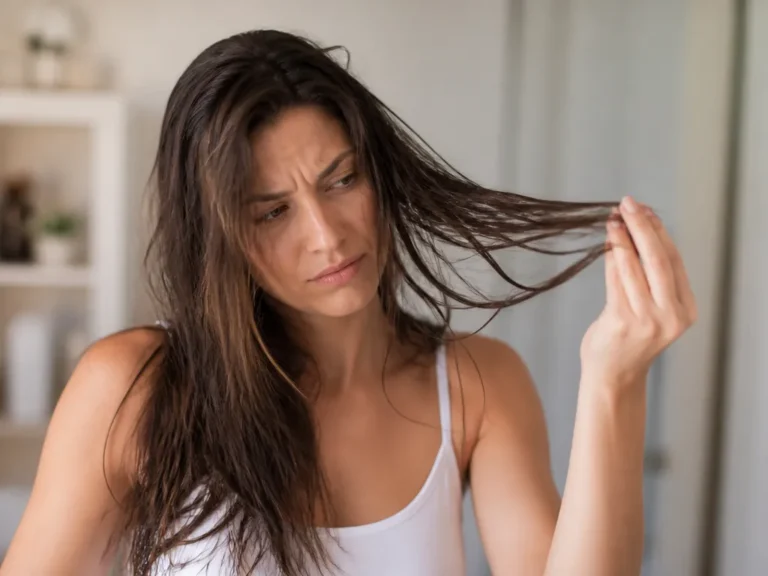
One of the biggest complaints after a protein-heavy routine is that hair can feel less soft.
You may notice:
- Hair feels stiff after washing
- Curls lose their softness
- Hair feels rough instead of smooth
- Detangling becomes harder
- Ends feel dry
- Hair seems less flexible
- Your usual moisturizer does not feel as effective
These signs do not automatically prove that your hair has a “protein overload.” Hair feel can change for many reasons, including buildup, excessive cleansing, heat, chemical processing, environmental exposure, and simply using a product that does not suit your hair.
Still, switching temporarily to a protein-free conditioning routine can be a practical way to simplify your routine and see whether your hair responds better to more conditioning.
The relationship is straightforward:
Protein-free formula → more emphasis on conditioning ingredients → improved slip and softness → easier detangling and styling.
Best Natural Ingredients for a Protein-Free Deep Conditioner
A good DIY recipe does not need a long ingredient list.
In fact, fewer ingredients can make the treatment easier to understand and troubleshoot.
For this recipe, each ingredient has a specific role.
Aloe Vera Gel: Hydration and Slip
Aloe vera gel is commonly used in DIY hair treatments because of its lightweight, slippery texture.
For a deep conditioner, aloe vera can help the mixture spread through the hair and provide a pleasant conditioning feel.
Look for plain aloe vera gel without unnecessary fragrance or irritating additives.
Aloe vera is not a magical hair-growth ingredient, and it cannot repair damaged hair from the inside. Its main role in this recipe is to contribute moisture and slip.
For curly and coily hair, that slip can be particularly useful during detangling.
Honey: Moisture Support
Honey is a humectant.
Humectants attract and hold water, which is why honey appears in many moisturizing hair treatments.
You only need a small amount.
Using too much honey can make the treatment sticky and difficult to rinse.
For a single-use treatment, ½ teaspoon is enough to experiment with.
If your hair feels sticky afterward, simply leave honey out next time.
Conditioner: The Main Conditioning Ingredient
This is the most important part of the recipe.
Rather than trying to create a complete conditioner from kitchen ingredients, use a protein-free commercial conditioner as the creamy base.
A formulated conditioner can contain conditioning agents that DIY ingredients do not easily reproduce.
When choosing one, check the ingredient list for proteins if you specifically want a protein-free treatment.
Look for and avoid ingredients such as:
- Hydrolyzed keratin
- Hydrolyzed wheat protein
- Hydrolyzed rice protein
- Hydrolyzed silk
- Hydrolyzed soy protein
- Collagen protein
Not every ingredient containing the word “amino” is necessarily a protein, so do not assume every unfamiliar ingredient means the product contains protein.
Coconut Oil: Optional Softening Ingredient
Coconut oil is optional.
Some hair types respond beautifully to it, while others feel stiff or heavy after using it.
If your hair loves coconut oil, add a very small amount.
If your hair is fine, easily weighed down, or becomes stiff with coconut oil, skip it.
The recipe works without it.
Protein-Free Deep Conditioner Recipe
Here is a simple version that is easy to make at home.
Ingredients
- 2 tablespoons protein-free conditioner
- 1 tablespoon plain aloe vera gel
- ½ teaspoon honey
- ¼ teaspoon coconut oil, optional
What Each Ingredient Does
Protein-free conditioner: provides the primary conditioning effect.
Aloe vera gel: adds lightweight moisture and slip.
Honey: supports moisture retention and gives the treatment a more moisturizing feel.
Coconut oil: adds richness and may help reduce protein loss from the hair, but it is optional.
The important relationship is that the conditioner does most of the conditioning work, while the natural ingredients modify the texture and feel of the treatment.
How to Make the Natural Deep Conditioner
You do not need a blender, saucepan, or complicated equipment.
Step 1: Clean Your Bowl
Use a clean bowl and clean spoon.
Because this recipe contains water-based ingredients, cleanliness matters.
Step 2: Add the Conditioner
Start with two tablespoons of your protein-free conditioner.
This provides the creamy base.
Step 3: Add Aloe Vera
Add one tablespoon of aloe vera gel.
Mix slowly until the texture becomes smooth.
Step 4: Add Honey
Add about half a teaspoon of honey.
Do not pour in a large amount.
A little is enough for a moisturizing treatment.
Step 5: Add Oil If Needed
If your hair is thick, coarse, or particularly dry and responds well to coconut oil, add about ¼ teaspoon.
If your hair is fine or easily weighed down, skip it.
Step 6: Mix Immediately Before Use
Stir everything together until you have a smooth cream.
The finished mixture should be creamy rather than watery.
You should be able to spread it through damp hair without it dripping everywhere.
How to Use a Protein-Free Deep Conditioner
The application method matters almost as much as the recipe.
Start with freshly washed, damp hair.
You want the hair to be wet enough for easy distribution but not dripping.
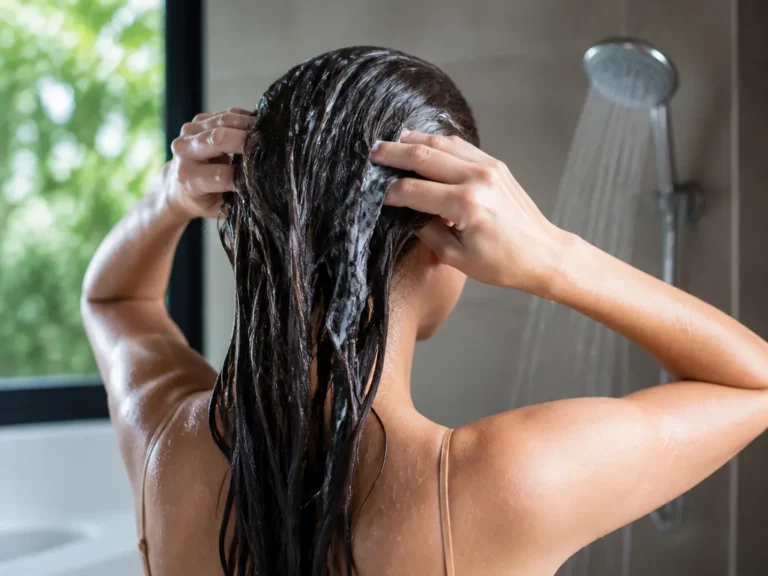
1. Shampoo First
Cleanse your hair with a shampoo that suits your scalp and hair type.
If you have heavy product buildup, you may need a more thorough cleansing routine before deep conditioning.
2. Remove Excess Water
Gently squeeze excess water from the hair.
Do not aggressively rub your hair with a towel.
3. Divide Your Hair Into Sections
For thick, curly, or coily hair, divide your hair into four or more sections.
This makes the treatment easier to distribute evenly.
4. Apply the Conditioner
Apply the mixture from the mid-lengths toward the ends.
Pay extra attention to dry areas and tangled ends.
You generally do not need to coat an oily scalp with a rich conditioner.
5. Detangle Gently
Use your fingers first.
Once the hair has enough slip, gently work through it with a wide-tooth comb or suitable detangling brush.
Start at the ends and gradually move upward.
Never force a comb through a knot.
6. Leave It On for 15–30 Minutes
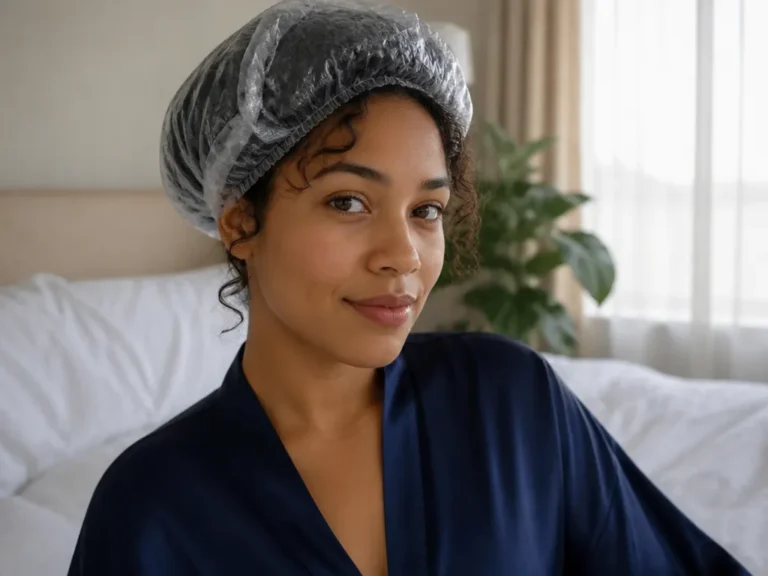
Cover the hair with a shower cap.
You can use gentle warmth if desired, but intense heat is unnecessary.
There is no need to leave this DIY treatment overnight.
7. Rinse Thoroughly
Rinse with lukewarm or cool water until your hair feels clean, soft, and conditioned.
You should not have to scrub the hair to remove the treatment.
Why This Recipe Works for Dry Hair
Dry-feeling hair often needs more than simply adding oil.
Hair softness is affected by water, conditioning agents, surface lubrication, friction, and the condition of the hair fiber.
This recipe addresses several of those factors.
The conditioner provides conditioning ingredients.
Aloe contributes a lightweight, slippery component.
Honey contributes humectant properties.
A small amount of oil can add richness and lubrication.
The result is a treatment designed around softness and manageability rather than protein reinforcement.
That makes it particularly useful when your biggest complaint is:
“My hair feels dry even though I keep using hair products.”
Protein-Free Deep Conditioner for Curly Hair
Curly hair can benefit from a protein-free deep-conditioning treatment when the main concern is dryness and poor manageability.
The curves in curly hair can make it more difficult for natural scalp oils to travel evenly along the hair fiber.
This does not mean every curly-haired person needs protein-free products.
It simply means that conditioning and lubrication can be especially useful during detangling.
For curly hair, use the recipe as follows:
- Wash your hair.
- Divide it into sections.
- Apply the treatment generously enough to provide slip.
- Finger-detangle.
- Use a wide-tooth comb if necessary.
- Leave for 20–30 minutes.
- Rinse.
- Follow with your normal leave-in or styling routine.
Avoid aggressive brushing while the hair is dry.
Protein-Free Deep Conditioner for 4C Hair
4C hair often needs careful moisture management and gentle handling.
A protein-free deep conditioner can be useful when the hair feels dry, stiff, or difficult to detangle.
For 4C hair, I would make one small adjustment: increase the richness rather than adding more ingredients.
You can use:
- 2 tablespoons rich protein-free conditioner
- 1 tablespoon aloe vera gel
- ½ teaspoon honey
- ¼–½ teaspoon suitable oil, optional
Apply it section by section.
Allow the treatment to provide enough slip before attempting to detangle.
The biggest mistake is using more force when the hair is tangled.
Instead, add enough conditioner to reduce friction and work through the hair gradually.
Protein-Free Deep Conditioner for Fine Hair
Fine hair needs a different approach.
The same recipe that feels wonderfully rich on thick hair can make fine hair limp and greasy.
For fine hair, try:
- 2 tablespoons lightweight protein-free conditioner
- 1 tablespoon aloe vera gel
- ¼ teaspoon honey
- No added oil
Leave it on for approximately 15–20 minutes.
Apply mostly to the lengths and ends.
If your hair becomes flat afterward, reduce the amount of conditioner or shorten the treatment frequency.
Protein-Free Deep Conditioner for Low-Porosity Hair
Low-porosity hair is often described as hair that resists absorbing water and can become weighed down by heavy products.
The important point is not to assume that low-porosity hair needs a special miracle ingredient.
Instead, focus on light layers and good product distribution.
For this hair type:
- Use a lightweight conditioner.
- Keep the oil amount very low.
- Avoid excessive butter.
- Use warm—not extremely hot—water when washing.
- Apply the deep conditioner to damp hair.
- Rinse thoroughly.
Gentle warmth from a shower cap or warm environment can make the treatment feel more comfortable, but there is no need for extreme heat.
Protein-Free Deep Conditioner for High-Porosity Hair
Hair described as high porosity can often feel dry quickly and may benefit from richer conditioning.
A richer conditioner and a small amount of oil may work better than a very lightweight formula.
Try:
- 2 tablespoons rich protein-free conditioner
- 1 tablespoon aloe vera gel
- ½ teaspoon honey
- ½ teaspoon oil, if your hair tolerates it
The goal is not to coat the hair with as much product as possible.
You want enough conditioning to improve softness and reduce friction without leaving a heavy residue.
What If Your Hair Feels Stiff After a Protein Treatment?
This is one of the most common reasons people search for protein-free deep conditioners.
If your hair suddenly feels:
- Hard
- Dry
- Rough
- Less flexible
- Difficult to detangle
you may want to pause protein-heavy products and use a simple conditioning routine for a while.
But don’t automatically diagnose “protein overload.”
Your hair may feel stiff because of:
- Product buildup
- Hard-water deposits
- Excessive cleansing
- Heat damage
- Chemical damage
- Dry environmental conditions
- Too much styling product
- A conditioner that does not suit your hair
A protein-free deep conditioner can still be a sensible experiment because it simplifies the routine.
How Often Should You Use a Protein-Free Deep Conditioner?
Start with once a week if your hair is dry or frequently manipulated.
If your hair is relatively healthy, every one to two weeks may be enough.
You do not need to deep condition every day.
Too much conditioning can sometimes leave hair feeling:
- Limp
- Heavy
- Greasy
- Coated
- Difficult to style
The right frequency depends on your hair’s response.
A simple rule is:
Dry and rough → consider more conditioning.
Soft but heavy and limp → reduce the amount or frequency.
Can You Use a Protein-Free Deep Conditioner Every Wash Day?
Yes, if the formula is lightweight and your hair responds well to it.
However, deep conditioning does not need to be an automatic step after every shampoo.
Some people may only need it once weekly.
Others with dry, curly, coily, or chemically processed hair may prefer more frequent conditioning.
Your hair’s feel is a better guide than a rigid schedule.
Natural Ingredients That Are Not Necessary
The internet contains hundreds of DIY hair-mask recipes.
You do not need to combine all of them.
Avocado
Avocado contains fats and other nutrients, but mashed avocado can be difficult to rinse completely from hair.
If you enjoy it and your hair responds well, you can experiment with it.
It is not necessary for a successful protein-free conditioner.
Banana
Banana masks are popular, but poorly blended banana can leave particles trapped in textured hair.
Again, it is optional rather than essential.
Yogurt
Yogurt can be used in some DIY hair masks, but dairy-based mixtures can be messy and are not necessary when your goal is a simple protein-free treatment.
If you are specifically avoiding protein because your hair does not respond well to protein treatments, check the ingredients and consider whether adding a dairy product makes sense for your particular goal.
Eggs
Egg masks are not ideal for this recipe.
Eggs contain protein, so they do not fit a deliberately protein-free deep-conditioning approach.
Ingredients to Avoid in a Gentle DIY Deep Conditioner
If your goal is softness, there is no reason to make the treatment harsh.
Avoid adding ingredients such as:
Baking Soda
Baking soda is not necessary for deep conditioning and may make hair feel rough or dry.
Lemon Juice
Lemon juice can be irritating and is not needed in a moisturizing hair mask.
Undiluted Vinegar
Strong acidic ingredients can irritate the scalp.
A deep conditioner should be comfortable, not burning or tingling.
Large Amounts of Essential Oils
Essential oils are concentrated and can irritate sensitive skin.
They are not necessary for conditioning.
Excessive Salt
Salt does not make a better deep conditioner.
It can contribute to a drying or uncomfortable treatment.
Can a Protein-Free Deep Conditioner Repair Damaged Hair?
It can improve the feel and appearance of damaged hair, but it cannot permanently reverse severe structural damage.
This distinction is important.
A conditioning treatment can make damaged hair feel:
- Softer
- Smoother
- More manageable
- Less tangled
- Less rough
But it cannot permanently reconnect a split end or restore severely broken hair to its original condition.
If your hair is damaged, combine conditioning with prevention:
- Reduce high-heat styling.
- Avoid unnecessary chemical processing.
- Detangle gently.
- Use a heat protectant when using heat.
- Protect hair while sleeping.
- Keep ends conditioned.
- Avoid excessive manipulation.
Does Protein-Free Mean Moisture-Only?
Not necessarily.
“Protein-free” simply describes what the product doesn’t intentionally contain.
It does not automatically mean the product is more moisturizing.
A protein-free conditioner can still be poorly formulated for your hair.
Likewise, a conditioner containing protein can be highly moisturizing.
Think about the relationship this way:
Protein-free ≠ automatically moisturizing.
Instead:
Protein-free + appropriate conditioning ingredients + suitable application = potentially softer, more manageable hair.
This is why reading the full ingredient list and observing your hair’s response is more useful than relying on a single marketing label.
How to Tell If the Recipe Is Working
You should notice practical improvements rather than dramatic overnight changes.
After rinsing, look for:
- Easier detangling
- Softer strands
- Less roughness
- Better curl flexibility
- Reduced friction
- Easier styling
- Less dryness at the ends
Your hair should feel conditioned but not coated.
If it feels greasy, sticky, or heavy, reduce the oil or honey.
If it still feels dry, try using a richer conditioner as your base rather than adding five more DIY ingredients.
What If Your Hair Still Feels Dry After Deep Conditioning?
This is a common frustration.
Sometimes the problem is not the deep conditioner.
Check your entire routine.
Your Shampoo May Be Too Harsh
If your cleanser leaves your hair feeling extremely stripped after every wash, your deep conditioner may be trying to compensate for excessive cleansing.
You May Have Buildup
Heavy oils, gels, creams, and styling products can accumulate.
When buildup is present, conditioning products may not feel effective.
You May Be Using Too Much Heat
Frequent high-temperature styling can contribute to dryness and damage.
You May Need More Water
Conditioner helps, but hair also needs water.
Apply conditioning products to damp or wet hair rather than trying to moisturize extremely dry hair with oil alone.
Your Hair May Be Chemically Damaged
Bleaching, relaxing, permanent coloring, and repeated chemical treatments can alter the hair fiber.
A DIY mask can improve feel, but it cannot undo chemical processing.
How to Make This Recipe More Moisturizing
If your hair is very dry, don’t immediately double every ingredient.
Instead, change one thing at a time.
Start with a richer protein-free conditioner.
Then add:
- 1 tablespoon aloe vera
- ½ teaspoon honey
- A small amount of oil if needed
If your hair still feels dry, evaluate your shampoo and styling routine.
The goal is to create a balanced moisture routine, not an increasingly complicated DIY recipe.
How to Make It Lighter for Oily Hair
For oily or fine hair, reduce the richest ingredients.
Use:
- Lightweight protein-free conditioner
- Aloe vera gel
- A tiny amount of honey
- No added oil
Apply from mid-lengths to ends.
Avoid coating the scalp.
Rinse thoroughly.
This creates a lighter conditioning treatment while keeping the main benefit: improved softness and slip.
Can You Store Homemade Protein-Free Deep Conditioner?
I recommend making this recipe fresh for each use.
The reason is preservation.
Once you add aloe vera gel, honey, water-containing ingredients, or other fresh materials to a commercial conditioner, you have changed the original formula.
The manufacturer’s preservation system was designed for the original formulation, not necessarily for your homemade modification.
Therefore, don’t assume that adding ingredients to a commercial conditioner creates a shelf-stable product.
For the safest approach:
Make only what you need, use it immediately, and discard leftovers.
Protein-Free Deep Conditioner vs Regular Conditioner
A regular conditioner is normally designed for use after shampooing and is rinsed relatively quickly.
A deep conditioner is usually richer or used for a longer contact time.
The difference is not simply “regular conditioner versus natural ingredients.”
A commercial deep conditioner may contain a carefully balanced combination of:
- Conditioning agents
- Fatty alcohols
- Humectants
- Oils
- Emollients
- Other cosmetic ingredients
A DIY recipe can complement a routine, but it does not automatically outperform a professionally formulated product.
Common Mistakes With Protein-Free Deep Conditioning
Using Too Much Product
More conditioner does not always mean more moisture.
Use enough to coat the hair evenly.
Adding Every Natural Ingredient
Aloe + honey + avocado + banana + yogurt + oils + eggs does not necessarily make a better mask.
Complex recipes make it harder to identify what caused a reaction or buildup.
Leaving It Overnight
Longer is not automatically better.
15–30 minutes is sufficient for a simple treatment.
Applying Heavy Products to the Scalp
If your scalp becomes oily or irritated, keep the treatment focused on the hair lengths.
Forgetting to Rinse
Residue can make hair feel greasy and heavy.
Rinse thoroughly.
Expecting Permanent Repair
Conditioning improves the cosmetic feel of hair.
It cannot permanently reverse split ends or severe structural damage.
Frequently Asked Questions
What is the best natural protein-free deep conditioner?
A simple combination of protein-free conditioner, aloe vera gel, and a small amount of honey is a practical option. Add a tiny amount of coconut oil only if your hair responds well to it.
What can I use instead of protein in a deep conditioner?
If you want to avoid protein, focus on conditioning and moisturizing ingredients such as aloe vera, humectants, oils, and properly formulated conditioners. You do not need to replace protein with another “strengthening” ingredient.
Is aloe vera protein-free?
Pure aloe vera gel itself is not a hydrolyzed protein treatment. However, commercial aloe products can contain additional ingredients, so check the label if avoiding protein is important to you.
Can I use this recipe on 4C hair?
Yes. The recipe can work for 4C hair when adjusted for its needs. Use enough conditioner to provide slip and apply it in sections. A small amount of oil can be added if your hair tolerates it.
How long should I leave a protein-free deep conditioner on?
Around 15–30 minutes is a practical range. You do not need to leave it overnight.
Can I use honey in a protein-free hair mask?
Yes. Honey is a humectant and can contribute to a moisturizing treatment. Use a small amount because too much can make the hair sticky.
Can protein-free deep conditioner help with breakage?
It may help reduce breakage caused by excessive friction and difficult detangling by improving lubrication and manageability. It cannot treat every cause of hair breakage.
How often should I deep condition without protein?
Start with once a week if your hair is dry. If your hair becomes heavy or limp, reduce the frequency or use a lighter formula.
Can I add coconut oil?
Yes, but it is optional. Some hair types respond well to coconut oil, while others become stiff or weighed down. Start with a very small amount.
What if my hair feels worse after the treatment?
Stop and reassess the formula. You may be reacting to an ingredient, using too much product, experiencing buildup, or simply not responding well to one of the ingredients. Simplify the recipe and change only one ingredient at a time.
Final Takeaway
A good protein-free deep conditioner recipe does not need to be complicated.
For a natural, beginner-friendly treatment, start with:
2 tablespoons protein-free conditioner + 1 tablespoon aloe vera gel + ½ teaspoon honey + a tiny amount of coconut oil if needed.
Apply it to clean, damp hair, work through the lengths and ends, gently detangle, leave it for 15–30 minutes, and rinse thoroughly.
The biggest benefit is not a miracle transformation. It is better slip, softness, manageability, and comfort during detangling.
And if your hair has been feeling hard, stiff, or rough after protein-heavy products, a simplified protein-free routine can be a useful way to see whether your hair prefers more conditioning.
Most importantly, don’t chase complicated DIY recipes. The right base conditioner, enough water, gentle handling, and a consistent routine matter more than adding ten natural ingredients to one bowl.

- How to Make Deep Conditioner for Natural Hair: 8 Easy DIY Recipes - September 29, 2026
- Natural Homemade Deep Conditioner for Natural Hair: Easy DIY Recipes - September 29, 2026
- From Kitchen to Cuticle: Natural Deep Conditioner Recipes for Every Hair Porosity - September 29, 2026