From Kitchen to Cuticle: Natural Deep Conditioner Recipes for Every Hair Porosity
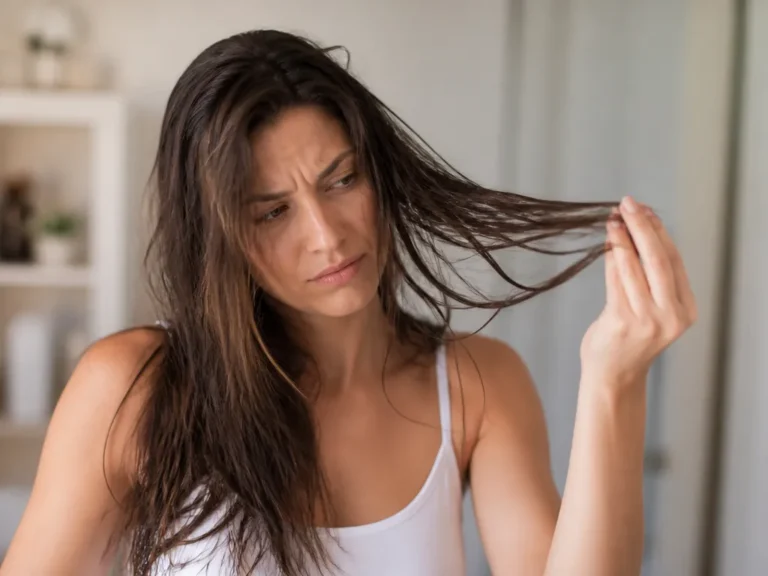
If your hair feels like straw, snaps off in your comb, or frizzes the moment you step outside, your standard daily conditioner isn’t enough. Daily conditioners only coat the cuticle for a temporary smoothing effect, but they don’t penetrate the hair shaft to repair structural damage or replenish lost hydration. Natural deep conditioners offer a potent, chemical-free solution to these common pain points by utilizing raw, earth-derived ingredients that actively rebuild and deeply moisturize your strands from the inside out.
| Condition | Standard Conditioner | Natural Deep Conditioner |
| Purpose | Surface detangling and smoothing | Deep structural repair and hydration |
| Penetration Level | Sits outside the hair cuticle | Penetrates the cortex of the hair shaft |
Here is a comprehensive guide to rescuing your hair using the power of natural deep conditioning, formulated to target your specific hair struggles.
Identifying Your Core Hair Pain Points
Before applying random ingredients to your hair, you must diagnose the root cause of your hair’s distress. Hair problems are not one-size-fits-all; they are specific reactions to environmental, chemical, or mechanical stressors. Understanding the relationship between your habits and your hair’s attributes is the first step to true restoration.
Dryness and Frizz
Dryness occurs when your scalp doesn’t produce enough natural sebum, or when your hair’s cuticle layer is raised, allowing moisture to escape easily. Frizz is a direct relationship to dryness: when the hair lacks internal moisture, it reaches out to the surrounding air to absorb humidity, causing the hair shaft to swell and the cuticle to lift.
Breakage and Split Ends
If your hair is snapping off or splitting at the ends, it lacks elasticity and structural integrity. This is typically a protein deficiency caused by mechanical damage (rough brushing, tight hairstyles) or chemical damage (bleach, relaxers, permanent dyes).
Dullness and Lack of Shine
Healthy hair has a flat, smooth cuticle layer that reflects light. When hair is damaged by heat styling or hard water buildup, the cuticle becomes roughened and jagged. Instead of reflecting light, the hair scatters it, resulting in a dull, matte, and lifeless appearance.
The Science of Hair Porosity
To ensure your natural deep conditioner actually works, you must understand your hair’s porosity. Porosity is the hair’s ability to absorb and retain moisture, dictated by how flat or raised the cuticle layer sits.
Low Porosity Hair
Low porosity hair has a tightly bound, flat cuticle layer. Water and oils struggle to penetrate the strand, often sitting on top of the hair and causing buildup.
-
The Pain Point: Products feel heavy, and hair takes hours to air-dry.
-
The Solution: You need lightweight, penetrating ingredients (like aloe vera and argan oil) and the application of gentle heat to lift the cuticle and allow the conditioner inside.
Medium Porosity Hair
The cuticle layer is looser, allowing a steady flow of moisture in and out. This hair type is generally low-maintenance, holding styles well and responding predictably to conditioning treatments.
High Porosity Hair
High porosity hair has wide gaps and holes in the cuticle, often due to chemical processing, environmental damage, or genetics.
-
The Pain Point: It absorbs moisture instantly but loses it just as fast, leading to chronic dryness, tangles, and frizz.
-
The Solution: You need heavy, sealing ingredients (like shea butter and castor oil) and protein treatments to temporarily fill the gaps in the cuticle.
Moisture-Rich Entities: Best Hydrating Natural Ingredients
When building a natural deep conditioner, we utilize a semantic system of Entity, Attribute, and Relationship. In this section, we examine the best naturally occurring humectants and moisturizers.
Aloe Vera
-
Entity: Aloe Vera (Plant Extract)
-
Attribute: Rich in water, vitamins A, C, and E, and proteolytic enzymes.
-
Relationship to Hair: The enzymes repair dead skin cells on the scalp. As a humectant, aloe vera draws moisture from the environment directly into the hair shaft, drastically improving hydration without leaving a greasy residue.
Raw Honey
-
Entity: Raw Honey (Humectant & Emollient)
-
Attribute: Antibacterial, high sugar content, naturally slightly acidic.
-
Relationship to Hair: Honey binds water molecules to the hair strand. Its slight acidity helps smooth the cuticle layer, resulting in intense shine and prolonged moisture retention.
Plant Glycerin
-
Entity: Vegetable Glycerin (Potent Humectant)
-
Attribute: Colorless, odorless, highly water-soluble liquid.
-
Relationship to Hair: Acts as a moisture magnet. It is highly effective for extremely dry hair types, pulling water into the cortex to soften brittle strands.
Protein-Rich Ingredients for Strength
Moisture alone is not enough if the structural integrity of your hair is compromised. Your hair is primarily made of a protein called keratin. When damaged, you must temporarily patch those gaps with natural proteins.
Hydrolyzed Wheat Protein
-
Entity: Wheat Protein (Hydrolyzed)
-
Attribute: Low molecular weight amino acids.
-
Relationship to Hair: Unlike large protein molecules that just sit on the hair, hydrolyzed proteins are small enough to penetrate the hair cortex. They fortify the hair from within, reducing breakage and improving elasticity.
Egg Yolk
-
Entity: Egg Yolk (Natural Protein & Lipid Source)
-
Attribute: Dense in peptides, biotin, and folate.
-
Relationship to Hair: Coats the hair shaft to provide a temporary strengthening effect. While the protein molecules in raw eggs are too large to penetrate deeply, they act as an excellent surface patch to smooth rough cuticles and stop immediate breakage.
Greek Yogurt
-
Entity: Unsweetened Greek Yogurt (Dairy Protein)
-
Attribute: Rich in lactic acid and milk proteins.
-
Relationship to Hair: The lactic acid gently clears away scalp buildup and hard water minerals, while the milk proteins provide a gentle, conditioning strength that is less rigid than egg treatments.
Oils and Butters for Sealing Moisture
Humectants pull moisture in, but without sealants, that moisture will evaporate right back out. Carrier oils and natural butters act as the crucial barrier that locks hydration inside the hair shaft.
Unrefined Shea Butter
Shea butter is a heavy, fat-rich emollient extracted from the nut of the African shea tree. It contains a high concentration of fatty acids and vitamins. For high porosity or thick, coarse hair, shea butter creates an occlusive layer over the hair strand, completely sealing in moisture and protecting the hair from harsh weather.
Extra Virgin Coconut Oil
Coconut oil is unique because it is one of the few oils composed of medium-chain fatty acids (specifically lauric acid). This molecular structure allows it to actually penetrate the hair shaft rather than just sitting on top. It prevents protein loss and reduces hygral fatigue (the damaging swelling and shrinking of hair when it gets wet and dries).
Argan Oil
Often called “liquid gold,” argan oil is a lightweight oil rich in vitamin E and oleic acid. It is ideal for low porosity or fine hair types because it smooths the cuticle and adds massive shine without weighing the hair down or causing greasy buildup.
DIY Recipes for Dry and Frizzy Hair
If your primary pain point is chronic dryness, rough texture, and frizz, your focus must be strictly on hydration (humectants) and sealing (emollients). Avoid heavy proteins in these recipes, as too much protein can make dry hair feel stiffer.
The Ultimate Honey & Aloe Hydration Mask
This recipe utilizes the humectant properties of both honey and aloe, sealed lightly with olive oil to maximize softness and elasticity.
Ingredients:
-
3 tablespoons of pure Aloe Vera gel (fresh or store-bought without alcohol)
-
2 tablespoons of Raw Honey
-
1 tablespoon of Extra Virgin Olive Oil
Mixing and Application:
Whisk the aloe vera gel and honey together until you achieve a smooth, syrup-like consistency. Slowly drizzle in the olive oil while stirring. Apply this mixture to freshly washed, damp hair. The water in your hair will interact with the honey and aloe, pulling maximum moisture into the strand.
The Avocado & Argan Smoothing Blend
Avocados are packed with natural fats, biotin, and vitamins that deeply condition parched strands, while argan oil provides a lightweight seal to banish frizz.
Ingredients:
-
1/2 of a very ripe, soft Avocado
-
1 tablespoon of Argan Oil
-
1 tablespoon of Vegetable Glycerin
Mixing and Application:
Blend the avocado in a food processor to ensure there are no lumps (avocado chunks are notoriously difficult to wash out of hair). Stir in the argan oil and glycerin. Coat your hair from roots to ends, paying special attention to the oldest, driest parts of your hair at the tips.
DIY Recipes for Damaged and Brittle Hair
If you are dealing with bleach damage, heat damage from flat irons, or severe breakage, your hair’s cuticle is torn and the cortex is exposed. You need a careful balance of moisture and protein to rebuild structural integrity.
The Egg & Coconut Oil Reconstructor
This intense treatment uses egg to temporarily patch the holes in your cuticle and coconut oil to penetrate the cortex and prevent further protein loss.
Ingredients:
-
1 whole Egg (beaten well)
-
2 tablespoons of melted Extra Virgin Coconut Oil
-
1 tablespoon of Plain Greek Yogurt
Mixing and Application:
Ensure the melted coconut oil has cooled to room temperature before mixing it with the egg, otherwise, you will cook the egg. Whisk all ingredients together into a creamy paste. Apply to damp hair and leave it on for no more than 30 minutes. Over-processing with protein can cause hair to become brittle.
The Banana & Castor Oil Strengthening Mask
Bananas are rich in silica, a mineral element that helps the body synthesize collagen and makes hair stronger and thicker. Jamaican Black Castor oil provides a heavy, protective seal.
Ingredients:
-
1 overripe Banana (heavily spotted)
-
1 tablespoon of Jamaican Black Castor Oil
-
1 teaspoon of Raw Honey
Mixing and Application:
Blend the banana thoroughly until it is completely liquefied—do not mash it by hand, as banana fibers will get stuck in your hair. Mix in the castor oil and honey. Apply generously to the mid-lengths and ends of your hair to protect against split ends.
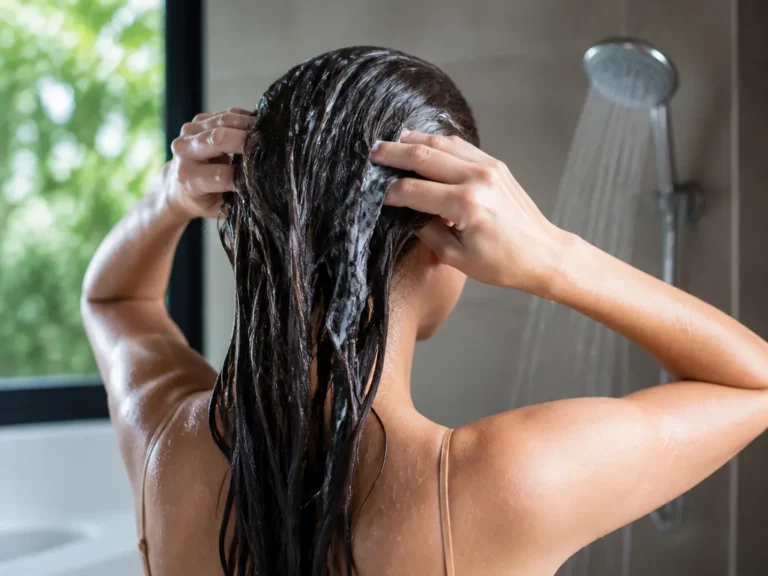
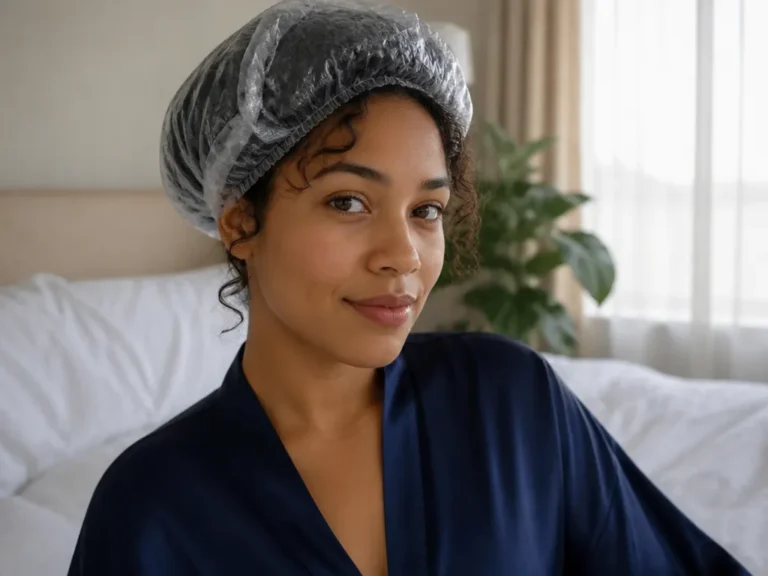
Step-by-Step Application Guide
Even the most nutrient-dense natural deep conditioner will fail if applied incorrectly. The application process is just as important as the ingredients you choose.
Building a Long-Term Natural Hair Care Schedule
Deep conditioning is not a one-time miracle cure; it is a foundational pillar of a consistent hair care regimen. To see lasting transformations in your hair’s elasticity, shine, and length retention, you must build a strategic schedule.
-
For Severely Damaged/Transitioning Hair: Deep condition once a week. Alternate between a moisture-focused mask (like the Honey & Aloe recipe) and a protein-focused mask (like the Egg & Coconut oil recipe) to maintain a healthy moisture-protein balance.
-
For Dry/Curly/Coily Hair: Deep condition every 1 to 2 weeks focusing strictly on rich emollients and humectants. Curly hair thrives on heavy hydration.
-
For Fine/Straight/Low Porosity Hair: Deep condition twice a month. Using heavy masks too frequently will cause fine hair to become limp, greasy, and weighed down. Stick to lightweight ingredients like argan oil and aloe.
Remember to listen to your hair. If your hair feels stiff, straw-like, and snaps easily, it has too much protein—switch entirely to moisture. If your hair feels excessively soft, mushy, and stretches like a rubber band before breaking, it needs protein to rebuild its structure.
5 Frequently Asked Questions (FAQs)
1. Can I leave a natural deep conditioner in my hair overnight?
It is generally not recommended to leave natural DIY masks in your hair overnight. Leaving moisture on the hair for 8+ hours can cause hygral fatigue, where the hair shaft swells excessively and the cuticle becomes permanently damaged. Furthermore, food-based ingredients can spoil or cause scalp irritation if left on too long. 30 to 45 minutes is the optimal time for maximum absorption.
2. Do I need to use a regular conditioner after I deep condition?
No, you do not need to use a daily surface conditioner after using a deep conditioner. A deep conditioner does the job of a regular conditioner (smoothing the cuticle) while also penetrating the hair shaft. Following up with a standard conditioner is redundant and may lead to heavy product buildup.
3. Why does my hair feel hard after using an egg or yogurt mask?
This is a classic sign of protein overload. Your hair already had enough protein, or you left the treatment on for too long. When the hair absorbs too much protein, it loses its flexibility and becomes rigid and stiff. To fix this, clarify your hair and follow up with a strictly moisture-based humectant mask (like aloe and glycerin) to restore elasticity.
4. How long can I store leftover DIY deep conditioner?
Because these recipes use raw, unpreserved food ingredients, they will spoil rapidly. A DIY mask containing avocado, egg, or banana should be used immediately, and any leftovers should be discarded. Masks made entirely of oils and honey can be stored in an airtight glass jar in a cool, dark place for several weeks.
5. Will natural deep conditioners strip my hair dye?
Most natural deep conditioners are incredibly color-safe because they do not contain harsh detergents or stripping sulfates. However, heavy hot-oil treatments or masks utilizing highly acidic ingredients (like large amounts of lemon juice or apple cider vinegar) can slightly fade semi-permanent hair color over time. Stick to pH-balanced ingredients like aloe vera and argan oil to preserve your color.

- How to Make Deep Conditioner for Natural Hair: 8 Easy DIY Recipes - September 29, 2026
- Natural Homemade Deep Conditioner for Natural Hair: Easy DIY Recipes - September 29, 2026
- From Kitchen to Cuticle: Natural Deep Conditioner Recipes for Every Hair Porosity - September 29, 2026