How to Make Deep Conditioner for Natural Hair: 8 Easy DIY Recipes
Natural hair thrives on deep hydration and structural reinforcement, yet its spiral and coily architecture makes it physically challenging for natural scalp sebum to travel down the hair shaft. This structural reality leaves textured hair susceptible to chronic dryness, fairy knots, and breakage. While commercial conditioners often rely on surface-coating silicones that offer temporary slip without internal nourishment, a homemade natural deep conditioner delivers raw, bioavailable nutrients directly into the hair cortex to repair, soften, and strengthen strands from within.
| Conditioner Category | Core Mechanism | Penetration Depth |
| Standard Rinse-Out Conditioner | Surface smoothing and detangling via synthetic quaternary compounds and light silicones | Outer cuticle layer only |
| Homemade Deep Conditioner | Internal cortex restoration via raw humectants, fatty acid lipids, and natural amino acids | Deep inner cortex of the hair shaft |
1. Understanding the Anatomy and Need for Natural Deep Conditioning
Deep conditioning is not merely an optional pampering step; it is a foundational biological necessity for maintaining healthy, growing natural hair. To understand why homemade formulations are so effective, one must first look at the anatomical structure of textured strands.
The Unique Structure of Textured Hair
Every bend, curve, and kink along a natural hair strand represents a localized point of structural vulnerability. At each turn of the curl, the protective outer layer—known as the cuticle—slightly lifts. These naturally raised cuticles allow internal moisture to evaporate quickly into the atmosphere. Furthermore, the elliptical shape of coily hair follicles prevents scalp sebum from distributing evenly along the length of the strand, leaving the mid-lengths and ends perpetually starved for lipids.
Why Commercial Conditioners Fall Short
Many store-bought conditioners prioritize immediate cosmetic results over long-term hair health. They rely heavily on non-water-soluble silicones (such as dimethicone) that create an artificial film around the strand. While this film temporarily masks roughness, it simultaneously creates an impermeable barrier that blocks water and nutrient absorption during subsequent washes. Over time, this buildup leads to severe internal dehydration—a state where the hair appears shiny on the outside but remains brittle and hollow on the inside. Homemade deep conditioners eliminate artificial fillers, replacing them with active, biocompatible ingredients that nourish without suffocating the hair.
2. Identifying Core Natural Hair Pain Points
Formulating an effective deep conditioner requires diagnosing the exact physical distress signals your hair is exhibiting. Applying heavy proteins to hair that requires pure water will cause stiffness, while applying only humectants to chemically compromised hair will fail to halt breakage.
Chronic Dryness and Elasticity Loss
Healthy natural hair possesses high elasticity, meaning a single strand can stretch up to 30% beyond its original length when wet and bounce back without snapping. When hair lacks moisture, this elasticity collapses. Strands become rigid, straw-like, and rough to the touch, snapping under the mildest tension during styling or daily handling.
Single-Strand Knots and Severe Friction
Single-strand knots (often referred to as “fairy knots”) occur when a dry, curling strand loops around itself and forms an unbreakable knot near the ends. This issue stems directly from cuticle friction. When the hair shaft is dry, the cuticle scales remain jagged and lifted, causing adjacent strands to snag onto one another rather than gliding smoothly during natural movement.
Mechanical and Chemical Breakage
Breakage manifests as short fragments of hair shedding during detangling or styling, rather than full-length strands with the white bulb attached at the root. Mechanical breakage is caused by aggressive combing or friction against cotton pillowcases, while chemical breakage results from dye, bleach, or heat styling that destroys the internal disulfid-bound keratin matrix.
3. Navigating Hair Porosity for Maximum Absorption
Porosity refers to your hair’s ability to absorb and retain moisture. It is governed by how flat or raised your cuticle scales lay along the hair shaft. Understanding your porosity dictates which ingredients, textures, and thermal techniques your DIY conditioner requires.
Low Porosity Natural Hair
Low porosity hair features tightly packed, overlapping cuticles that resemble roof shingles laying flat. Water and nutrients struggle to penetrate this tight barrier, often causing products to pool on the surface as greasy buildup.
-
The Physical Struggle: Products sit on top of the hair, taking hours to dry, while the inner core remains dry.
-
Formulation Strategy: Utilize lightweight, water-soluble humectants (aloe vera, liquid honey) and low-molecular-weight oils (argan oil, jojoba oil). Indirect thermal heat is required during deep conditioning to forcibly lift the cuticles and allow ingredient entry.
High Porosity Natural Hair
High porosity hair has widely raised, damaged, or pitted cuticles with microscopic gaps throughout the shaft, caused by genetics, heat damage, or chemical processing.
-
The Physical Struggle: The hair absorbs moisture instantly like a sponge, but loses it just as quickly, resulting in rapid drying, chronic tangling, and high frizz.
-
Formulation Strategy: Incorporate heavier emollients and occlusives (shea butter, castor oil) alongside structural proteins (greek yogurt, hydrolyzed amino acids) to temporarily fill the cuticle gaps and lock moisture inside.
Medium Porosity Balance
Medium porosity hair features slightly raised cuticles that allow a steady flow of moisture in and out of the shaft. It requires a balanced formulation of equal parts hydration and mild nourishment to maintain its natural equilibrium without overburdening the strands.
4. Hydrating Entities: Humectants and Their Core Attributes
Humectants are hygroscopic substances that attract water molecules from the surrounding environment and bind them directly to the hair shaft. Within a semantic formulation framework, each raw ingredient functions as a distinct Entity with specific chemical Attributes that govern its Relationship to the hair.
Fresh Aloe Vera Inner Leaf Gel
-
Entity: Fresh Aloe Vera Leaf Mucilage.
-
Attribute: Rich in glucomannans, amino acids, vitamins A, C, and E, and proteolytic enzymes with a pH of roughly 4.5.
-
Relationship to Hair: The acidic pH flattens the cuticle layer, locking in moisture and smoothing the hair surface. The glucomannans bind water directly into the cortex, while proteolytic enzymes soothe the scalp and dissolve excess dead skin cells around the hair follicle.
Raw Unfiltered Wildflower Honey
-
Entity: Raw Wildflower Honey.
-
Attribute: High sugar density (fructose and glucose), natural hydrogen peroxide trace compounds, high viscosity, and hygroscopic nature.
-
Relationship to Hair: Acts as an intensive humectant that draws atmospheric moisture into the keratin fiber. Its emollient properties soften coarse strands, while its natural sugars form a light protective coating that boosts natural shine.
Pure Plant-Derived Vegetable Glycerin
-
Entity: Pure Vegetable Glycerin (Glycerol).
-
Attribute: Low molecular weight polyol, clear, odorless, highly viscous, and miscible in water.
-
Relationship to Hair: Penetrates deep into the cortex due to its small molecular structure, holding up to several times its weight in water. It increases internal strand flexibility, dramatically reducing brittleness in dense, coily Type 4 hair.
5. Fortifying Entities: Natural Proteins and Reconstructors
When the hair’s internal keratin matrix is broken down by daily manipulation or environmental stressors, natural protein entities help patch those structural vulnerabilities to restore elasticity and tensile strength.
Hydrolyzed Wheat and Silk Proteins
-
Entity: Hydrolyzed Plant and Silk Amino Acids.
-
Attribute: Low molecular weight peptides (under 1000 Daltons) created through enzymatic hydrolysis.
-
Relationship to Hair: Unlike raw food proteins whose molecules are too large to cross the cuticle boundary, hydrolyzed proteins are small enough to pass into the hair cortex. They bind to damaged keratin chains, reinforcing the strand’s internal strength and filling gaps along the outer cuticle.
Organic Plain Greek Yogurt
-
Entity: Unsweetened Whole-Milk Greek Yogurt.
-
Attribute: High concentration of lactic acid, milk proteins (casein and whey), and lipid fats.
-
Relationship to Hair: Provides a dual-action benefit. Lactic acid acts as a mild clarifying agent that dissolves hard water mineral buildup on the hair shaft, while milk lipids and surface-binding proteins smooth rough, raised cuticles to reduce friction.
Egg Yolk Lipids and Peptides
-
Entity: Raw Egg Yolk.
-
Attribute: Abundant in lecithin, vitamin D, biotin, and essential fatty acids.
-
Relationship to Hair: Lecithin acts as a natural emulsifier that conditions dry, damaged strands. While the raw protein molecules act primarily on the surface layer, the rich fatty acids deeply nourish extremely brittle, high-porosity ends.
6. Sealing Entities: Emollient Plant Oils and Butters
Without sealing agents, water introduced by humectants will evaporate straight back into dry air—a process known as trans-epidermal water loss. Emollient oils and plant butters create a protective hydrophobic barrier over the hair shaft.
Unrefined Raw Shea Butter
-
Entity: Raw African Shea Butter (Vitellaria paradoxa).
-
Attribute: High concentration of cinnamic acid esters, oleic acid, stearic acid, and unsaponifiable lipids.
-
Relationship to Hair: Forms a thick, protective seal over high porosity hair strands, shielding the core from humidity fluctuations and physical friction. It fills large cuticle gaps and softens thick, coarse textures.
Cold-Pressed Extra Virgin Olive Oil
-
Entity: Extra Virgin Olive Oil (EVOO).
-
Attribute: Rich in squalene, oleic acid, and alpha-tocopherol (vitamin E).
-
Relationship to Hair: EVOO is one of the few natural oils capable of penetrating the hair shaft past the cuticle layer. It increases internal flexibility, lubricates the cortex, and protects against hygral fatigue (the damaging expansion and contraction of hair fibers when wet).
Pure Jamaican Black Castor Oil
-
Entity: Jamaican Black Castor Oil (JBCO).
-
Attribute: High viscosity, rich in ricinoleic acid (an unsaturated omega-9 fatty acid), with alkaline ash content from roasted castor beans.
-
Relationship to Hair: Delivers an ultra-heavy, protective film over frayed ends. Its thick consistency seals split ends temporarily, coats the strand to eliminate single-strand knots, and protects vulnerable ends during protective styling.
7. Formulating DIY Deep Conditioners for Intense Hydration
These recipes focus entirely on moisture retention, elasticity restoration, and surface softening. They are specifically designed for hair suffering from chronic dryness, stiffness, and lack of slip.
The Honey-Aloe Moisture Elixir
This lightweight, high-performance mask is designed for low-to-medium porosity hair that requires deep hydration without heavy product buildup.
-
1/2 cup Fresh Aloe Vera Gel (filleted directly from the leaf and strained)
-
3 tablespoons Raw Wildflower Honey
-
2 tablespoons Cold-Pressed Jojoba Oil
-
5 drops Essential Lavender Oil (for scalp soothing)
Instructions:
-
Add the strained aloe vera gel and raw honey to a glass bowl. Whisk vigorously until the honey completely dissolves into the gel.
-
Slowly drizzle in the jojoba oil while continuing to whisk to form a smooth, uniform emulsion.
-
Add the lavender essential oil and stir thoroughly.
-
Apply to freshly washed, damp hair, ensuring every section is fully saturated from mid-lengths to ends.
The Avocado-Glycerin Ultra-Softening Cream
An ultra-rich, fatty-acid-dense treatment formulated to soften coarse, high-density Type 4 coils.
-
1 whole Ripe Avocado (soft to the touch)
-
2 tablespoons Pure Vegetable Glycerin
-
2 tablespoons Extra Virgin Olive Oil
-
1 tablespoon Coconut Milk (full fat)
Instructions:
-
Scoop the avocado flesh into a high-speed blender. Add the coconut milk, vegetable glycerin, and olive oil.
-
Blend on high speed for at least 90 seconds until the mixture transforms into a silky, smooth cream with zero visible green flecks or chunks.
-
Pass the cream through a fine-mesh sieve or cheesecloth into a clean container to catch any remaining plant fibers.
-
Work generously into damp hair, focusing heavily on brittle ends.
8. Formulating DIY Deep Conditioners for Structural Repair
These recipes incorporate mild natural proteins and heavy lipids to rebuild damaged, over-processed, or high-porosity hair that suffers from constant snapping and elastic breakdown.
The Greek Yogurt & Castor Reconstructor
A targeted strengthening treatment that patches cuticle gaps, increases tensile strength, and stops active shedding and breakage.
-
1/2 cup Unsweetened Plain Greek Yogurt
-
1 tablespoon Jamaican Black Castor Oil
-
1 tablespoon Raw Unrefined Honey
-
1 Raw Egg Yolk (whisked)
Instructions:
-
In a ceramic bowl, whisk the Greek yogurt and raw egg yolk together until completely smooth and pale yellow.
-
Stir in the Jamaican Black Castor Oil and raw honey until fully integrated.
-
Apply systematically to sectioned hair, prioritizing areas exhibiting chemical damage, heat stress, or high breakage.
-
Leave on for 20 to 30 minutes. Note: Always rinse this specific recipe with lukewarm or cool water to prevent the egg from cooking in your hair.
The Banana & Silk Anti-Breakage Mask
Bananas are high in silica, a natural mineral element that fortifies the hair cuticle, while coconut oil minimizes internal protein loss.
-
1 heavily spotted, Overripe Banana
-
2 tablespoons Extra Virgin Coconut Oil (melted)
-
1 tablespoon Hydrolyzed Silk Protein Liquid (optional, available from cosmetic craft suppliers)
-
1 tablespoon Argan Oil
Instructions:
-
Place the overripe banana into a blender and process until completely liquefied into a smooth puree.
-
Add the melted coconut oil, argan oil, and liquid silk protein. Blend again on high speed for 60 seconds.
-
Filter the mixture through a strainer or nylon stocking to guarantee a smooth application that won’t leave residual banana pulp in your curls.
-
Coat strands thoroughly from root to tip, smoothing downward along the cuticle direction.
9. Step-by-Step Application Methodology for Maximum Efficacy
The technique used to apply a deep conditioner is just as critical as the quality of the raw ingredients. Following a precise, methodical approach ensures optimal nutrient delivery and structural protection.
Key Takeaway: Never apply deep conditioner over dirty, unwashed hair. Surface sebum, dust, and old styling polymers act as a physical shield, preventing water and active humectants from entering the cortex.
-
Clarify and Cleanse: Wash hair thoroughly with a gentle sulfate-free or chelating shampoo. This removes mineral deposits and product buildup, opening up clean pathways for ingredient absorption. Gently squeeze out excess water with a microfiber towel so hair remains damp, not soaking wet.
-
Section into Manageable Quadrants: Divide hair into 4 to 6 equal sections using wide-toothed sectioning clips. Working in smaller sections guarantees that every individual coil receives uniform coverage, eliminating dry, untreated patches at the crown or nape.
-
Apply with Downward Smoothing Motions: Take a generous amount of your DIY conditioner and apply it section by section, starting two inches away from the scalp and working down to the ends. Smooth the hair using the “praying hands” technique—pressing the strand between flat palms and gliding downward—to force the cuticle scales flat.
-
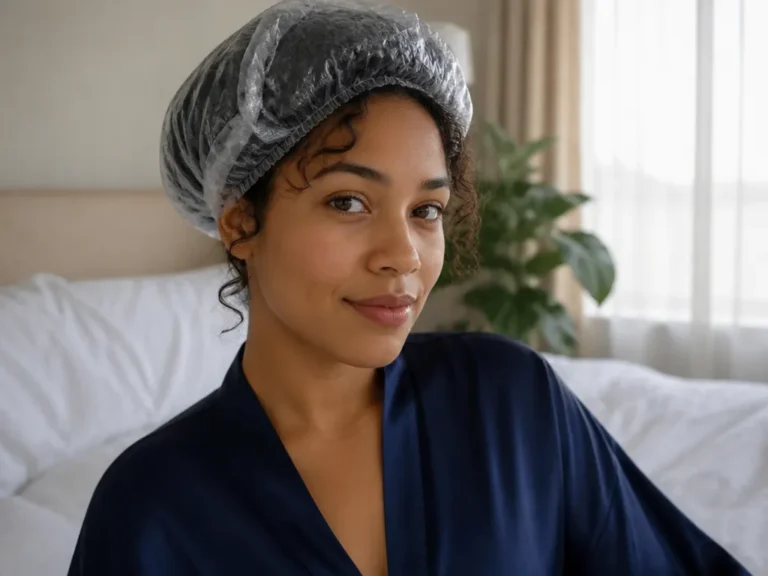
Incorporate Thermal Heat Activation: Gather your coated hair into a loose top knot and cover with a plastic shower cap. Apply indirect heat using a thermal heat cap, a warm steam towel, or by sitting under a hooded dryer for 20 to 30 minutes. Heat swells the hair shaft and expands the cuticle openings, allowing the humectants and oils to pass directly into the cortex.
-
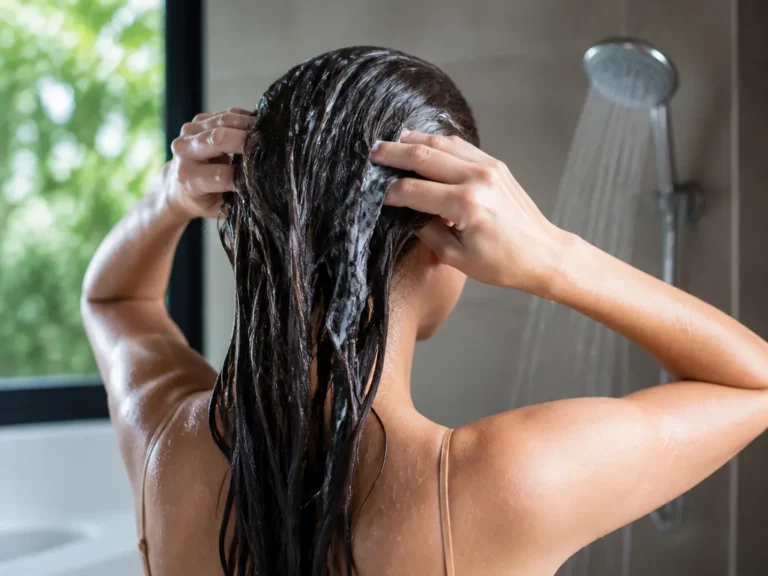
Cool Down and Cold-Water Rinse: Remove the heat cap and allow your hair to cool down at room temperature for 5 minutes. This allows the expanded cuticles to begin settling back into place. Rinse the hair thoroughly with cool or cold water to snap the cuticles shut, trapping the newly absorbed nutrients inside the strand.
10. Frequently Asked Questions (FAQs)
1. Can I leave a homemade deep conditioner in my hair overnight?
Leaving a homemade mask in your hair overnight is strongly discouraged. Exposing hair strands to prolonged wetness for 8+ hours causes a state known as hygral fatigue, where the hair shaft swells and weakens from excessive water absorption. Furthermore, food-based ingredients (like milk, eggs, or fruit purees) can spoil at room temperature, breeding bacteria and causing severe scalp irritation or fungal imbalances. Limit treatments to 30–45 minutes with heat for optimal results.
2. How long can I store leftover homemade deep conditioner?
Recipes containing raw, unpreserved food items such as fresh avocado, egg, banana, or yogurt must be used immediately upon preparation and discarded afterward. They lack broad-spectrum antimicrobial preservatives and will spoil within 24–48 hours, even when refrigerated. Formulations composed entirely of stable raw oils, unrefined butters, and pure honey can be stored in an airtight glass jar in a cool, dark place for up to 3 to 4 weeks.
3. Why does my hair feel stiff after using a natural deep conditioner?
Stiffness or a straw-like texture immediately following a treatment typically indicates protein overload or an improper pH balance. If your hair absorbs more protein than its structure requires, the excess protein hardens along the exterior cuticle, reducing flexibility. To correct this, clarify your hair with a gentle shampoo to remove the surface protein, then apply a pure humectant-focused mask made with aloe vera and vegetable glycerin to restore softness and elasticity.
4. Do I need to shampoo again after rinsing out a DIY mask?
If your formulation utilizes lightweight humectants and balanced oils (such as aloe, honey, jojoba, or argan oil), a thorough rinse with cool water is completely sufficient. However, if your recipe contains heavy, viscous emollients like unrefined shea butter or raw castor oil—and you have fine or low-porosity hair—you may experience heavy, greasy residue. In that case, follow up with a light, sulfate-free co-wash or mild cleanser focused on the roots to remove excess surface oil without stripping hydration.
5. Will natural deep conditioners strip or alter hair color?
Homemade deep conditioners made with aloe vera, honey, plant oils, and yogurt are exceptionally gentle and completely color-safe. Unlike synthetic treatments that may contain harsh alcohols or sulfates, natural ingredients help seal the hair cuticle, which actually prevents dye molecules from washing out. However, avoid adding large quantities of freshly squeezed lemon juice or raw apple cider vinegar to your masks, as high acidity combined with direct sunlight can gradually lighten semi-permanent color treatments.

- How to Make Deep Conditioner for Natural Hair: 8 Easy DIY Recipes - September 29, 2026
- Natural Homemade Deep Conditioner for Natural Hair: Easy DIY Recipes - September 29, 2026
- From Kitchen to Cuticle: Natural Deep Conditioner Recipes for Every Hair Porosity - September 29, 2026