Is Conditioner For Hair Or Scalp?
Ever had your hair feel soft right after conditioner, then get greasy or itchy at your scalp by day two? That mix-up is super common because conditioner is a hair product, but some people smear it everywhere. The good news, there is a simple rule you can follow, plus a few exceptions if your scalp truly needs something extra.
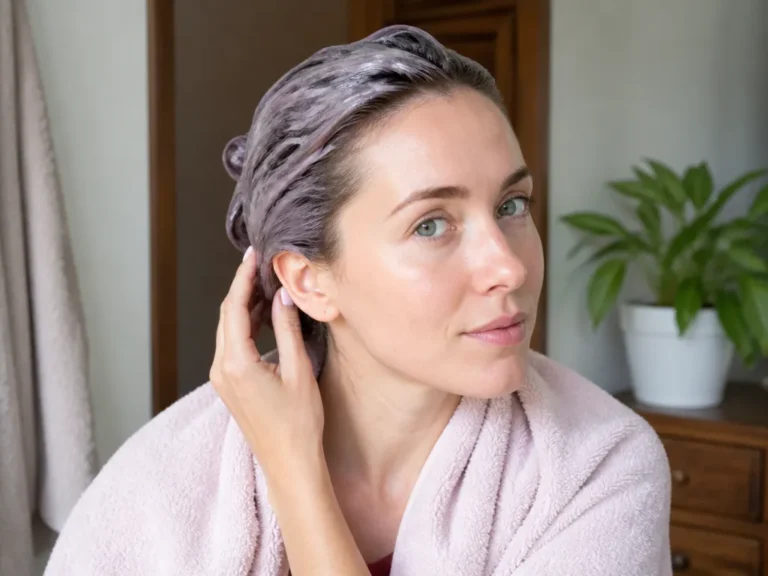
Conditioner is for hair, mostly mid-lengths to ends, to detangle and smooth the cuticle so strands break less. If you drag it onto your scalp, many regular conditioners can cause buildup or irritation, especially if you have an oily scalp. Look for lightweight conditioner for fine hair and keep it off roots.
Best for: all hair types (use on lengths). Use caution if: oily scalp, dandruff-prone scalp, or sensitive skin near the hairline.
Conditioner for hair or scalp? Conditioner is primarily for hair, not scalp. Apply it from mid-lengths to ends (about 1 to 2 inches from roots) and leave it on 2 to 5 minutes. Avoid scalp roots, since many formulas can feel heavy and may trigger buildup or irritation for oily or sensitive scalps.
Is Conditioner For Hair Or Scalp?
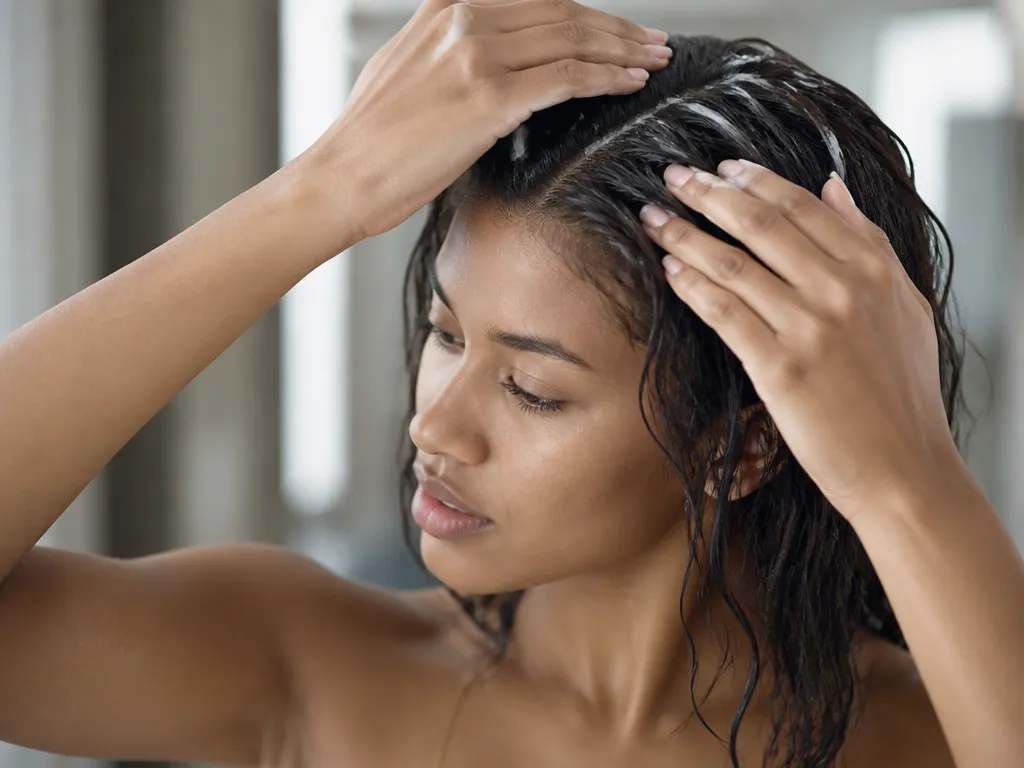
Standard conditioners are designed for the hair shaft and should be applied from the mid-lengths to the ends. The scalp produces its own natural oils, so adding heavy conditioning agents to the roots often leads to unnecessary buildup.
Conditioners work by sealing the hair cuticle. This process locks in moisture and makes the hair easier to detangle. Most formulas use silicones like dimethicone or fatty alcohols such as cetyl alcohol to create a smooth surface.
The scalp is skin, while the hair shaft is dead protein. Applying conditioner to the scalp can clog follicles or cause “weigh down,” making hair look flat. This is especially true for people with oily or combination scalps.
For instance, someone with an oily scalp may find their hair becomes greasy within a few hours if they apply conditioner to the roots. This can lead to a cycle of over-washing, which further strips the hair of needed moisture.
| Focus Area | Primary Purpose | Risk of Over-application |
|---|---|---|
| Scalp | Cleaning and Health | Greasiness and Buildup |
| Mid-Lengths | Moisture and Slip | Minimal |
| Ends | Repair and Protection | Minimal |
Esthetician tip: If you have extremely dry or curly hair, you can move the product slightly higher up the shaft, but still avoid the actual skin of the scalp.
Some specialized products are labeled as “scalp conditioners” or “scalp treatments.” These are formulated with different ingredients that are safe for skin contact and focus on hydration without the heavy waxes found in rinse-out conditioners.
Understanding Your Hair Type
Conditioner is made to improve hair shaft feel and manage tangles, so the “right placement” depends on how your hair and scalp behave under water, shampoo, and heat. Porosity (how easily hair absorbs and releases moisture) is the fastest clue for how heavy your conditioner should feel on your lengths.
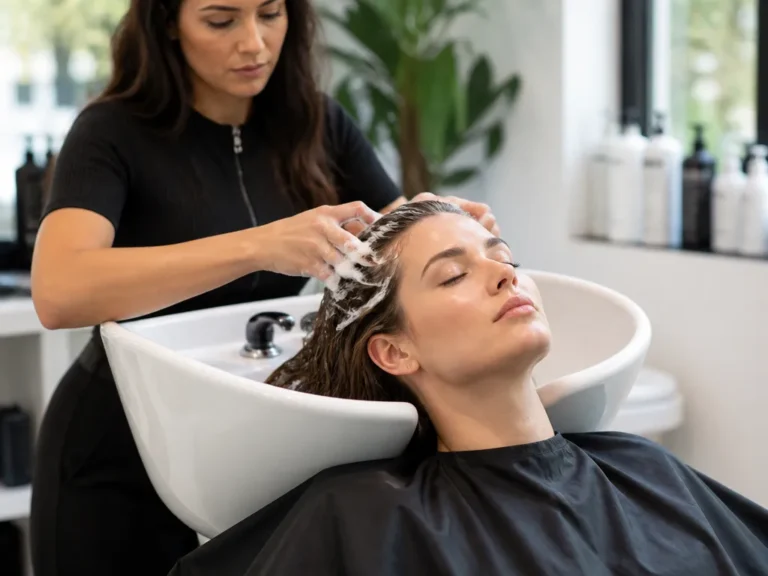
Scalp needs are the second clue. Oily roots, dandruff, itch, or sensitivity mean extra caution, because most regular conditioners are not formulated for prolonged scalp contact and can worsen buildup or irritation for some people.
Identifying Your Hair Porosity
Low porosity hair resists moisture, so conditioner may sit on top unless you use enough slip and give it time. High porosity hair absorbs quickly but loses moisture fast, so you usually need conditioning that helps seal the cuticle and reduces frizz and rough texture.
Medium porosity hair is the easiest to “balance” and often does well with standard rinse-out conditioner used consistently.
| Porosity | What Your Hair Feels Like | Where Conditioner Works Best | How to Use |
|---|---|---|---|
| Low | Can feel “coated” or heavy | Mid-lengths to ends only | Shorter sit time (1 to 3 minutes) or apply after detangling |
| Medium | Balanced softness and shine | Mid-lengths to ends | Leave on 3 to 5 minutes |
| High | Dry, rough, frizz-prone | Ends, plus mid-lengths as needed | Leave on 5 to 8 minutes |
Scalp Concerns To Consider
Oily or acne-prone scalps often do best when conditioner stays off the scalp entirely, because emollients and film-formers can make roots feel greasy faster. Dandruff, flaky irritation, or a sensitive scalp can react to richer conditioners if they linger at the hairline.
In practice, keep conditioner behind the scalp line, especially if you use medicated anti-dandruff shampoo (like ketoconazole, zinc pyrithione, or selenium sulfide). If you accidentally get conditioner on your scalp, rinse thoroughly with lukewarm water.
Dermatologist tip: treat the scalp like skin, if it gets itchy, greasy, or flaky after a product, shorten contact or move the formula to your lengths only.
Matching Conditioner To Hair Type
Type plus density matters. Fine, straight hair benefits from lighter, faster-rinse conditioners (often gel-cream or “weightless” textures) and a small amount focused on ends. Coarse, thick, wavy, or curly hair typically tolerates richer conditioning and benefits from longer contact time for slip and cuticle smoothing.
For patch-test basics, try a small amount behind the ear or on a hidden scalp part, then watch for 24 to 48 hours of itching, redness, or bumps. This is especially important if you have sensitive skin or if your conditioner contains fragrance or plant extracts.
Key Ingredients In Conditioners
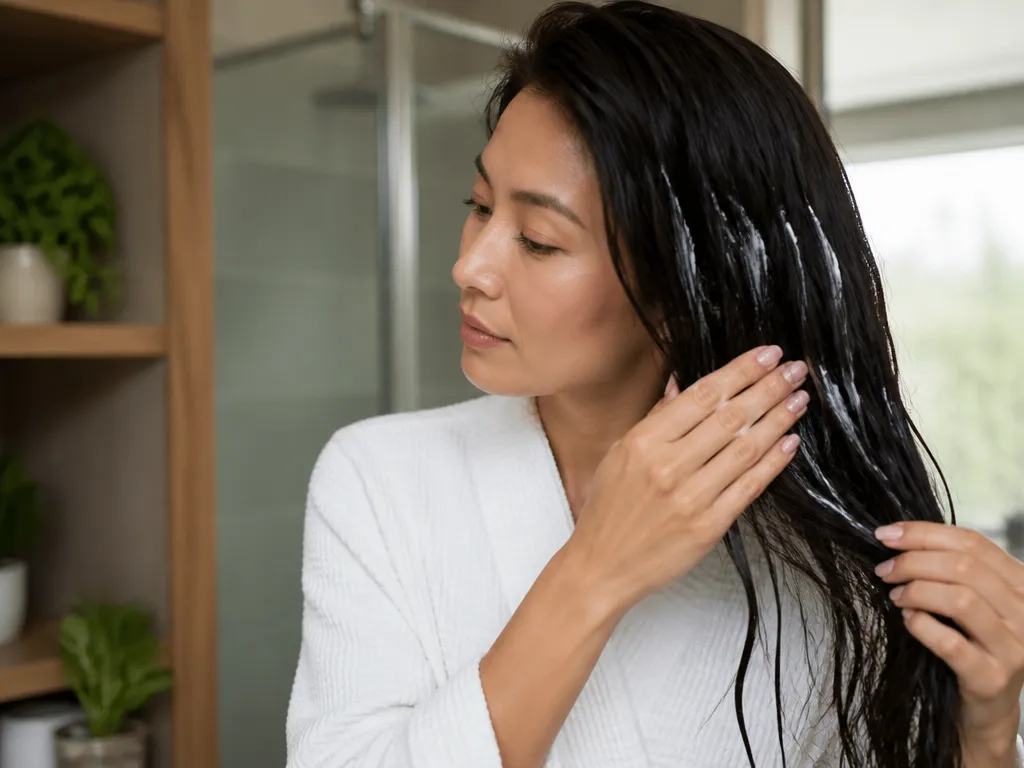
Conditioners are built to improve hair shaft feel and manage tangles through cuticle smoothing, which is why their chemistry is concentrated on lengths and ends. When you shift conditioner onto the scalp, those same ingredients can increase residue, which is a common trigger for buildup and irritation in people with oily scalps or scalp sensitivity.
Moisturizing Ingredients
Look for humectants like glycerin and panthenol (Vitamin B5) to pull water into the hair and reduce that rough, dry look. Look for fatty alcohols and emollients like cetearyl alcohol, cetyl alcohol, and various oils to soften the hair surface, which helps detangling and reduces breakage from friction.
These ingredients can be helpful for most hair types, especially dry, coarse, or color-treated hair. For oily to combination skin on the scalp area, prioritize keeping moisturizing conditioner off the roots and let the rinse-off carryover do the lightest touch near the scalp.
Protein-rich Formulations
Protein ingredients (like hydrolyzed keratin, collagen, wheat protein, or amino acids) strengthen the hair by improving structure in the strands. Protein can reduce limpness and brittleness, but too much can make hair feel stiff or overly dry, especially if you already use strong treatments.
Protein-heavy conditioners are most useful for damaged hair from heat, bleach, or frequent chemical services. People with fine hair should use them sparingly, focusing on mid-lengths and ends, because protein residue can weigh hair down and can feel drying over time.
Trichology-style guidance for the real world: if your hair feels wiry or straw-like after conditioning, reduce protein frequency and switch to a moisturizing formula for a few washes.
Silicone-based Conditioners
Silicones such as dimethicone, cyclopentasiloxane, and amodimethicone coat the hair cuticle to reduce frizz, improve slip, and make combing easier. Silicones help manage the surface of the hair, which is why they are popular for smoothing, shine, and heat-protection effects (through surface lubrication rather than skin-level protection).
Silicones can be a problem on the scalp for some people because they can build up with product mix (dry shampoo, styling gels, sweat), which can worsen oiliness or visible flakes. Silicone conditioners work best for normal to dry hair, while oily, dandruff-prone, or very sensitive scalps usually do better with conditioner kept strictly to lengths and a clarifying wash on a schedule.
| Product Type | Price | Key Ingredient | Best For |
|---|---|---|---|
| Silicone-smoothing conditioner (common mainstream types) | Varies by brand | Dimethicone / amodimethicone | Frizz control, slip, detangling for normal to dry scalps |
| Moisture conditioner (often humectant/emollient heavy) | Varies by brand | Glycerin / panthenol | Dry, coarse hair that still needs softness |
| Protein-focused conditioner | Varies by brand | Hydrolyzed keratin / amino acids | Damaged hair needing extra structure |
Proper Application Technique
Timing and rinsing are where most people go off track. If you rinse too quickly, tangles may return; if you rinse too little, your roots can look dull faster and feel tacky within a day or two.
| Hair/Scalp Type | Where to Apply Conditioner | Leave Time | Rinse Tip |
|---|---|---|---|
| Oily to combination scalp | Mid-lengths to ends, avoid roots by 1 to 2 inches | 2 to 3 minutes | Rinse extra at the part and crown |
| Dry, coarse or curly hair | Mid-lengths to ends, you can go slightly higher if hair is dry | 4 to 8 minutes | Rinse until hair feels “clean,” not slick |
| Sensitive scalp | Strictly on hair lengths, skip root contact | 2 to 5 minutes | Patch test and discontinue if stinging occurs |
Dermatology-adjacent reality: if you feel itching, burning, or a new “coated” scalp after conditioning, rinse immediately, stop the product, and patch test before trying again.
Common Conditioner Mistakes
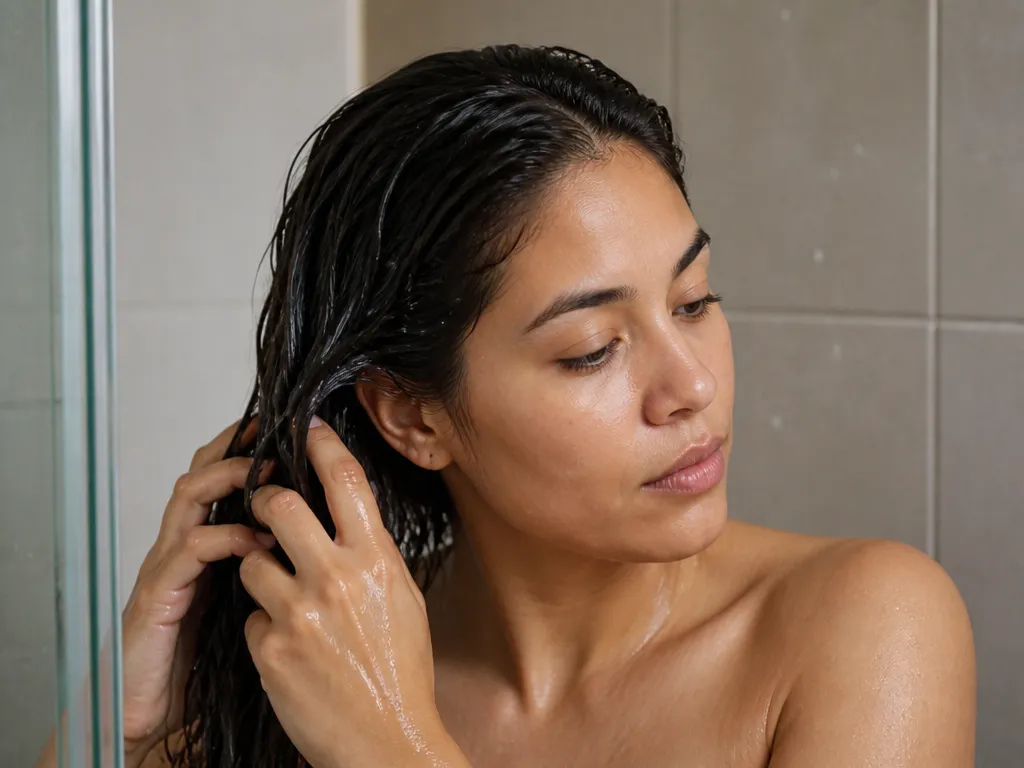
Over-conditioning Issues
Over-conditioning usually shows up as limp, heavy hair and faster oil buildup at the roots. Cause: too much product, too many days per week, or applying conditioner too high up the hair shaft (or on the scalp). Fix: use a smaller amount, keep it from mid-length to ends, and shorten your leave time.
Dermatologist tip: If your roots look greasy the next day, reduce product amount and stop at the crown line.
Scalp Buildup Problems
Scalp buildup looks like persistent flakes that do not improve after shampooing, a waxy texture, or itchy scalp. Cause: conditioner residue (especially silicones and heavier emollients) trapped at the roots, plus hard water or not cleansing often enough. Fix: rinse longer, clarify occasionally, and switch to a lighter conditioner formula when your scalp is oily or prone to dandruff.
| Skin/Scalp Type | What to Avoid | What to Do Instead |
|---|---|---|
| Oily or acne-prone scalp | Conditioner near the roots | Condition mid-length to ends only |
| Dry, sensitive scalp | Fragranced, very heavy conditioners on scalp | Patch test and keep product on hair shafts |
Ingredient Incompatibilities
Ingredient mismatches can cause stinging, redness, or worsening flakes, especially when scalp actives are part of your routine. Cause: layering conditioner close to the scalp with treatments like medicated anti-dandruff formulas or exfoliating scalp products, so residue and film interfere with how well your scalp product works. Fix: separate where each product goes and avoid combining strong actives with conditioner at the roots.
Budget-friendly Alternatives
Effective hair conditioning does not require expensive salon brands. Many affordable drugstore options use the same cationic surfactants and fatty alcohols found in luxury products.
Drugstore And Diy Options
Drugstore conditioners often rely on Behentrimonium Chloride or Cetyl Alcohol to smooth the hair cuticle. These ingredients provide the same slip and detangling as high-end versions.
| Product Type | Budget Option | Key Ingredient | Best For |
|---|---|---|---|
| Daily Conditioner | Drugstore Brand | Behentrimonium Chloride | Normal to Oily Hair |
| Deep Conditioner | Store Brand Mask | Shea Butter | Dry or Coarse Hair |
| Scalp Treatment | Pure Aloe Vera | Polysaccharides | Sensitive Scalps |
DIY rinses are a low-cost way to manage hair texture. Apple cider vinegar (ACV) is a common choice for balancing pH and adding shine to the hair shaft.
For instance, mix one part ACV with four parts water. Apply this mixture to the mid-lengths and ends of the hair, then rinse after two minutes.
Patch test any DIY mixture on a small area of skin before full application to avoid irritation.
When To Invest In Premium Products
High-end spending is most useful for bond-building treatments. These products use specific molecules to repair disulfide bonds in bleached or heat-damaged hair.
In practice, a luxury bond repair mask is more effective for coarse or chemically treated hair than a basic drugstore conditioner. Those with virgin or healthy hair will not see a noticeable difference from a budget option.
Expect to see a difference in hair elasticity and breakage within 4 to 6 weeks of consistent use. Use these intensive treatments once a week to avoid protein overload, which can make hair feel brittle.
Expert Tips For Better Results
Stylist application timing is where most people miss the mark. After rinsing shampoo, squeeze out excess water so conditioner spreads thinly, then work it through with your fingers or a wide-tooth comb, focusing on the drier sections where frizz and snagging start.
Frequency should match your texture and scalp comfort, not just your hair type. This works best for oily to combination skin when you condition only the lengths, and you can usually keep it at every wash.
For special treatment techniques, think targeted, not global. For example, use conditioner like a quick detangler for the last pass only, then rinse well to avoid root heaviness.
Patch test tip: If you have sensitive skin, try a small amount behind the ear or on the inner arm first, especially if your conditioner contains strong fragrances or essential oils.
| Hair Need | What to Do | Where to Apply |
|---|---|---|
| Snags and tangles | Short leave time (1 to 3 minutes) | Mid-lengths to ends |
| Frizz and flyaways | Conditioner or mask, rinse thoroughly | Ends first, then blend upward slightly |
| Dry ends | Use a richer formula or occasional mask | Lower half only |
Ingredient decisions also affect whether you should keep conditioner away from the scalp. Look for smoothers like cetearyl alcohol, cetyl alcohol, behentrimonium chloride, and panthenol for hair softness, but avoid frequent scalp contact if you react easily to fragrance or essential oils.
Special “scalp conditioner” products exist, but they are still rinse-out or formulated for scalp contact, so use them only as directed on the label. For any active scalp issue (itch, redness, persistent flaking), prioritize treatment shampoo and keep standard conditioner off the scalp until irritation settles.
Quick Summary
Standard conditioner is a hair product designed to treat the hair shaft rather than the skin. It works by sealing the hair cuticle to lock in moisture and facilitate easier detangling. To prevent buildup or irritation, you should apply conditioner only to the mid-lengths and ends, starting about 1 to 2 inches away from your roots. Using heavy formulas on an oily or sensitive scalp can lead to clogged follicles, itching, or hair that looks greasy much faster than usual.
The way you use conditioner should change based on your hair porosity. Low porosity hair may feel coated easily and needs a shorter sit time of 1 to 3 minutes, while high porosity hair requires products that help seal the cuticle to prevent frizz. For best results, squeeze excess water out of your hair before application and leave rinse-out products on for 2 to 5 minutes. Always remember that shampoo treats the scalp while conditioner is meant for the hair.
| Focus Area | Primary Purpose | Risk of Over-application |
|---|---|---|
| Scalp | Cleaning and Health | Greasiness and Buildup |
| Mid-Lengths | Moisture and Slip | Minimal |
| Ends | Repair and Protection | Minimal |
Beauty Routine Cheat Sheet
One Thing To Stop Doing Immediately
Stop applying heavy rinse-out conditioners directly onto your scalp and roots, as this can cause buildup and greasiness.
Expected Timeline For Results
Immediate smoothness and easier detangling after the first wash, with improved moisture retention over several weeks of consistent, correct application.
Frequently Asked Questions
Should Conditioner Be Applied To The Scalp Or Only To The Hair?
Apply conditioner to the mid-lengths and ends, not the scalp, to avoid buildup. Conditioner is formulated to coat the hair shaft for moisture and slip, so focusing application away from the scalp helps prevent greasiness and clogged follicles. For a dry scalp, choose a scalp-specific product rather than applying regular conditioner to the roots.
How Long Until I See Results From Using Conditioner On My Hair Or Scalp?
You can usually feel smoother hair after the first wash. For noticeable manageability and shine, expect 1-2 weeks of regular use. If you are targeting scalp concerns like dryness or flaking with a scalp conditioner, results may take 2-4 weeks.
Can Conditioner Cause Breakouts Or Worsen Acne On A Sensitive Or Acne-prone Scalp?
Yes, it can clog follicles if applied heavily to the scalp. Choose a lightweight formula and avoid heavy oils on the scalp, then rinse thoroughly. Always patch test new products first and consult a dermatologist if irritation occurs.
What Is The Difference Between Regular Conditioner And Scalp Care Products Or Ingredients Like Silicones, Oils, Or Acids?
Regular conditioner hydrates the hair shaft, while scalp care products target the skin on the scalp. Look for ingredients suited to your needs; silicones can add slip and shine but may build up on the scalp with repeated use, while actives like salicylic acid help exfoliate flaky scalps. Test one product at a time.
Is The Expensive Conditioner Worth It Versus A Drugstore Option?
Most people get solid results from mid priced formulas. Look for key actives you actually need, such as ceramides, glycerin, or panthenol, rather than paying for prestige packaging. If you have a sensitive scalp, patch test and choose fragrance-free options when possible.

- 13 Best Natural Deep Conditioning Ingredients to Tame Frizzy Hair - September 29, 2026
- How to Make Deep Conditioner for Natural Hair: 8 Easy DIY Recipes - September 29, 2026
- Natural Homemade Deep Conditioner for Natural Hair: Easy DIY Recipes - September 29, 2026