
Is Conditioner Everyday Bad For Your Hair?
You might think skipping conditioner will save your hair from looking greasy, but you are likely just making breakage worse. Most people struggle with heavy, limp strands because they apply product to the wrong areas rather than changing their frequency. Daily conditioning is not inherently bad when you choose the right formula and apply it correctly.
Conditioner use every day is not inherently bad if you apply it only to the mid-lengths and ends. Daily conditioning works well for dry, curly, or color-treated hair, but those with fine or oily hair should limit application to every 2 or 3 washes. Avoid the scalp to prevent heavy buildup and irritation.
Best for: dry, curly, and color-treated hair. Use caution if: fine, straight, or oily scalp types.
Is Conditioner Everyday Bad For Your Hair?

Conditioning every wash is usually safe for most hair types, but it isn’t a universal rule. For fine or oily scalps, daily conditioning can weigh hair down or contribute to buildup if you reach for heavy formulas; dry or textured hair often benefits from more frequent conditioning, sometimes daily, or using lighter leave-ins on non-wash days.
Conditioning on a daily basis isn’t inherently harmful when you tailor the product to your hair type. Lightweight, rinse-out formulas keep strands smooth without clogging the scalp, and they help protect against breakage from brushing or heat. This approach works best for dry or textured hair, while fine or oily hair usually benefits from less frequent use.
| Hair Type | Recommended Frequency | Why | What to Look For |
|---|---|---|---|
| Fine/oily scalp | Every wash or every other wash | Prevents tangles but minimizes weighed-down roots | Lightweight, silicone-free, rinse easily |
| Dry/curly/coily | Most washes or daily | Maintains moisture, controls frizz | Rich or moisturizing formula with targeted oils |
| Color-treated/chemically treated | After each wash if needed | Helps seal cuticle and protect color | Color-safe, protein-friendly options |
Risks of product buildup and weighed-down hair include dullness, crusty residue, and scalp itchiness. If you notice greasy roots, limp strands, or a persistent residue after rinsing, you may be using too heavy a formula or applying conditioner too close to the scalp.
In practice, thorough rinsing for 30 to 60 seconds can help prevent this.
Balancing moisture versus scalp health means you may need to adjust over time. Consider using a clarifying shampoo once every 1 – 2 weeks if you notice buildup, and reserve richer conditioners for ends rather than the scalp. Patch-test new products to rule out sensitivity, especially with fragrances or botanical actives.
Dermatologist tip: apply conditioner from mid-lengths to ends only, avoiding the scalp most days to keep roots fresh while protecting the ends.
Expect to notice smoother ends and easier combing within a few weeks of consistent use, with adjustments based on how your scalp responds.
Identify Your Hair And Scalp Type
Hair health depends on the natural oil production at your scalp and the porosity of your hair strands. Fine, straight hair usually requires less frequent conditioning to avoid weighing down the roots, whereas thick, curly, or color-treated hair often needs frequent moisture to maintain elasticity and prevent breakage.
Scalp And Porosity Assessment
Oily scalps produce excess sebum that travels quickly down straight hair strands, making them appear greasy if heavy conditioners are used too often. Conversely, dry or itchy scalps often correlate with coarse or curly hair textures that lack natural oil distribution, making consistent conditioning useful for the lengths.
Esthetician Tip: If you have a dandruff-prone or sensitive scalp, avoid applying any conditioner within two inches of the roots. This prevents clogged follicles and irritation while still nourishing the drier ends.
Matching Routine To Needs
Adjusting your frequency based on these traits keeps your hair balanced. Those with fine, straight hair often benefit from conditioning every other wash or using lightweight, volumizing formulas that rinse clean. Individuals with color-treated or chemically processed hair usually need conditioning after each wash to replace lost lipids and support the cuticle, which protects the hair shaft from further environmental damage.
| Hair/Scalp Type | Conditioning Frequency | Best Approach |
|---|---|---|
| Oily/Fine | Every other wash | Apply to ends only |
| Dry/Coily | Every wash | Focus on lengths/ends |
| Color-Treated | Every wash | Use color-safe formulas |
Essential Ingredients For Daily Conditioning
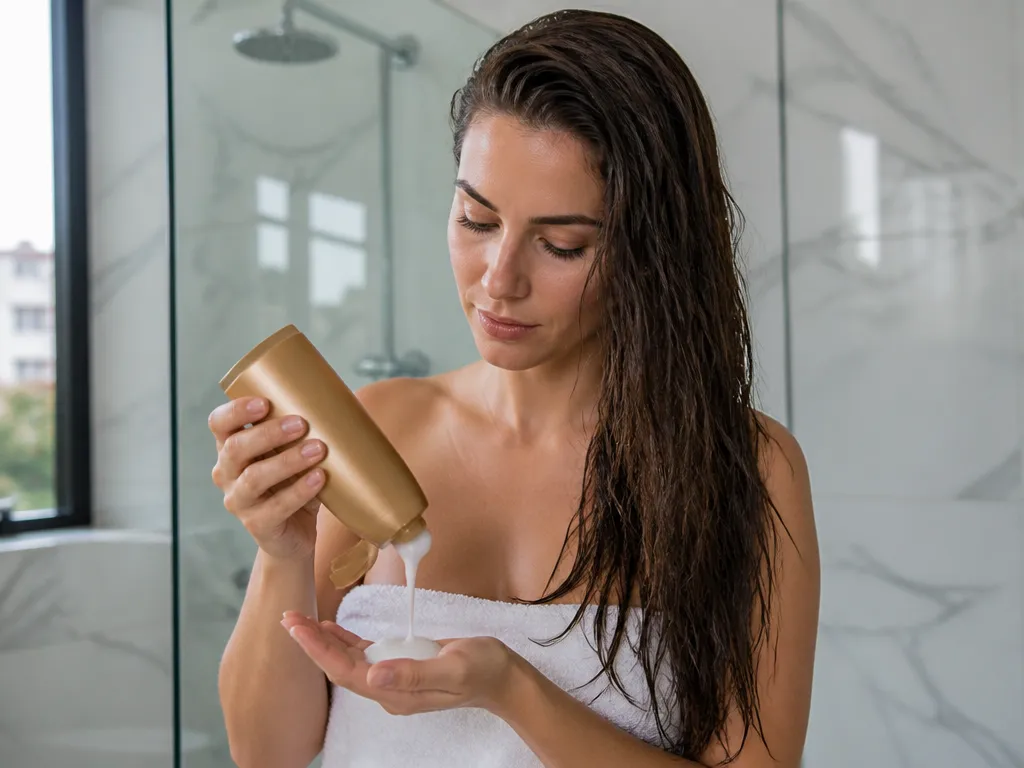
Conditioners that feel good every wash often do so because of humectants and film-formers, not because they are “stronger” than shampoo. Humectants like glycerin and hyaluronic acid pull water into the hair shaft and help softness without heavily coating the scalp. Proteins can improve strength, but they need the right amount and fit, or hair can feel rough or brittle.
Humectants are the best daily-friendly allies for most hair types, especially for dry ends and frizz-prone styles. Glycerin is common in conditioners and leave-ins because it helps hair hold onto moisture, while hyaluronic acid gives slip and hydration. Trade-off: on very humid days or if hair is already weighed down, humectants can make hair feel limp, so focus application on mid-lengths to ends.
Silicones: Slip And Shine, With A Buildup Risk
Silicones (like dimethicone, amodimethicone, and cyclopentasiloxane) reduce friction, boost shine, and help detangle, which is why many conditioners make hair feel instantly smoother. The downside is “buildup,” meaning residue that can cling to strands and make hair look dull, feel coated, or feel extra greasy. People with fine, straight hair or oily scalps usually notice this sooner, especially when they use the same rich conditioner every wash.
For daily conditioning, choose silicones that rinse clean for your hair and adjust how often you use a clarifying shampoo.
In practice, if your hair gets flat within a day, switch to a lighter conditioner and use it less often. Clarifying 1-4 times per month is a common adjustment, but your exact timing depends on how often you condition and how much product you use.
| Item | Amount/Specification | Notes |
|---|---|---|
| Glycerin | Not a fixed percentage listed on labels | Daily-friendly moisture, apply mid-lengths to ends to avoid oily roots. |
| Hyaluronic acid | Not always listed by % | Helps hydration and slip; can feel heavy if you over-apply. |
| Dimethicone / Amodimethicone | Often high on the ingredient list for smoothing | Great for frizz and tangles, may build up on fine hair. |
| Protein (hydrolyzed keratin, collagen, wheat/soy proteins) | Typically blends, not one “safe” % for everyone | Good for weakened strands, can lead to roughness if overdone. |
For example, dandruff-prone scalps often do best with conditioner strictly on lengths, because richer formulas can worsen irritation if they touch the scalp. For color-treated hair and chemically treated hair, humectants and gentle silicones can help detangle and reduce breakage, but protein should be balanced so it does not make strands feel overly rigid.
Dermatologist tip for hairline-skin: keep conditioners away from the scalp margin and rinse until water runs clear, since residue can irritate sensitive skin near the hairline.
Proper Daily Conditioning Technique
Effective conditioning requires precise application starting at the mid-lengths and focusing exclusively on the ends. Applying product directly to the scalp often results in weighed-down roots and unnecessary oil buildup, regardless of your hair texture.
Dermatologist tip: If you struggle with back acne or body breakouts, always wash your body with a gentle cleanser after you have finished rinsing out your conditioner to ensure no residue remains on your skin.
Tailoring Technique By Hair Type
Oily scalp types should prioritize lightweight formulas and avoid the root area during application. For those with thick, coily, or chemically treated hair, applying conditioner while the hair is still quite damp helps with moisture retention and prevents the product from clumping.
| Hair Type | Application Strategy | Rinse Priority |
|---|---|---|
| Fine/Straight | Ends only | Very thorough rinse |
| Coily/Textured | Mid-lengths to ends | Leave slightly damp |
| Color-Treated | Even saturation | Cold water only |
Dry or damaged hair may benefit from a quick detangling session using a comb while the conditioner is still in the hair. Always move from the ends upward toward the mid-lengths to prevent snapping fragile strands. This method minimizes mechanical damage and ensures that every strand receives proper coating without creating tangles that lead to breakage.
Common Conditioning Mistakes To Avoid

Conditioner everyday is only a problem when it is applied in a way that causes residue buildup on the scalp or weighs hair down. The most common culprits are scalp application, too much product, and skipping a clarifying wash when your hair is starting to feel coated.
Using excessive product amounts is another reason hair feels greasy even if you rinse. Conditioner can film the hair shaft when you overload, and film blocks normal water absorption, so your hair looks dull and “slick” instead of soft.
Trichology-style reality check: if your roots look waxy within 12 to 24 hours, you are probably using too much conditioner or placing it too high.
| Hair/Scalp Situation | Typical Slip Amount | Where To Apply | What You’ll See If You Overdo It |
|---|---|---|---|
| Oily scalp, straight hair | Small, pea-sized to dime-sized (depending on length) | Only ends | Flat crown, limp roots, faster greasiness |
| Dry, thick, coarse or coily hair | Generous on ends, less at mid-lengths | Mid-lengths to ends | Heavy, hard-to-style feel if overloaded |
| Color-treated or chemically processed hair | Use less than you think, especially on fine strands | Mid-lengths to ends | Coated look, dullness, rough re-growth |
Neglecting the clarifying wash is the least glamorous mistake, and it is one of the most obvious once you know what to look for. If you use conditioner frequently, styling products too, or you have hard water, you can build up a layer that makes hair feel rough, coated, and resistant to styling.
In practice, clarifying is usually needed every few weeks depending on your routine and scalp behavior. People with dandruff-prone scalps or easily irritated skin should be cautious with harsh clarifiers, and they may do better with a gentler detox shampoo less often.
If your hair already shows oily roots, itching, or a coated feel, reduce contact area first, then cut the amount. Patch test or test a small area of product on the scalp if you have a history of sensitivity, and if irritation persists, pause and consider switching to a lower-fragrance, simpler formula.
Drugstore Vs. Luxury Conditioner Options
Budget conditioners and high-end formulas both aim to smooth the hair cuticle and prevent moisture loss. While luxury brands often use more refined silicones and rare botanical oils, drugstore options provide effective basic hydration through reliable ingredients like dimethicone or glycerin.
Price differences usually stem from the concentration of active ingredients and the complexity of the scent profiles. For daily users, a high-quality drugstore option is often more practical to prevent product buildup. For those with severely damaged or chemically treated hair, the concentrated nutrients in professional lines can offer more significant repair.
Product Comparison By Hair Need
| Category | Product Type | Key Ingredient | Best For |
|---|---|---|---|
| Budget | Daily Hydrating | Glycerin | Normal to oily hair |
| Professional | Repair/Bonding | Bis-Aminopropyl Diglycol Dimaleate | Bleached or color-treated hair |
| Luxury | Smoothing/Anti-Frizz | Argan or Camellia Oil | Dry, coarse, or thick hair |
Daily conditioners work well for most people when applied only from the mid-lengths to the ends.
For instance, someone with an oily scalp should avoid heavy luxury creams near the roots to prevent limp hair. They can instead use a lightweight drugstore conditioner on the tips to maintain softness without the weight.
Professional tip: If your hair feels heavy or “coated” after a few days of conditioning, switch to a clarifying shampoo once a week to remove residue.
Low-cost Alternatives
Apple cider vinegar (ACV) rinses offer a natural way to balance hair pH and add shine. This method works best for people with hard water buildup or those who want to avoid heavy silicones.
In practice, a DIY rinse is a great way to refresh hair between deep conditioning sessions. However, do not use undiluted vinegar, as the high acidity can cause scalp irritation or dryness.
Professional Tips For Lasting Results
Product buildup occurs when heavy silicones, oils, and waxes accumulate on the hair shaft due to frequent conditioning without adequate cleansing. This coating weighs hair down, makes it appear limp, and prevents moisture from penetrating the cuticle. Managing this requires a strategic balance between hydration and purification.
Managing Product Overload
Symptoms of over-conditioning include a greasy appearance even shortly after washing, a lack of volume, and a “coated” feel that resists water. If your hair feels heavy or looks dull, you likely need to reset your scalp and strands.
Professional Tip: If you have fine hair, look for lightweight, silicone-free conditioners. Heavy silicones like dimethicone can cause rapid buildup on thinner hair strands.
Seasonal And Environmental Adjustments
Weather changes significantly impact how much moisture your hair requires. Humidity and temperature shifts dictate whether your current conditioning frequency is helping or hurting your hair health.
| Season | Hair Condition | Routine Adjustment |
| Summer | High humidity, salt/chlorine exposure | Increase clarifying washes; use UV protection sprays. |
| Winter | Dry air, indoor heating | Focus on deeper moisture; use more emollient conditioners. |
| Spring/Fall | Transitioning moisture levels | Monitor for frizz or dryness and adjust frequency. |
For instance, someone with curly, coily hair may find that daily conditioning is necessary to combat extreme dryness during winter months.
In practice, this person should use a deep conditioning mask once a week instead of a standard conditioner to provide more intense hydration without daily heaviness.
In contrast, individuals with oily scalps or very straight hair should limit conditioning rather than use it daily. Applying product every day can lead to a cycle of greasiness that requires more frequent, harsh shampooing, which ultimately dries out the ends.
Conditioner Frequency Cheat Sheet
Conditioning frequency depends on hair porosity and sebum production. Coily or highly porous hair often requires daily moisture to prevent breakage, while fine or low-porosity hair can become weighed down by daily application.
High Porosity And Coily Hair
Coily and curly textures (Type 3 and 4) naturally struggle to move scalp oils down the hair shaft. Daily conditioning with a lightweight rinse-out or a leave-in formula prevents the cuticle from lifting and drying out. Look for shea butter or coconut oil to seal in moisture.
For instance, someone with 4C hair might use a rinse-out conditioner every wash and a leave-in cream daily. This layering prevents tangles and reduces breakage during styling. High-end options like Briogeo ($28) offer great slip, while drugstore options like Maui Moisture ($7) provide similar hydration.
Color-treated coily hair needs additional care. Use a pH-balanced conditioner every time you wash to close the cuticle and lock in pigment. This prevents the color from fading too quickly.
Fine And Oily Hair
Fine hair has a smaller diameter and is easily overwhelmed by heavy emollients. Conditioning every day often leads to limp strands and a greasy appearance. A frequency of two to three times per week is usually sufficient for this hair type.
In practice, focusing on water-based formulas helps maintain volume. Avoid heavy silicones that build up over time and flatten the roots. If the hair feels sticky, a clarifying shampoo once every two weeks removes the residue. High-end: Pureology ($32). Drugstore: Pantene Volume ($5).
Some people with very fine hair benefit from a reverse wash. In this method, you apply conditioner first, then shampoo. This ensures the ends are hydrated without leaving a heavy film on the hair.
| Hair Type | Frequency | Key Ingredient | Primary Goal |
|---|---|---|---|
| Coily/Dry | Daily/Every Wash | Shea Butter | Moisture Retention |
| Fine/Oily | 2-3x Weekly | Glycerin | Volume & Shine |
| Color-Treated | Every Wash | Amino Acids | Color Longevity |
Esthetician tip: Always apply conditioner from the mid-shaft down to the ends. Applying it to the roots can clog follicles and make the scalp appear oily faster.
Common Conditioner Questions Answered
Conditioner every wash is usually fine, but it can become a problem if it builds up on your scalp, leaves residue behind, or weighs down fine strands. The “bad” part is rarely the act of conditioning itself; it is how often, how much, where you apply it, and how your scalp reacts.
For dandruff, conditioner can worsen the look when it makes the scalp feel more coated or traps flakes. Dandruff is driven by yeast (Malassezia), irritation, or both, so the shampoo choice matters more than the conditioner. If you use anti-dandruff shampoo (like zinc pyrithione, ketoconazole, or selenium sulfide), keep conditioner strictly on the lengths and avoid the scalp area.
| Scalp issue | Conditioner approach | What to watch for |
|---|---|---|
| Dandruff-prone | Condition mid-length to ends only | More flakes, itching, or greasy scalp feel |
| Oily roots | Skip roots, use a smaller amount | Flatness within 24 hours |
| Dry, tight scalp | Use a scalp-friendly, light conditioner only if tolerated | Burning or redness (stop and reassess) |
Conditioning without shampoo can work in a limited “reset” way for dry, coily hair, but it is not a reliable long-term strategy. Without shampoo, buildup from oils, styling products, and minerals stays in the hair and can make the scalp feel clogged, especially for straight or fine hair.
In practice, use a gentle cleanser when you feel residue (slick, dull, or tangly hair) even if your ends still feel dry.
Dermatologic caution: if your scalp gets itchy, inflamed, or develops rashy bumps, stop the conditioner on the scalp area and consider a dermatologist, especially if you also have eczema or a known allergy history.
For a dry scalp, conditioner safety depends on where it touches. Many people do fine with conditioner on the lengths, but scalp application can trigger irritation if the formula is fragranced, contains certain plant extracts, or is too occlusive. Dry scalp comfort usually improves faster when you focus on gentle cleansing and, if needed, an anti-itch or anti-dandruff shampoo rather than increasing conditioner frequency.
Budget-friendly options exist, but the key is the texture and placement, not the price. Drugstore picks can work well as long as they are light enough to avoid root heaviness, and high-end formulas help mainly when they match your hair porosity and detangling needs. If you are switching routines, give your hair 2-4 weeks to adjust before judging results.
Quick Summary
Conditioner every day is not automatically bad, but applying it the wrong way is where problems start. Daily conditioning is appropriate for dry, curly, or color-treated hair when conditioner is kept to the mid-lengths and ends. Fine or oily hair generally needs less frequent conditioning, often every 2 to 3 washes, with the scalp left free of conditioner to reduce buildup and irritation.
The piece also emphasizes rinsing and cleanup routines to prevent buildup, dullness, and scalp itchiness. Rinse thoroughly for 30 to 60 seconds if you feel residue, and use a clarifying shampoo once every 1 to 2 weeks when buildup is noticeable. If you see greasy roots or persistent residue, adjust the formula, amount, and application area.
| Hair/Scalp Type | Conditioning Frequency | Where to Apply | What to Watch For |
|---|---|---|---|
| Fine or oily scalp | Every wash or every other wash, or every 2 to 3 washes | Mid-lengths and ends only | Greasy roots, limp strands, residue |
| Dry, curly, or coily | Most washes, sometimes daily | Mid-lengths and ends | Crusty residue, itchy scalp from over-conditioning |
| Color-treated or chemically treated | After each wash if needed | Mid-lengths and ends | Dullness if buildup forms, limp hair if too heavy |
Frequently Asked Questions
Will Using Conditioner Every Day Make My Hair Greasy?
Yes, if you apply it to your scalp, you risk heavy buildup and oiliness. You should only apply conditioner from the mid-lengths to the ends of your hair to keep your roots light and bouncy.
Is It Better To Use A Drugstore Conditioner Or An Expensive Salon Brand?
Drugstore brands are great for basic hydration, while salon versions may contain different concentrations of active conditioning agents. If your hair is chemically treated or extremely damaged, a professional formula may suit its needs.
Can Conditioner Cause Breakouts On My Face Or Back?
It can, especially if you have acne-prone skin. Many conditioners contain heavy oils or silicones that can clog pores, so you should wash your face and body after rinsing your hair to remove any residue.
What Is The Difference Between A Conditioner And A Hair Mask?
A standard conditioner is designed for daily or frequent use to smooth the cuticle, while a hair mask is a much more concentrated treatment. You should only use a deep conditioning mask once or twice a week to avoid weighing your hair down.
What Is The Correct Order To Apply Hair Products?
You should always start with shampoo to cleanse the scalp, followed by conditioner to seal the cuticle. If you use a leave-in treatment, apply it after you have towel-dried your hair but before any styling products.

- 13 Best Natural Deep Conditioning Ingredients to Tame Frizzy Hair - September 29, 2026
- How to Make Deep Conditioner for Natural Hair: 8 Easy DIY Recipes - September 29, 2026
- Natural Homemade Deep Conditioner for Natural Hair: Easy DIY Recipes - September 29, 2026