
Can Conditioner Make Your Hair Greasy?
Struggling with flat, greasy-looking hair after conditioner? You’re not alone, and it makes sense, conditioner is meant to add slip, softness, and shine. The catch is that some formulas leave residue fast, especially on fine hair or if you apply too close to the scalp. Keep reading for what actually causes greasiness and how to fix it with small changes.
Yes, conditioner can make hair greasy if you use too much, apply to the scalp, or don’t rinse thoroughly. The biggest win is choosing a lighter formula with water-based humectants (like glycerin or panthenol) and using it only on mid-lengths to ends.
Can Conditioner Make Your Hair Greasy? (The Truth)?
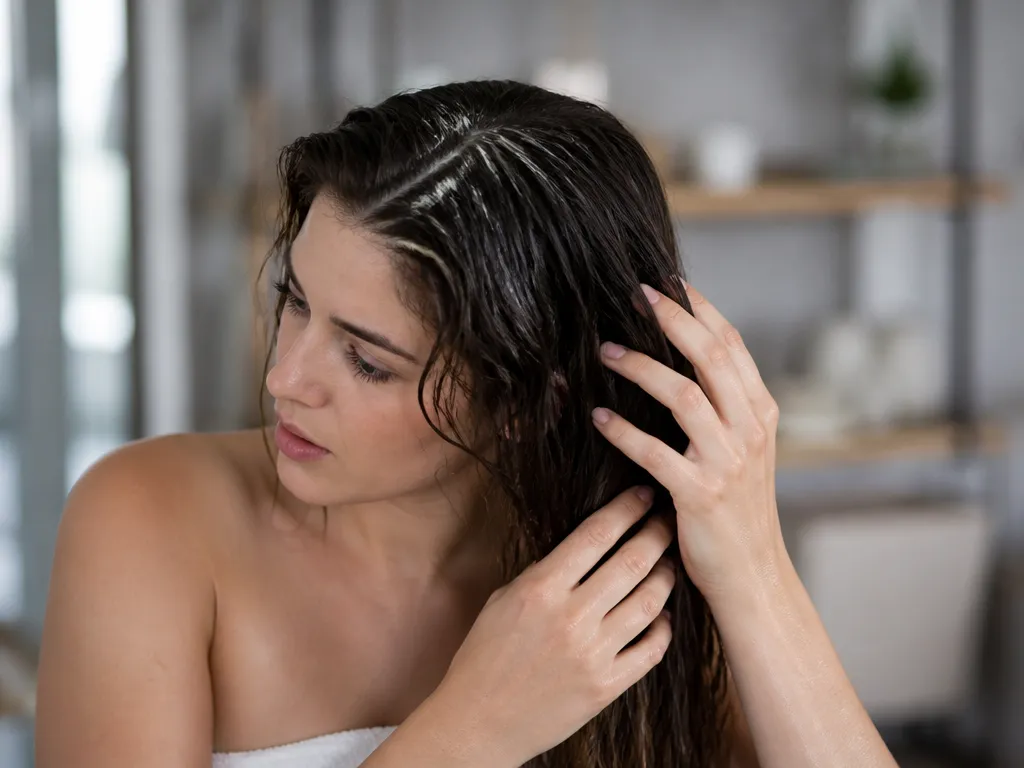
Conditioner causes greasiness when heavy emollients like silicones or oils are applied to the scalp or used on fine hair. This buildup creates a film that traps natural sebum, making the hair look oily faster.
Residue occurs when conditioning agents bind to the hair shaft and scalp. Natural sebum, produced by the sebaceous glands, mixes with these synthetic films.
This combination prevents the hair from feeling light. It often results in a weighed-down appearance within hours of washing.
Fine hair types struggle with this the most. Fine strands have less surface area to absorb moisture, so product sits on top of the hair.
For instance, using a heavy mask designed for curly, coarse hair on straight, thin hair usually leads to immediate flatness.
| Conditioner Type | Key Ingredients | Best For | Grease Risk |
|---|---|---|---|
| Heavy/Creamy | Dimethicone, Shea Butter | Coarse, Curly, Dry | High (on fine hair) |
| Light/Volumizing | Behentrimonium Methosulfate | Fine, Oily, Straight | Low |
Esthetician tip: Only apply conditioner from the ears down. The scalp produces its own natural oils, so it does not need additional moisture from a cream.
Application order is key to avoiding buildup. Follow this sequence: cleanser → conditioner → thorough rinse.
Budget options exist for every hair type. High-end: Pureology Hydrate ($35). Drugstore: Maui Moisture ($7). Both use different concentrations of hydrating agents to manage moisture.
Always perform a patch test on a small section of hair behind the ear if you try a new protein-heavy conditioner. Some hair types react to excess protein by becoming stiff or brittle.
Identify Your Scalp And Hair Type
A tissue test shows how much oil sits on the scalp and how quickly it transfers to the hair shaft. If you see oil on the tissue within about an hour of washing, your scalp runs oily and roots can look greasy fast. Look at the ends too, because dry ends often coexist with slick roots in combination patterns.
This approach works best for oily to combination scalps with fine hair, since the goal is to protect ends while preventing root greasiness. Keep notes on how your scalp responds to different wash frequencies and product types, and adjust accordingly. Patch test any new product on a small area before full use to avoid irritation or buildup.
In practice, seasons, climate, and activity level can shift your pattern. Track outcomes over 4-6 weeks to confirm stability, then tailor your routine to maintain balance without overloading the roots. Consult a stylist or trichologist for a scalp check and personalized guidance if needed.
Ingredients That Prevent Greasy Buildup
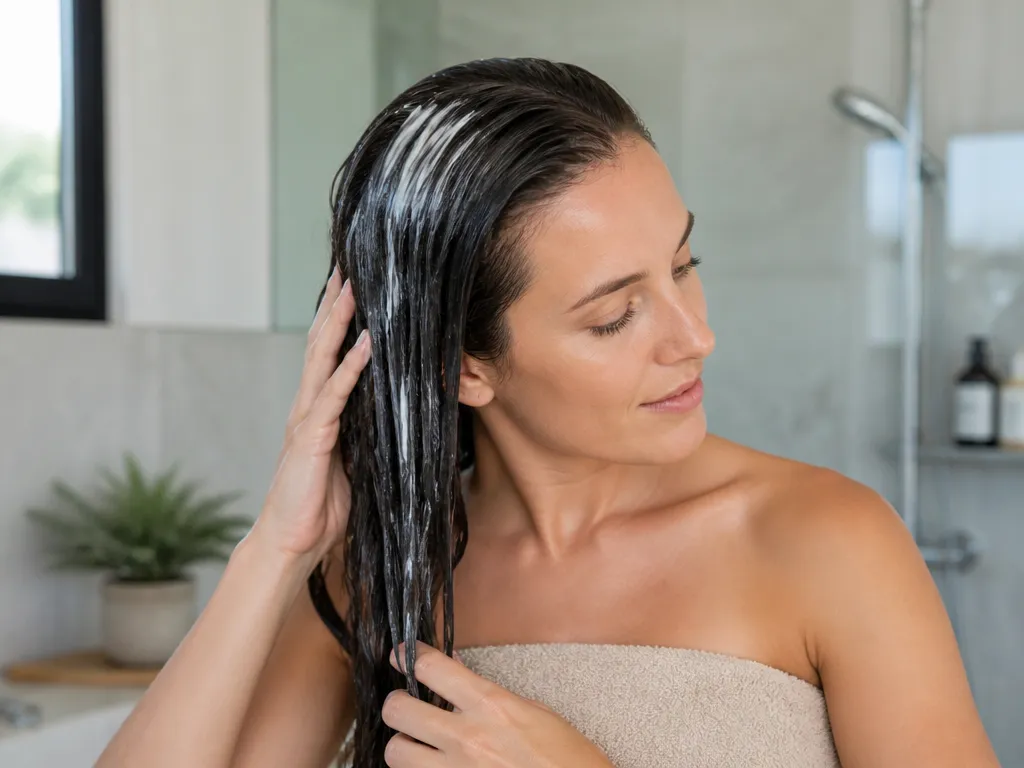
Lightweight hydrators like glycerin and aloe vera provide moisture to the hair shaft without leaving a heavy residue on the cuticle. These ingredients attract water into the hair instead of coating it in thick lipids.
Lightweight Hydrators Vs. Heavy Lipids
Glycerin is a humectant that pulls moisture from the air into the hair. Panthenol is a Pro-Vitamin B5 that improves hair elasticity without adding weight to the strands.
Aloe vera is a gentle hydrator that works well for fine hair. These ingredients are ideal for oily scalps that still require moisture on the ends.
Proper Conditioning Technique For Volume
For volume, distribute a suitable conditioner lightly from mid-lengths to ends and rinse thoroughly, especially if your hair is oily or fine. Conditioner can remain volume-friendly when you match the product type to your hair texture.
For example, if your roots get oily by day two, switch from a heavy cream conditioner to a lightweight gel-cream or “clarifying” conditioning rinse and use a smaller amount.
In practice, this keeps moisture where hair needs it, the mid-length to ends, while your scalp stays balanced.
Conditioner type also affects how often you need to wash. Fine, oily hair often does better with rinse-out conditioners and occasional masks, while thicker hair can tolerate richer formulas 2 to 3 times per week without looking greasy.
| Product | Price | Key Ingredient | Best For |
|---|---|---|---|
| Lightweight rinse-out conditioner | Drugstore: $10-$20 | Glycerin or hyaluronic acid | Oily roots, fine hair needing slip without residue |
| Deep mask (rinse) | Mid-range: $20-$40 | Ceramides or panthenol | Dry ends, color-treated hair (use sparingly) |
| Leave-in frizz control | Drugstore: $12-$25 | Dimethicone (for slip) or amino acids | Ends only, humidity/frizz control |
Patch-test caution for hair products: apply a small amount behind the ear or at the crown for 24 hours if you have a sensitive scalp, especially with fragranced formulas or high-protein treatments.
Hair order matters too, even though it is not “skin” makeup steps. Shampoo your scalp, then apply conditioner after shampoo rinsing, then use leave-in only on dry-down ends, and avoid touching roots during styling.
Mistakes Leading To Oily Roots
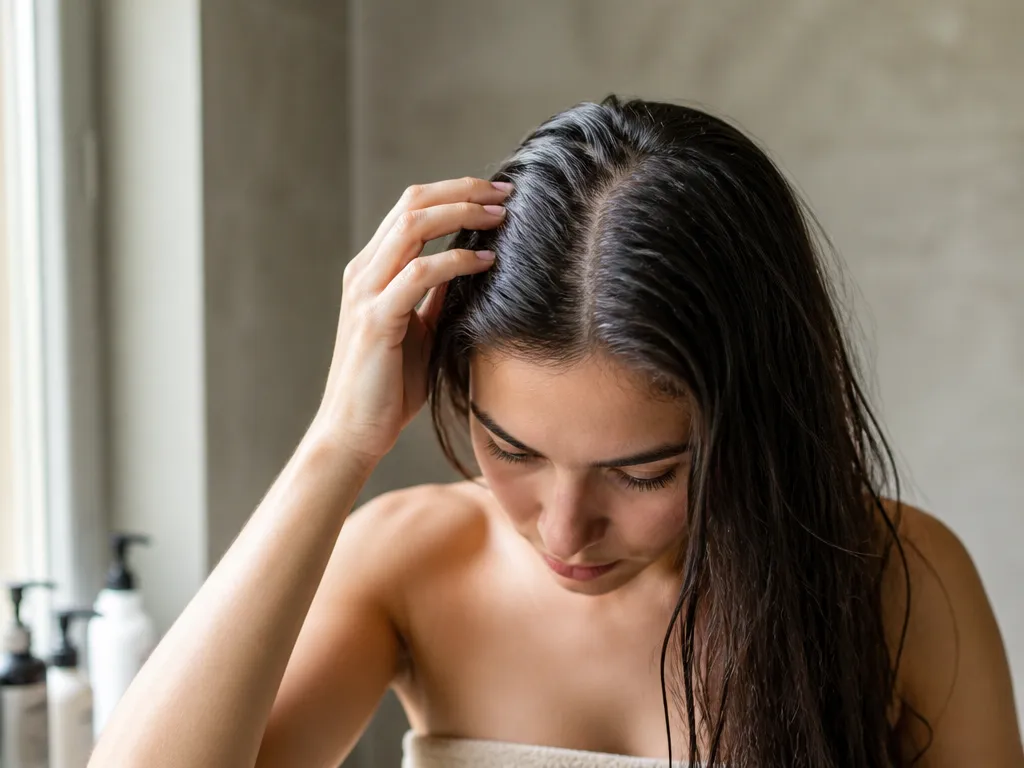
Applying Conditioner To The Scalp
Conditioner is designed to soften and detangle hair lengths, not to treat the scalp. When you smooth it up the crown, the emollients coat the scalp surface and can trigger that “oily at the roots, dry at the ends” cycle, especially on oily to combination hair types.
For example, if you part your hair and see product sitting at the root line, you are using more than you need. Switch to a length-focused approach by keeping conditioner 1 to 2 inches away from the scalp, even if your strands are fine and prone to oiliness.
Stylist tip: If your roots look shinier within 12 to 24 hours, your conditioner placement is likely too high or you are not rinsing fully.
Using Too Much Product
Excess conditioner is the fastest way to create buildup, which shows up as limp, greasy-looking roots. This is common with rich, butter-based, or high-slip formulas, since the extra emollients cling to fine hair and collect with styling product.
For instance, a thick leave-in conditioner plus a heavy mask at the same time can stack ingredients like fatty alcohols and silicones in a way that feels coated at the scalp area. Oily to combination scalps do best with lighter textures and smaller amounts.
Skipping Clarifying Shampoo
Conditioner mistakes get worse when buildup sits for weeks. Hair products, hard water minerals, and styling residue can make roots feel greasy even when you used conditioner correctly.
In practice, oily to combination hair types often need clarifying shampoo more than dry hair types, usually about once every 1 to 2 weeks. Use it on the scalp and rinse well, then follow with conditioner only on lengths to keep ends soft.
| Product Type | Price Range | Key Ingredient to Look For | Best For |
|---|---|---|---|
| Clarifying Shampoo (budget) | Drugstore | Detoxifying surfactants and strong cleansing agents | Oily roots and buildup from styling |
| Clarifying Shampoo (high-end) | High-end | Clarifying complex with less harsh feel | Sensitive scalps that still need occasional reset |
Drugstore Vs High-end Lightweight Options
Lightweight conditioning formulas can be great for oily or fine hair, while heavy, highly occlusive conditioners and over-application are the usual reasons roots look greasy. Product type, placement, and rinsing remain the main considerations.
Affordable Silicone-free Drugstore Picks
For oily roots, many people do best with silicone-free options that still include lightweight conditioners and scalp-friendly feel. Look for conditioning agents like hydrolyzed proteins (for slip) and fatty alcohols like cetyl alcohol, plus humectants such as glycerin to avoid a waxy finish.
Pick one budget option and use it consistently for 3 to 4 washes before you judge results, because buildup can take time to show. Apply to towel-dried hair, then rinse well at the end of your shower.
Luxury Lightweight Conditioning Formulas
High-end does not automatically mean “too heavy,” but luxury conditioners often lean rich for dry hair and shine. If you love the feel, choose a “lightweight” version and use less product than you think you need, concentrating on ends only.
For maximum lightness, look for styles that include amino acids and low-to-moderate fatty acid esters, which usually rinse cleaner than butter-heavy blends. On deeper color-treated hair, rinse longer because darker hair can hold onto film longer and start to look dull or greasy faster.
| Product Tier | Price | Key Ingredient | Best For |
|---|---|---|---|
| Drugstore (example category) | ~$10 to $20 | Glycerin + hydrolyzed proteins | Oily to combination skin-like scalps, fine hair |
| High-end (example category) | ~$40+ | Amino acids + lightweight conditioning polymers | Dry ends, color-treated hair that needs slip |
Diy Apple Cider Vinegar Rinse For Clarity
Apple cider vinegar rinses can help when conditioner residue, hard water, or styling product leaves hair limp and oily. Mix 1 to 2 tablespoons of ACV with 2 cups of cool to lukewarm water, then pour through the hair after shampoo, avoiding the scalp if you get sensitive easily.
Use it once every 1 to 2 weeks for oily hair, then adjust. Follow with conditioner only on the ends (a thin layer) or skip conditioner if your hair feels coated.
Patch test tip: Apply a diluted rinse behind your ear or along a small section of scalp for irritation before using it on your whole head.
Professional Secrets For Lasting Freshness
Reverse Washing Technique
Reverse washing means you condition first, then cleanse. This works best for oily to combination scalps with dry or tangly mids and ends because the conditioner gets rinsed into the lengths instead of sitting on your scalp while you shampoo.
Use it like this: apply conditioner to mid-lengths and ends (skip the scalp), detangle, rinse thoroughly. Then shampoo only your roots, massage the scalp for 30 to 60 seconds, rinse well, and follow with a lighter conditioner or just a quick conditioner-free leave-in on the ends.
Professional tip: Apply conditioner with a light hand, then run fingers from ear to ends. If you can feel product at the scalp line, you used too much.
Adjusting Frequency: Oily Vs. Dry Hair
Oily hair usually needs more scalp washing, while dry hair needs more conditioning, so you adjust frequency by section, not by the whole head. For oily to combination skin types on the scalp side, condition every wash but only on the lengths, and consider reverse washing 1 to 2 times per week to keep ends soft without extra buildup.
Dry or curly hair often benefits from less frequent cleansing, but conditioner still should stay mid-length to end. Fine curls can get weighed down, so choose lighter conditioners and increase slip just on the areas that tangle.
| Hair Type | Shampoo Frequency | Conditioner Frequency | Where to Apply |
|---|---|---|---|
| Oily roots, fine hair | Every 1 to 3 days | Every wash | Mid-lengths to ends only |
| Normal | 2 to 4 days | Every wash or every other wash | Mid-lengths to ends |
| Dry/Coily | Every 3 to 7 days | Every wash | Ends first, then mid-lengths |
The Professional Clarifying Cycle
Clarifying removes residue that can make hair look greasy even when you wash. Do it on a schedule: every 2 to 4 weeks for oily to combination scalps, every 4 to 6 weeks for normal hair, and about every 6 to 8 weeks if your hair is very dry and you use minimal styling product.
Choose a clarifying shampoo that rinses clean, then condition only the lengths afterward. Skip immediate heavy oils on top of a clarifier, and give your hair 24 hours to settle before judging the result.
For most people, a greasiness “reset” happens after 1 clarifying wash plus a week of correct placement. Expect improvement in how quickly hair looks oily within 1 to 2 weeks of consistent technique.
Quick Summary
Conditioner can make hair look greasy when it leaves residue, especially on fine hair or when you apply it too close to the scalp. Heavy formulas and improper placement can create a film that binds to the hair shaft and scalp, then mixes with natural sebum, so roots can feel weighed down within hours.
Use conditioner from mid-lengths to ends only, with an estimated pea-sized amount per section, and rinse longer by spending about 30 to 60 seconds rinsing. Look for lightweight, water-based humectants like glycerin and panthenol, and be cautious with heavy, creamy formulas that rely on ingredients such as dimethicone or shea butter on fine hair. If greasiness persists, use a clarifying shampoo once, then reassess over 4 to 6 weeks.
| Problem | Likely Cause | Do This Instead |
|---|---|---|
| Roots look oily fast | Conditioner applied near scalp or too much product creates buildup | Apply only to mid-lengths and ends, use less per section, and rinse 30-60 seconds |
| Hair feels flat and weighed down | Heavy/creamy conditioners with higher grease risk ingredients on fine hair | Choose lightweight or volumizing textures and water-based humectants |
| Greasiness won’t improve | Residue remains despite normal routine | Use a clarifying shampoo once, then switch to a lighter conditioner |
Frequently Asked Questions
How Long Until I See My Hair Feel Less Greasy After Switching Conditioners?
You usually notice a difference in how heavy your hair feels within the first 1 to 3 washes. Changing your application and using less can show results quickly because less product reaches the root area.
Can Conditioner Make Hair Greasy Even If I Rinse It Out Well?
Yes, especially if the conditioner is left too close to the scalp or the formula is very rich. Apply only to mid-lengths and ends, using about the size of a quarter for short to medium hair.
Can I Use Conditioner If I Have Sensitive Skin Or An Acne-prone Scalp?
You can, but be careful with how it touches your scalp, because irritation and breakouts can happen when product builds up near the hairline. Patch test when possible, avoid applying conditioner to your roots, and consider switching to a lighter or “fragrance-free” formula if you are prone to scalp sensitivity.
What Is The Difference Between A Conditioner For Greasy Hair And A Regular Moisturizing Conditioner?
Greasy-hair conditioners tend to be lighter in texture and often focus on detangling with less buildup, while regular conditioners can be richer for softness and shine. Application still matters: if a rich conditioner touches your scalp, it can feel greasy even if the formula is technically “conditioner.”
Is An Expensive Conditioner Worth It Compared To A Drugstore One For Preventing Greasy Hair?
Only if the expensive one suits your hair weight needs and you use the right technique; many drugstore conditioners work well. Prioritize lightweight feel, minimal scalp contact, and consistent rinsing over price, because technique usually matters more than cost.

- Pre-Poo Treatments for Low Porosity Hair: 7 Essential Steps - September 20, 2026
- What To Avoid After Prp Hair Treatment? - August 28, 2026
- What Is The Malibu Treatment For Hair? - August 27, 2026